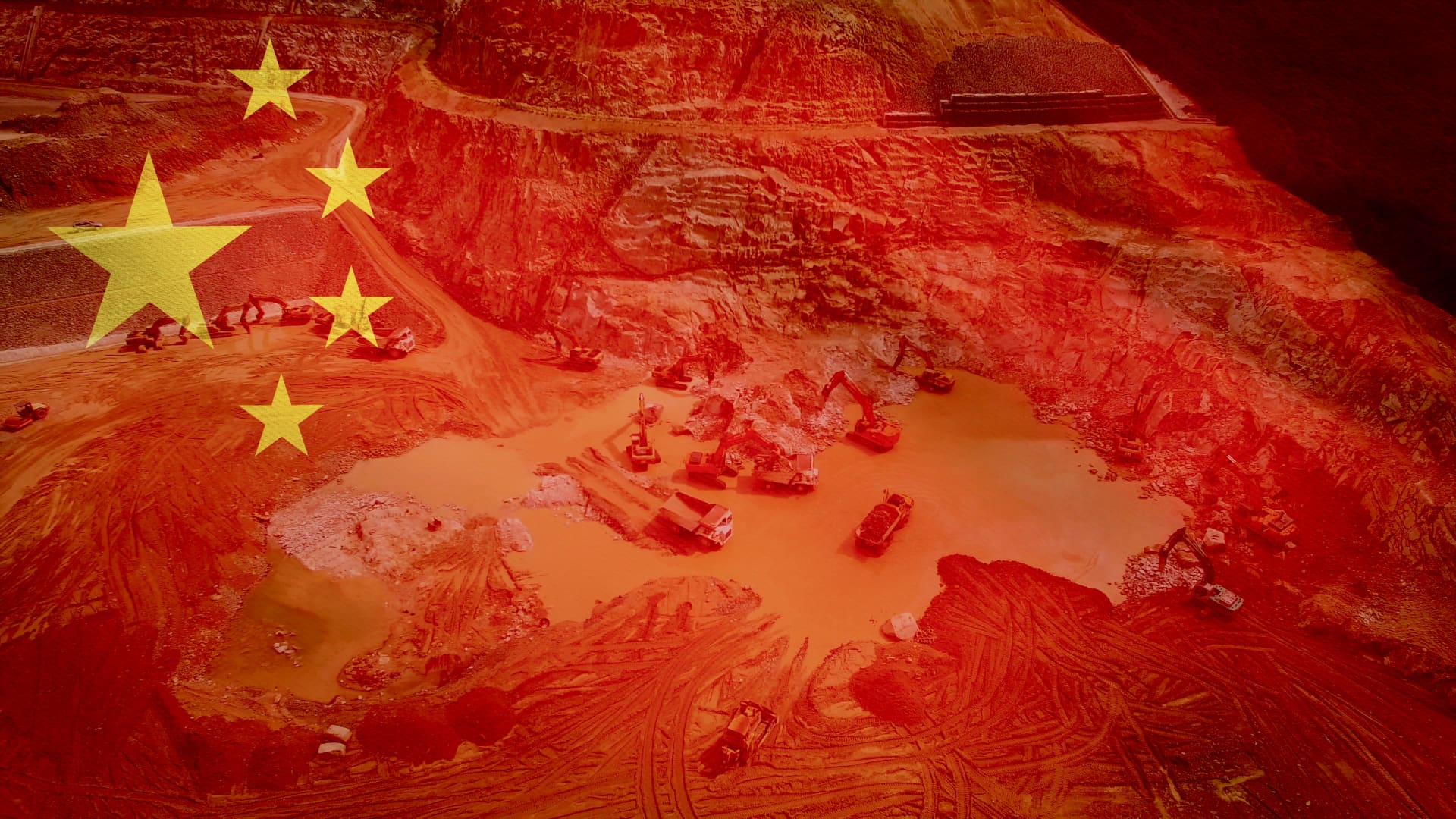

Beijing’s increasing restrictions on rare earth exports are leading to global shortages and revealing the world’s reliance on Chinese supply chains. Despite being the largest producer of rare earths, China is now significantly dependent on imports from an unlikely source: Myanmar, a country marked by conflict and economic challenges.
Recent data indicates that Myanmar supplied approximately 57% of China’s rare earth imports last year, as highlighted by Gracelin Baskaran, director of the Critical Minerals Security Program at the Center for Strategic and International Studies, in a discussion with CNBC. Following a surge in exports since 2018, Myanmar shipped nearly 42,000 metric tons of rare earth materials to China in 2023. Notably, these imports are rich in heavy rare earth elements, which are rarer in nature, enhancing their market value. Baskaran suggests that Myanmar’s output solidifies China’s dominant position, granting Beijing substantial control over the global heavy rare earth supply chain.
Myanmar is emerging as a crucial supplier for dysprosium and terbium, two vital elements in high-tech industries such as defense, aerospace, and renewables. This relationship underscores a supply chain where extraction occurs primarily in Myanmar while the processing and value addition predominantly take place in China.
Why Myanmar? The country possesses deposits characterized by higher concentrations of heavy rare earths, particularly “ionic adsorption clay” (IAC) deposits, as explained by David Merriman, research director at Project Blue. These deposits are mined through environmentally damaging leaching methods. Historically, IAC operations flourished in Southern China until new environmental regulations prompted many to shut down. Consequently, Myanmar became an attractive alternative, especially since its geology mirrored that of Chinese IAC regions. Chinese businesses played a significant role in establishing new IAC mines in Myanmar to supplement their domestic production.
The extracted rare earths from Myanmar are primarily exported to China in the form of “rare earth oxides,” where they undergo further refinement. However, this dependency carries significant risks. A Global Witness report highlighted that China has effectively outsourced its rare earth extraction to Myanmar, which poses grave risks to both the environment and local communities. Issues have escalated since Myanmar’s military coup in 2021, which has destabilized the Northern Kachin State-an area responsible for half of the world’s heavy rare earth production. Armed conflict in the region, particularly with the Kachin Independence Army (KIA), threatens supply stability, leading to recent disruptions and price spikes for some heavy rare earth elements.
The precarious situation indicates that should Myanmar halt its rare earth exports, China would find itself in a tight spot, struggling to satisfy its heavy rare earth demands in the short term. This scenario has prompted Beijing to explore diversifying its sources. IAC deposits are also found in neighboring countries like Malaysia and Laos, though higher environmental standards might pose challenges for operations there. Furthermore, China’s reduction in its own heavy rare earth extraction serves as a cautionary tale for other nations contemplating similar ventures. A 2022 report by Caixin illustrated the environmental devastation left in the wake of former IAC projects in Southern China, highlighting significant harm to the livelihoods of local farmers.
Beijing’s increasing reliance on Myanmar for rare earth supply thus raises critical questions about future trade dynamics and environmental sustainability in the region. As these supply chain complexities unfold, the world watches closely, aware of the significant implications for technology, defense, and environmental integrity.
Original Source: https://www.cnbc.com/2025/06/24/chinas-rare-earth-dominance-myanmar-plays-a-critical-role-.html
Category :
Tags:
Publish Date: 2025-06-24 09:12:00