Unlock Your Investment Potential: Breaking Down Stoxx 600, FTSE, SNB, and BOE Decisions That Could Transform Your Financial Future!

Turkey’s central bank has opted to maintain its key interest rate at 46%, despite a notable decline in inflation. In a recent statement, the monetary policy committee acknowledged that inflation, currently at 35.4%, has been cooling since May and continued to decline into June. However, the bank cited geopolitical tensions and trade uncertainties as risks that could reignite inflationary pressures. The committee also pointed out that consumer demand has weakened and that evolving geopolitical dynamics and rising global protectionism are under close watch. “Inflation expectations and pricing behaviors continue to be risk factors for the disinflation process,” the statement emphasized.
Meanwhile, the Bank of England held its interest rates steady at 4.25%, aligning with market expectations as inflation remained stubbornly high. U.K. consumer prices surged by 3.4% year-on-year in May, reflecting a sharper increase than economists had anticipated. Analysts are cautious about the economic landscape, especially after a correction in historical data from the Office for National Statistics raised concerns.
In Norway, the central bank made significant adjustments by cutting rates by 25 basis points to 4.25%. This marks the first reduction since the onset of the COVID-19 pandemic. Norges Bank’s governor Ida Wolden Bache stated that inflation had decreased since their last monetary policy meeting, leading to a revised outlook for lower inflation in the upcoming year. The decision to normalize policy rates was framed as essential for returning inflation to target while preventing excessive economic constriction.
Teleperformance’s shares have seen a recovery of over 3% following a volatile trading session that wiped out roughly €700 million from its market valuation. Earlier, the company unveiled its “Future Forward” strategy to incorporate artificial intelligence into its operations. However, despite management’s proactive approach, investor skepticism led to a 13% drop in share value post-announcement, reviving fears about potential disruptions to its customer service model stemming from advancing AI technologies. RBC Capital Markets analysts noted the company’s need to focus on delivering results quietly and effectively, given the unpredictable market environment.
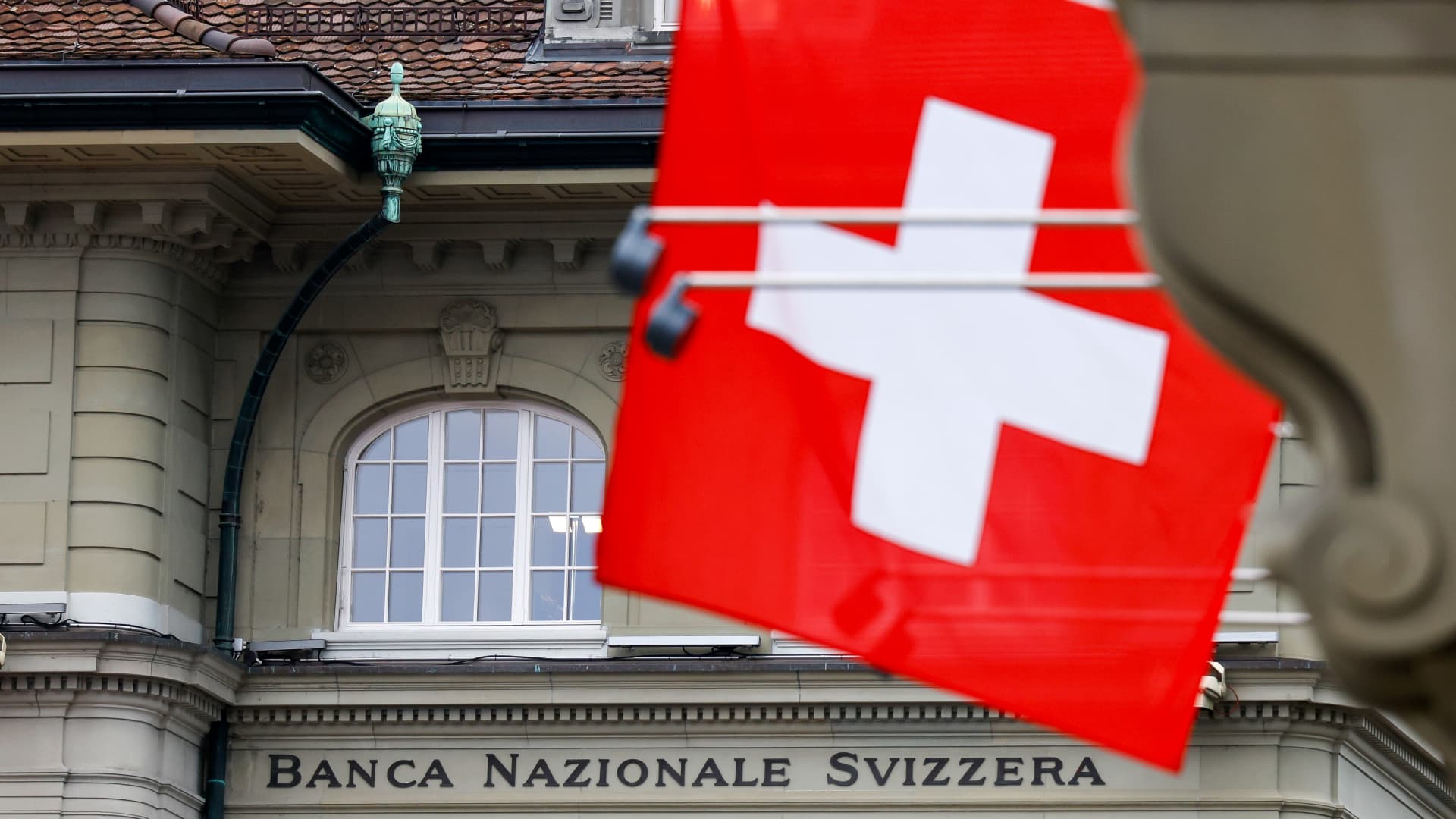
In Switzerland, the Swiss National Bank (SNB) reduced its interest rates further to 0%, raising concerns about a return to negative rates. This expectation was largely anticipated, as Switzerland grapples with low inflation and recent deflation trends, with consumer prices falling by 0.1% year-on-year in May. The SNB has endorsed new regulatory measures proposed by the Swiss government to enhance the nation’s financial stability, specifically pertaining to UBS, Switzerland’s largest bank. UBS is now required to hold an additional $26 billion in core capital to prepare for potential economic shocks stemming from its challenges post-Credit Suisse acquisition.
European stock markets were on a downward trend, with major indices like the Stoxx 600 declining by 0.63%. Investor anxiety over escalating tensions between Israel and Iran is partially driving this sentiment. As global conflict impacts market stability, sectors like telecommunications saw slight gains, with Vodafone’s shares rising after announcing a new CFO. In contrast, rising crude oil prices have bolstered energy stocks amid ongoing uncertainties in the Middle East.
Thursday represents a pivotal moment for financial markets, with key announcements from central banks across Turkey, Norway, Switzerland, and Britain coming into focus. Investors are keenly awaiting insights on future rate adjustments and overall monetary policy as economic conditions continue to shift.
Original Source: https://www.cnbc.com/2025/06/19/european-markets-on-thurs-june-19-stoxx-600-ftse-snb-boe-decisions.html
Category :
Tags:
Publish Date: 2025-06-19 17:56:00