Trump Mobilizes National Guard in LA: A Bold Response to Immigration Protests Igniting Tensions!

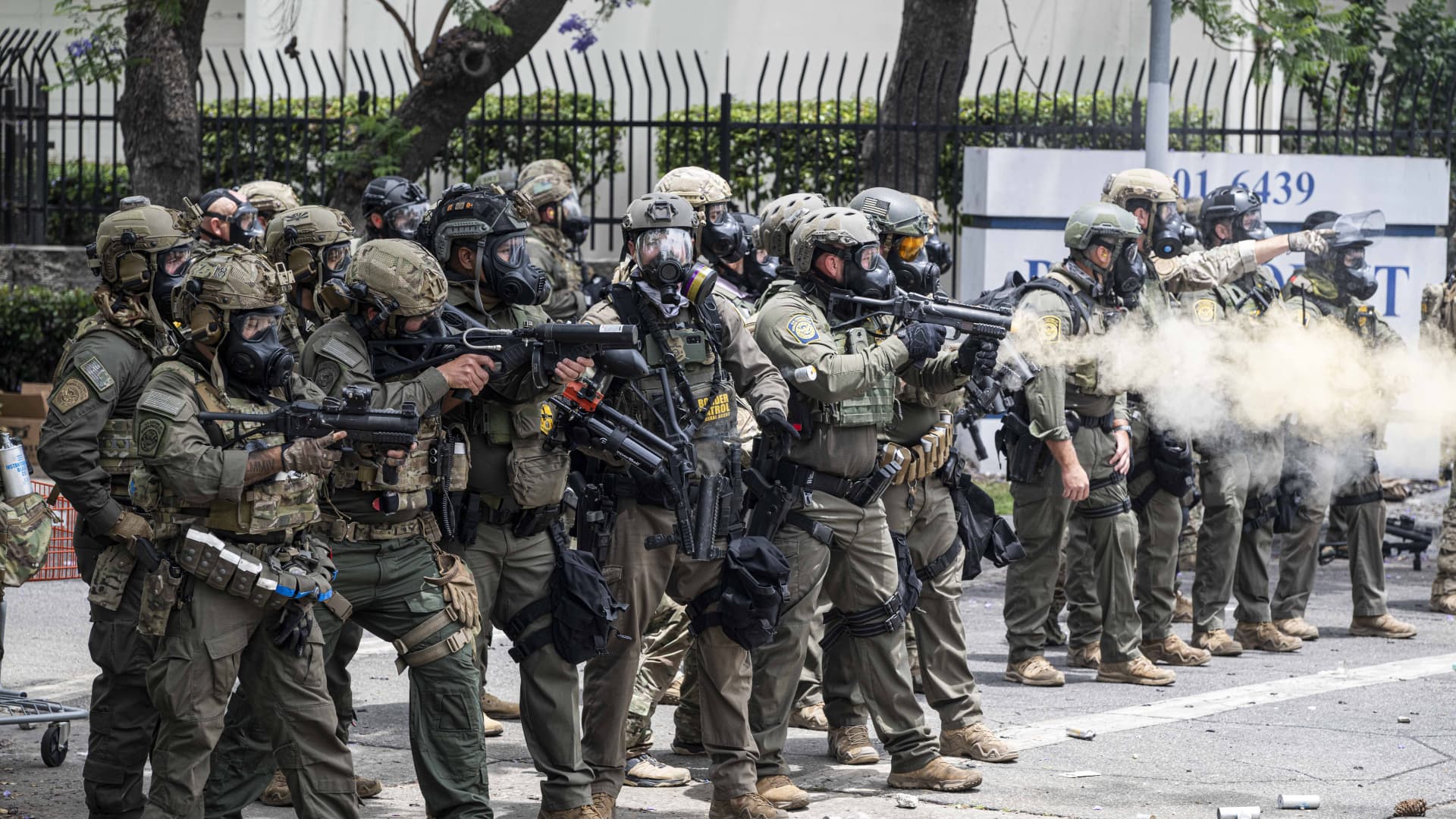
Tensions erupted in Paramount, California, on June 6, 2025, as U.S. Border Patrol and protesters clashed following an Immigration and Customs Enforcement (ICE) raid near a local Home Depot targeting undocumented immigrants. Amid these escalating protests in Los Angeles, President Donald Trump announced plans to deploy 2,000 National Guard members to the area, asserting that decisive federal action was necessary to restore order.
White House Press Secretary Karoline Leavitt described the unrest as a series of violent confrontations between demonstrators and federal agents engaged in immigration enforcement, resulting in over 100 arrests. “Violent mobs have attacked ICE Officers and Federal Law Enforcement Agents,” she stated, emphasizing the necessity for federal intervention. In a move that drew significant criticism, Trump opted to federalize portions of California’s National Guard, a step that typically requires the approval of the state governor.
In response, California Governor Gavin Newsom condemned Trump’s decision as “purposefully inflammatory,” warning that it could exacerbate an already volatile situation. He emphasized that local law enforcement already had adequate resources, proclaiming on social media that “there is currently no unmet need.” Newsom maintained that such actions by federal authorities risked eroding public trust.
Contrary to any immediate plans for de-escalation, Defense Secretary Pete Hegseth threatened further military action, indicating that active-duty Marines stationed at Camp Pendleton were on high alert and prepared for potential deployment if violence persisted. This rhetoric escalates the stakes in a situation already fraught with tension.
In a post on social media, Trump criticized local leaders, alleging that if “Governor Gavin Newscum” and Los Angeles Mayor Karen Bass were incapable of managing the unrest, the federal government would intervene. His comments reflected his administration’s hardline stance on immigration enforcement and public safety.
Additionally, the White House released a memo detailing Trump’s directive, articulating that protests obstructing federal law enforcement constitute a “form of rebellion against the authority” of the U.S. government. The memo served as a formal declaration of the president’s authority to mobilize the National Guard in response to civil unrest.
Vice President JD Vance labeled the protesters “insurrectionists,” claiming they were “attacking immigration enforcement officers” while leaders in Washington failed to support border enforcement. His remarks further illustrate the polarization surrounding the immigration debate in the country.
Amid the chaos, labor leader David Huerta, president of the SEIU California, sustained injuries during his arrest while monitoring the protests. Authorities allege Huerta was obstructing federal operations, marking another significant moment in the ongoing clashes that underscore the contentious atmosphere surrounding immigration policies in the U.S.
As the situation unfolds, the implications of federal militarization in California raise questions about the balance of power between state and federal authorities, public safety, and community trust. With both sides firmly entrenched in their positions, the path forward appears increasingly complex.
This unfolding event highlights the intersection of immigration policy, law enforcement, and community action, reverberating far beyond the streets of Los Angeles. As these tensions unfold, the nation watches closely.
Original Source: https://www.cnbc.com/2025/06/08/trump-national-guard-immigration-la-protests.html
Category :
Tags:
Publish Date: 2025-06-08 08:24:00