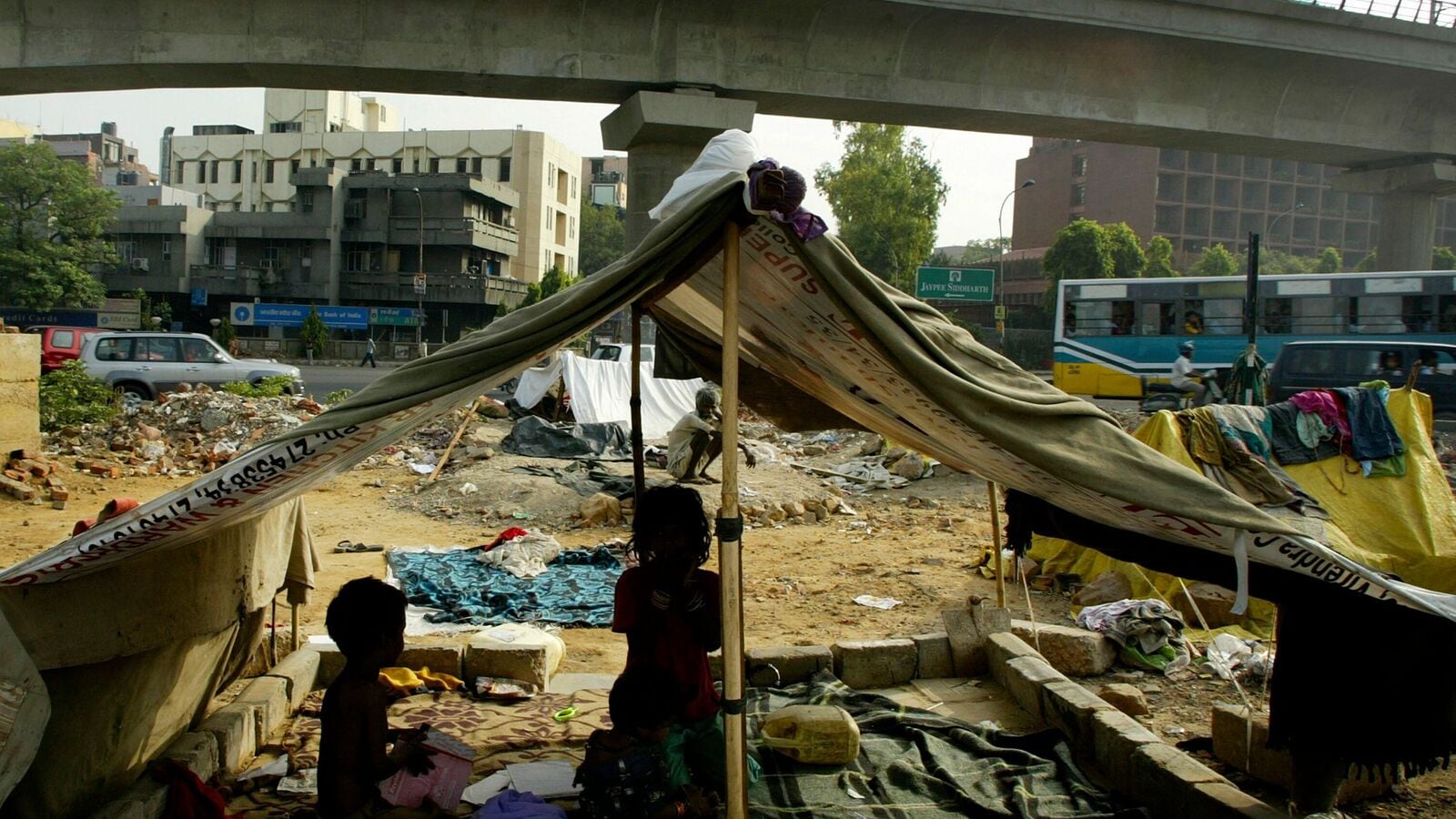

India’s poverty estimates have recently seen a downward revision, reflecting a complex interplay of varying metrics. Notably, the World Bank now reports that 5.3% of Indians live below one poverty threshold, while a staggering 23.9% fall below another. Understanding these figures requires unpacking the concept of the poverty line.
The poverty line is defined as the minimum expenditure needed to fulfill basic needs such as nutrition, clothing, and shelter. Countries have the autonomy to establish their own poverty lines, which complicates global comparisons. A simple currency conversion does not account for differing cost levels across nations, rendering such comparisons misleading.
To facilitate international assessments, researchers established an international poverty line in 1990, adjusted for purchasing power parity (PPP). This economic measure gauges the cost of a standard basket of goods and services in various countries, allowing for a more equitable currency comparison. Initially set at $1 a day using 1985 PPP, this benchmark has undergone multiple updates to reflect ongoing inflation and improved data collection methods across poorer nations.
Recently, the World Bank applied updated PPP figures to redefine the global poverty line. Previously, individuals spending less than $2.15 a day were classified as poor; the new threshold is now set at $3 a day, significantly revised from previous years. This change, coupled with enhanced data collection from numerous countries, has caused a reevaluation of global poverty figures. For instance, the World Bank’s latest estimate reveals that 10.5% of the world’s population was living in poverty in 2022, an increase from the previous figure of 9%. This adjustment translates to approximately 125 million more individuals classified as poor.
It’s crucial to recognize that this numerical increase does not necessarily indicate a rise in poverty levels but rather a recalibration in classification standards. India’s experience is particularly noteworthy; thanks to its first official household consumption expenditure survey in over a decade, significant new data has emerged. This survey estimated India’s poverty rate at around 5.3%, up from an earlier approximation of 2.4% based on the old standard of $2.15.
Interestingly, the revised poverty statistics suggest substantial progress in poverty reduction over the past decade. Comparisons with prior data using the previous benchmarks indicate that around 269 million Indians have moved out of poverty. However, direct comparisons are complicated by the updated data collection methodologies which now capture higher spending patterns.
Importantly, the World Bank employs a broader array of poverty lines internationally. The standard for lower-middle-income countries has been revised from $3.65 to $4.20 a day, under which the poverty rate in India was 23.9% in 2022, down from the earlier 28.1%. This highlights a continuing but nuanced narrative of economic progress.
Despite these revisions, concerns regarding data integrity persist. The latest survey is seen as more robust, yet it may still overlook households at the upper end of the consumption spectrum, potentially underrepresenting inequality. Nonetheless, the refreshed consumption expenditure data aims to provide clearer insight into poverty trends in the long term.
As these estimates evolve, they underscore the importance of accurate, comprehensive policy frameworks for effective poverty alleviation strategies in India and beyond. The complex dynamics of poverty measurement will remain a critical area of focus for researchers and policymakers alike.
Original Source: https://www.livemint.com/news/india/world-bank-poverty-line-india-extreme-poverty-purchasing-power-parity-india-international-poverty-line-poverty-line-11749371270703.html
Category :
Tags:
Publish Date: 2025-06-08 16:21:00