
The Shirui Lily Festival in Manipur, celebrated for its symbol of peace and cultural unity, has become a focal point of identity issues following an incident on May 20 that provoked a political backlash, media protests, and heightened ethnic tensions. A report from India Today NE indicates that the controversy began when a Manipur State Transport (MST) bus, carrying journalists to the festival, was halted at the Gwaltabi checkpoint by personnel from the 4th Mahar Regiment. The security forces reportedly instructed the media team to cover the words “Manipur State Transport” on the bus’s windshield with white paper, which many perceived as an attempt to erase the state’s identity.
The 5th Shirui Lily Festival, held from May 20 to 24 in Ukhrul, marked its return after a two-year break due to ethnic strife. The controversial directive sparked outrage among the Meitei community, who view the state’s name as a crucial emblem of their identity and historical pride. This incident compelled the media team to abandon their coverage, exacerbating feelings of resentment.
The situation was particularly unsettling considering the Union Government’s previous recognition of Manipur’s legacy, most notably in 2021 when Home Minister Amit Shah renamed Mount Harriet to Mount Manipur, honoring the state’s role in the 1891 resistance against British colonial rule. The removal of the state’s name from the vehicle was seen as a direct affront to Manipur’s dignity, leading to widespread outrage, protests, and shutdowns that intensified ongoing debates about identity, autonomy, and the role of security forces in the region.
The Coordinating Committee on Manipur Integrity (COCOMI), a significant Meitei civil society organization, announced a 48-hour general strike starting midnight on May 21. This shutdown brought the Imphal Valley to a halt, with businesses, schools, and public transport closing, except for emergency services and travel to the festival. Additionally, the All Manipur Working Journalists’ Union and the Editors’ Guild of Manipur staged a pen-down protest, calling for a thorough investigation and accountability regarding the incident.
COCOMI accused the Mahar Regiment of undermining state authority and demanded the resignation of key officials, including the security advisor, the police chief, and the chief secretary, as well as a formal apology from Governor Ajay Kumar Bhalla. Other civil society groups echoed these concerns, questioning how such directives could be enforced within Manipur, further intensifying discussions about state autonomy and dignity.
The incident also heightened tensions between the Meitei and Kuki communities, particularly since the ethnic conflict in May 2023. The road to the festival passes through a buffer zone that includes Kuki villages, raising safety concerns. Kuki civil society organizations have previously cautioned Meiteis against crossing this buffer, viewing it as a “direct challenge” to their community’s jurisdiction.
The incident overshadowed the festival’s intended purpose of promoting peace and cultural unity. Governor Ajay Kumar Bhalla, who officiated the festival’s opening, faced criticism for continuing the event amid the tensions. On the day of the festival, he was airlifted by an Army helicopter to avoid potential protests while traveling between Imphal airport and Raj Bhawan, which is only six kilometers apart.
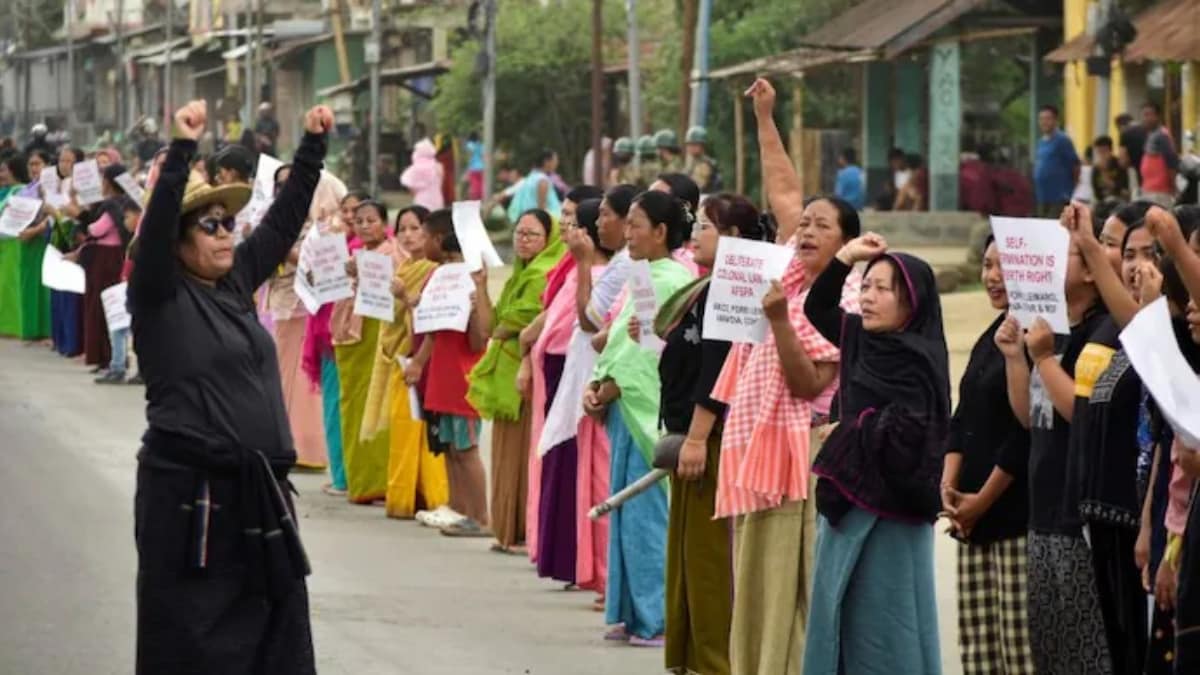
Protests led by COCOMI saw hundreds of people form a human chain on Tiddim Road to oppose the removal of the state’s name from the bus. The protest spanned approximately 5.5 kilometers from Imphal airport to Keishampat Junction, involving many students. Governor Bhalla returned to Imphal after a trip to New Delhi with Chief Secretary PK Singh on May 21, though the purpose of that visit has not been disclosed.
In response to public outcry, the state administration formed a two-member committee to investigate the incident. Home Commissioner N Ashok Kumar and IT Secretary Th Kirankumar Singh will lead this committee, which is expected to report back within 15 days and recommend measures to prevent similar occurrences in the future, according to the Times of India.
As the investigation proceeds, the incident continues to spark debates surrounding Manipur’s identity, governance, and the critical balance between security measures and cultural sensitivities.
Original Source: https://www.firstpost.com/india/why-manipurs-shirui-lily-festival-has-turned-into-a-flashpoint-over-identity-13892263.html
Category: India
Tags:
Publish Date: 2025-05-27 22:08:00