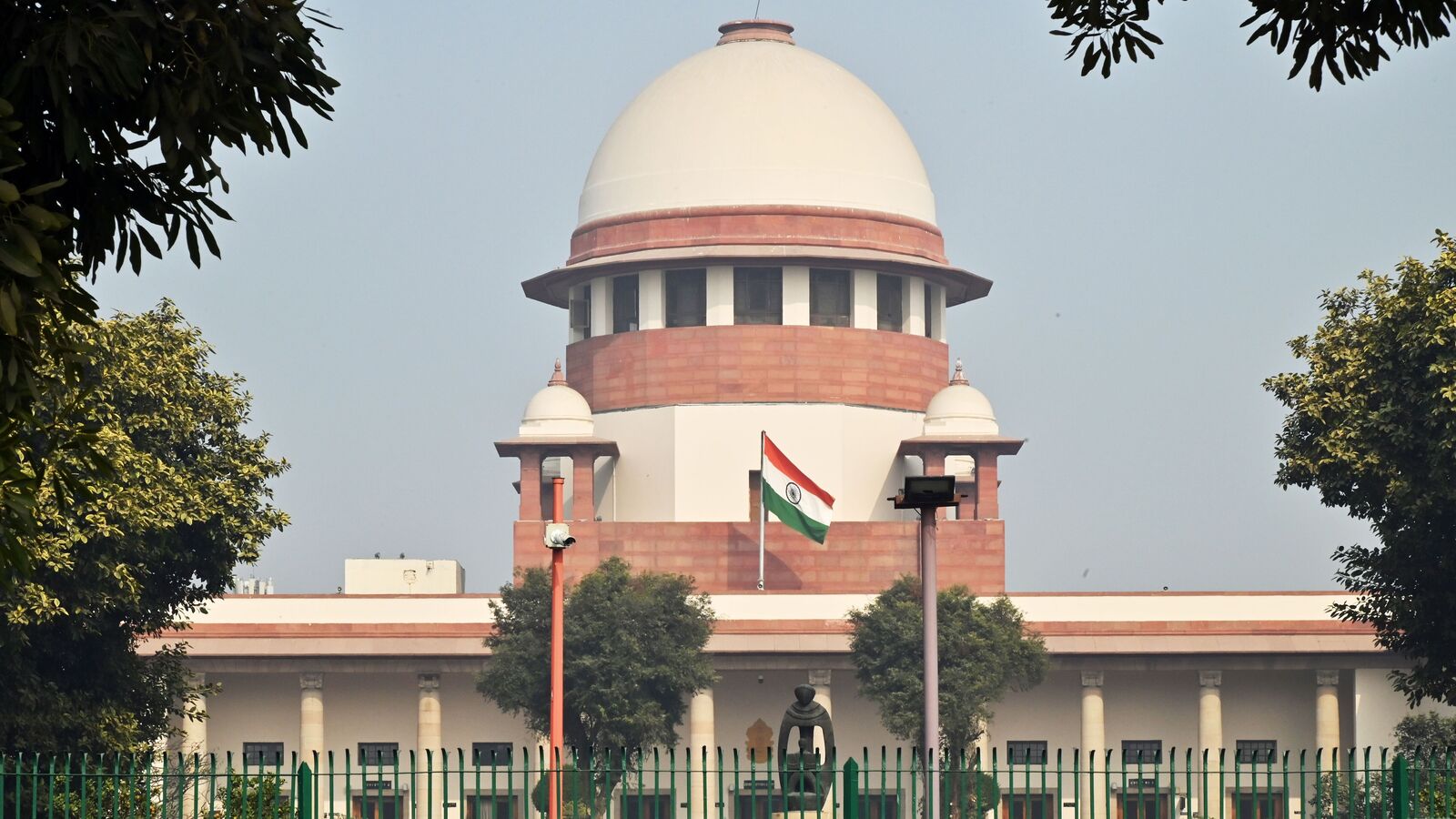
Unyielding Stance: Centre Asserts ‘No One Holds Claim Over Government Land’ in SC Hearing on Waqf Act Challenges

The Centre has reaffirmed its stance in the Supreme Court that no individual can claim ownership over government land, clarifying its legal authority to reclaim properties designated as waqf. This statement emerged during the ongoing hearings regarding the Waqf Bill, with Solicitor General Tushar Mehta representing the government. “Nobody has the right over government land,” Mehta asserted, referencing existing Supreme Court rulings that empower the government to safeguard properties acknowledged as waqf.
The principle of ‘waqf by user’ is pivotal in this context, enabling a property to be recognized as waqf based solely on its long-standing use for religious or charitable purposes, even without formal documentation. This legal nuance has sparked significant debate, particularly concerning the government’s jurisdiction over properties previously declared waqf.
During the proceedings, the Solicitor General expressed concerns about misconceptions circulating around the registration and management of waqf properties, emphasizing that there should be no expectation of waqf claims without proper registration. He cautioned against the potential consequences of judicial interventions that might inadvertently legitimize unregistered claims, describing the risk as a “creation of a legitimative regime” through court orders.
The Waqf (Amendment) Act, 2025, which has become the focal point of these hearings, was enacted after thorough consultations with various stakeholders, including state governments and waqf boards. Mehta pointed out that no parties impacted by the legislation have challenged Parliament’s authority to legislate in this area, adding weight to the Centre’s argument for the law’s constitutionality.
In its written submissions, the Centre characterized the Waqf Act as a “secular concept” that aligns with constitutional values, defending its provisions that aim to streamline waqf administration while protecting religious freedoms. The government insists that there are no urgent reasons for the Court to suspend the Act, arguing that it maintains a presumption of constitutionality.
The Supreme Court, led by Chief Justice B R Gavai and Justice Augustine George Masih, has reinforced the high threshold necessary for interim relief, requiring petitioners to provide compelling evidence to challenge the validity of the Act. Discussions during the hearings have also delved into contentious matters such as the authority assigned to officials above the district collector level regarding waqf claims, the composition of waqf boards, and denotification processes for waqf properties.
The Waqf Act, which received presidential assent on April 5, 2025, has elicited a polarized response within Parliament, passing with a significant majority but also facing substantial opposition. Critics argue that the amendments may unjustly discriminate against Muslim communities and interfere with the management of waqf properties.
As the judicial review continues, the Supreme Court faces the challenge of balancing legislative intent with constitutional rights, while the wider implications of this ongoing debate regarding waqf properties and government authority remain a focal point of national interest.
With the hearings in progress, further updates are expected as the Court deliberates the constitutional validity of the Waqf (Amendment) Act, positioning this case as a significant marker in the ongoing discourse on religious endowments and government oversight.
Original Source: https://www.livemint.com/news/nobody-has-right-over-govt-land-centre-tells-supreme-court-on-pleas-challenging-waqf-act-11747822878503.html
Category :
Tags:
Publish Date: 2025-05-21 16:12:00