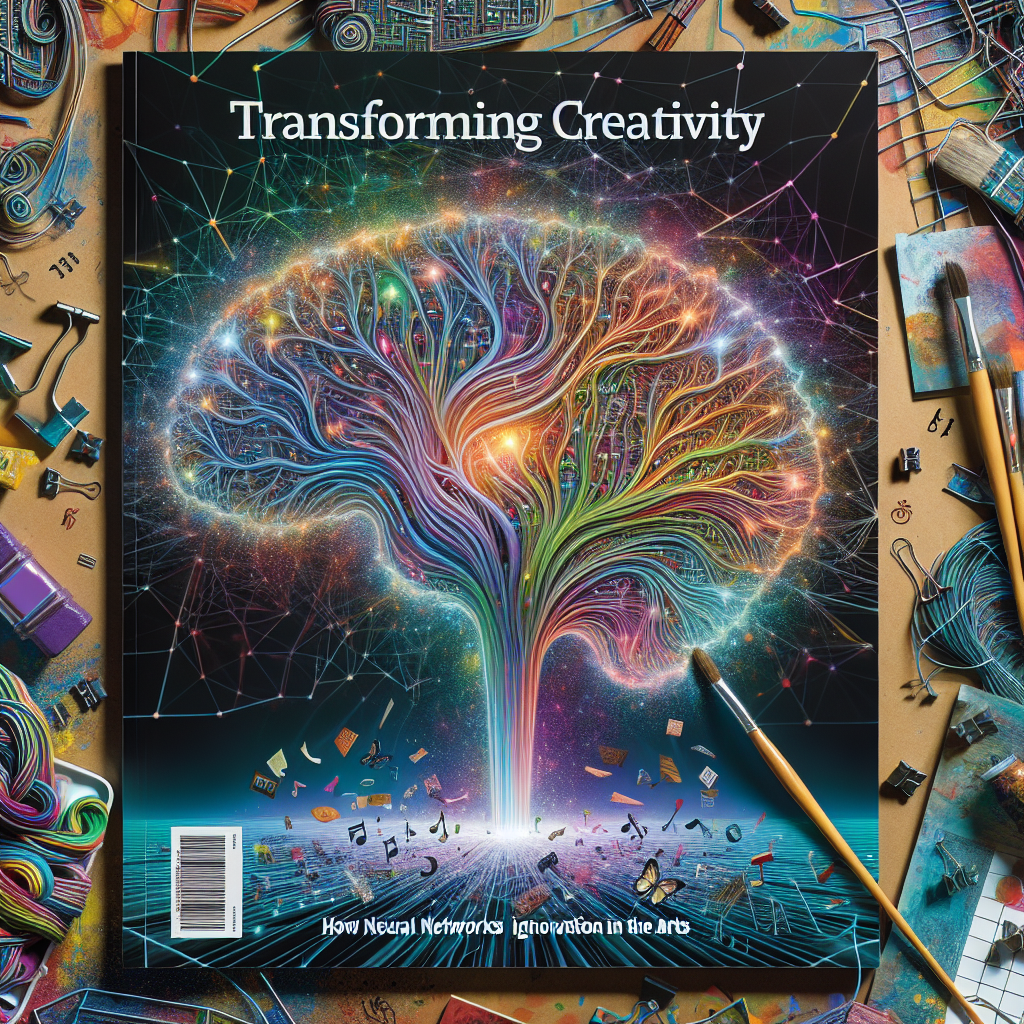
Transforming Creativity: How Neural Networks Ignite Innovation in the Arts

You know how sometimes you look at a piece of art, and you’re just floored? Maybe it’s a vibrant painting or a captivating sculpture. It draws you in, and you can’t help but wonder about the mind behind it. Now, imagine that mind isn’t human, but a neural network—a sophisticated model of artificial intelligence trained to create. This shift isn’t mere sci-fi anymore; it’s flipping the script on creativity as we know it.
Let’s take a walk through the fascinating world where algorithms meet artistry. Imagine a scenario: you’re browsing through some digital artwork, and one piece catches your eye. It’s an astonishing blend of surrealism and abstraction, yet it has a freshness that feels… new. Well, that’s the work of an AI named DALL-E, created by OpenAI. This neural network can generate images from mere text prompts. You could type in something as whimsical as “a cat surfing on a cosmic wave,” and voila—an artwork pops up that you didn’t know you needed in your life.
What’s happening here is not just a novelty; it’s a full-on revolution. Neural networks, designed to mimic the way our brains operate, have started to refine and emulate creative processes usually confined to humans. These systems learn from vast datasets, identifying patterns, styles, and techniques. They draw upon the work of countless human artists, effectively merging the old with the new. It’s a bit like giving a computer not just a paintbrush but the inspiration of the entire history of art.
Why does this matter? For one, it challenges the traditional notions of creativity. Think about it: what does it mean to be ‘creative’? Is it the output, the idea, or the source? If an algorithm can create something that evokes emotion, should we consider it art? And this isn’t just philosophical chatter; it has concrete implications for various industries. Marketing teams are turning to AI-generated images for ad campaigns, musicians are experimenting with AI-composed melodies, and even game designers are leveraging neural networks to generate rich, immersive worlds.
But here’s where it gets interesting. While these tools can spur creativity, they don’t replace the human touch. Take the case of a new artist named Refik Anadol, who blends architectural design with AI. His installations—powered by neural networks—transcend mere computer-generated visuals. They provoke discussions about human experience in a tech-driven world. This reflects something crucial: at the heart of creativity is context, meaning, and emotion—all things that AI struggles to fully grasp.
While we’re diving into this brave new world, it’s essential to leverage the strengths of both man and machine. Here are a couple of takeaways to ponder: first, consider how AI can be an ally, not a replacement. Treat it as a creative partner. Use its power to push the boundaries of your own imagination. Secondly, let’s not lose sight of the narrative. Technology should enhance our story, not dilute it. Aim to create experiences that resonate, regardless of the medium—be it AI-generated or handmade.
I remember my own early days at Webx Technologies, where we started exploring AI’s potential in digital transformation. My team and I were initially skeptical. However, experimenting with neural networks opened new doors—not just for the company but for our understanding of creativity itself. It taught us that technology can be a powerful tool, provided we know how to wield it.
As we navigate these waters, let’s keep the conversation open. What is creativity in this hybrid world? Should we embrace an AI artist, or is that akin to asking a calculator for philosophical insights? As we push the boundaries of creativity, let’s also reflect on how we define it, who gets to participate in its creation, and how we can harness this technology to tell more compelling stories.
### Author Profile
Sanjeev Sarma is the Director of Software Services and Chief Software Architect at Webx Technologies Private Limited. With a passion for technology and its intersection with everyday life, he blends insight with relatability, guiding others through the evolving landscape of AI, entrepreneurship, and digital transformation. When he’s not unraveling complex tech topics, you might catch him sipping tea while contemplating the next big idea or exploring the vibrant narratives of Northeast India.