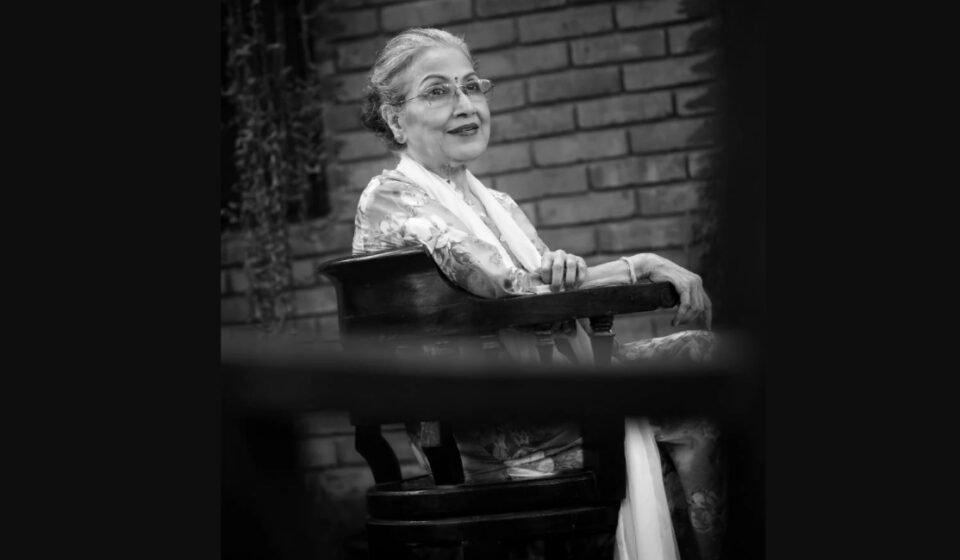

Veteran actress Bidya Rao, whose nearly four-decade career made her a defining face of Assamese cinema and a familiar presence in more than 20 Bengali films, built a remarkable screen journey from child artist to leading lady. Born in Dibrugarh to a Marathi father and an Assamese mother from Jorhat, she moved permanently to Kolkata at age five and later became one of the most recognisable actresses of her generation.
Her entry into films came through a family friendship with Dr Bhupen Hazarika. Rao’s mother occasionally performed with him on stage, and Hazarika often visited their home. During one such visit, he suggested casting the young Rao in Shakuntala. She made her debut as a six-year-old child artist in the 1961 film, a world she was then too young to fully understand.
At 14, she was chosen by Hazarika for the female lead in Lotighoti (1966), opposite Bijay Sankar. The film won the President’s Silver Medal for Best Feature Film in Assamese at the 14th National Film Awards. Before its release, Pratidhwani (1964), also featuring Rao, had reached theatres. She followed these with roles in Sangram (1968), Chik Mik Bijuli (1969), Mukuta and Aparajeya (1970), helping her transition from teenage performer to mature lead.
Rao’s breakthrough came with Samarendra Narayan Dev’s Aranya (1971), opposite Biju Phukan. The film brought her wide acclaim, and its song Xile Xile Theka Khale became a lasting classic. She went on to appear in Manav Aru Danav (1971), Sandhyaraag (1977), Mainajan and Ajali Nabou (1980), Manasi (1981), Shri Shri Maa Kamakhya (1983), Nayanmoni and Jeevan Surabhi (1984), Pooja (1985), Pratidan and Jetuki (1987), Ghar Sansar (1983), Mon Mandir (1985) and Sendur (1984). She also worked in Bengali films with stars such as Uttam Kumar and Soumitra Chatterjee.
Her marriage to M.P.N. Nair, a Malayali automobile businessman and later producer-distributor, came as a surprise to many. Though considerably older, he proved deeply supportive, and her career flourished after their wedding. The couple settled permanently in Assam in 1980. They moved into their own home in Guwahati’s Rehabari locality in 1988, but Nair died just 12 days later. Left to raise her son Dharam alone, Rao stayed away from acting for a long period before returning out of financial necessity.
Rao, who declined several Hindi film offers because her husband did not want her to act in Bollywood, later returned to the screen in Bhabendra Nath Saikia’s Sarothi (1991), playing an unconventional role. The film won the Rajat Kamal for Best Feature Film in Assamese. She was also honoured with the Filmfare Lifetime Achievement Award 2026.
Original Source: https://nenow.in/entertainment/bidya-rao-four-decades-across-assamese-and-bengali-cinema.html
Category: Assam,Entertainment,Northeast News,Top News
Tags:
Publish Date: 2026-11-20 00:12:00