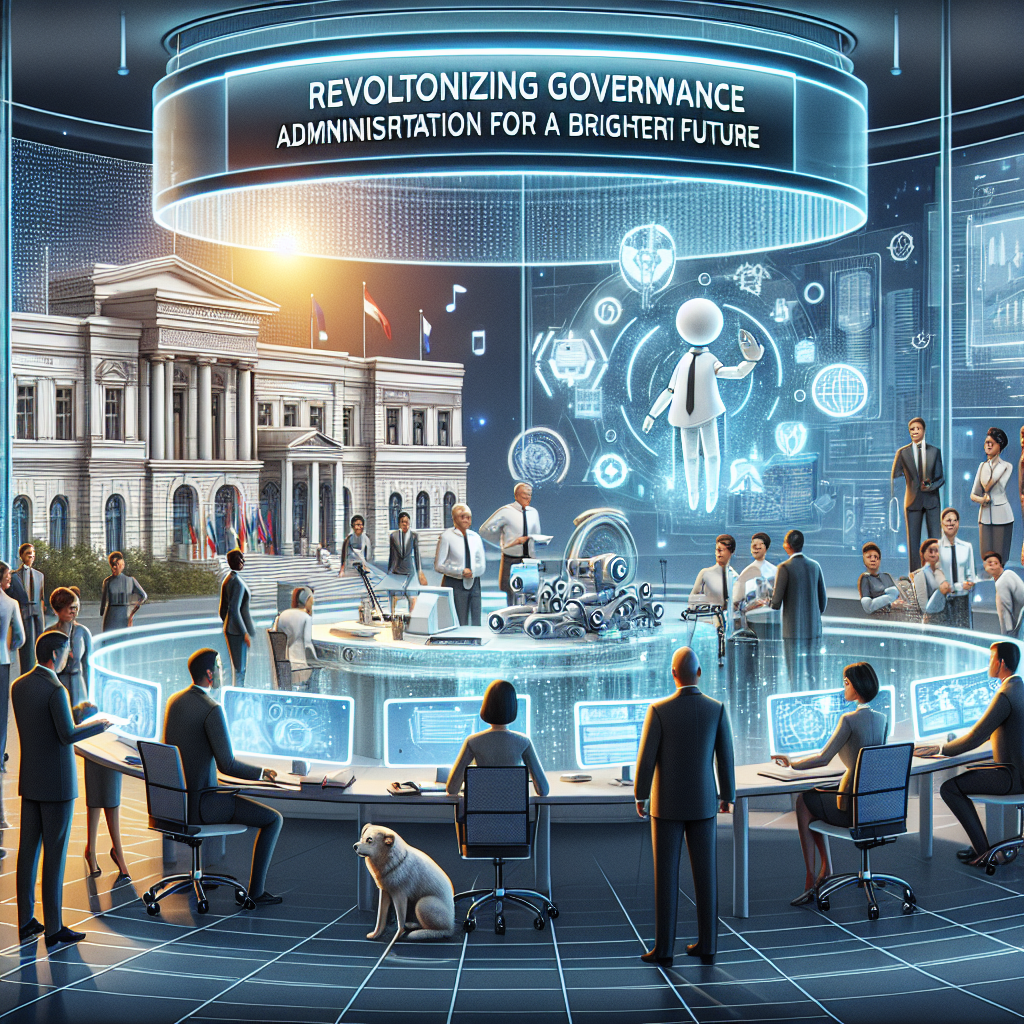
Revolutionizing Governance: Empowering Public Administration for a Brighter Future

Navigating the Future: How Smart Governance is Redefining Public Administration
In an age where technology evolves at breakneck speed, the juxtaposition of innovation with governance is becoming increasingly vital. Smart governance—the integration of technology into public administration—offers profound opportunities for enhancing transparency, efficiency, and citizen engagement. As a Chief Software Architect at Webx Technologies, I’ve witnessed how digital transformation can reshape traditional governance, making it more responsive to the needs of the community.
Take the example of Estonia, often deemed a global leader in digital governance. The Baltic nation has implemented a comprehensive e-Residency program that allows global citizens to start and manage a location-independent business in Estonia. This initiative not only boosts economic activity but also exemplifies how technology can redefine citizenship and community engagement. The e-Government system facilitates easy access to governmental services, allowing citizens to vote, file taxes, and even establish companies online with just a few clicks.
The key here is the shift from a centralized, bureaucratic approach to a decentralized system, where individuals have increased agency. Such systems leverage blockchain technology, ensuring secure transactions and fostering trust. It’s no longer just about providing services; it’s about empowering citizens to interact meaningfully with their government.
In the United States, cities like San Francisco and New York are adopting smart technologies to enhance urban living. Projects like the “Smart City” initiatives are utilizing IoT (Internet of Things) devices to improve city services. For instance, smart traffic lights adjust based on vehicle flow, reducing congestion and pollution while enhancing commuting times. Moreover, open data portals allow citizens to access real-time information about city operations, further democratizing data and creating a culture of accountability.
These advancements aren’t just beneficial; they’re essential in addressing pressing issues like climate change, public health crises, and social inequality. During the COVID-19 pandemic, many governments worldwide enacted contact tracing apps to control virus spread. South Korea’s aggressive use of data analytics allowed for quick identification of infection clusters, thereby realizing effective containment strategies. Their transparent communication and reliance on technology empowered citizens to participate actively in health measures, demonstrating how smart governance can effectively respond in crises.
There’s also a significant focus on enhancing public participation through technology. Civic tech platforms like CitizenLab in Belgium encourage citizens to voice their opinions on local policies through interactive digital forums. This engagement increases civic awareness and empowers individuals to influence decision-making processes directly. The ability to comment on or vote for proposed policy changes fosters a sense of community ownership, ultimately leading to more democratic governance.
However, with great power comes significant responsibility. As technology shapes governance, concerns around privacy, data security, and inequality must be addressed. Citizens must have confidence that the technology being used safeguards their personal data. Governments need to establish clear regulations governing digital privacy while balancing transparency with security.
As professionals passionate about technology and governance navigate this rapidly evolving landscape, several actionable takeaways emerge. First, embracing a citizen-centric approach is paramount. Technology should be employed to solve real problems, and public administrations should actively seek citizen input throughout the development and implementation phases.
Second, investing in cybersecurity is non-negotiable. Strong data protection frameworks will build public trust and ensure that sensitive information is kept secure amid increasing cyber threats.
Finally, collaboration between public institutions and technology providers is crucial. Governments should tap into the expertise of private sector leaders in technology to co-develop solutions that meet citizen needs more effectively.
As we look ahead, smart governance promises to redefine public administration. By leveraging technology, governments can transform bureaucratic processes into seamless engagements, fostering a more informed and active citizenry.
Author Profile: Sanjeev Sarma
Sanjeev Sarma is a seasoned IT enthusiast and thought leader, currently serving as Chief Software Architect at Webx Technologies. With a fervent passion for Artificial Intelligence, Machine Learning, Cybersecurity, and Generative AI, Sanjeev has dedicated his career to exploring how technology impacts various fields, from education and health to entrepreneurship and personal finance. His insights help bridge the gap between complex technological concepts and their practical applications in everyday life. Sanjeev believes in the transformative power of digital innovation and actively engages in discussions on how smart governance can redefine public administration for the betterment of society. He aims to empower professionals to embrace technology’s potential and navigate the future with confidence.