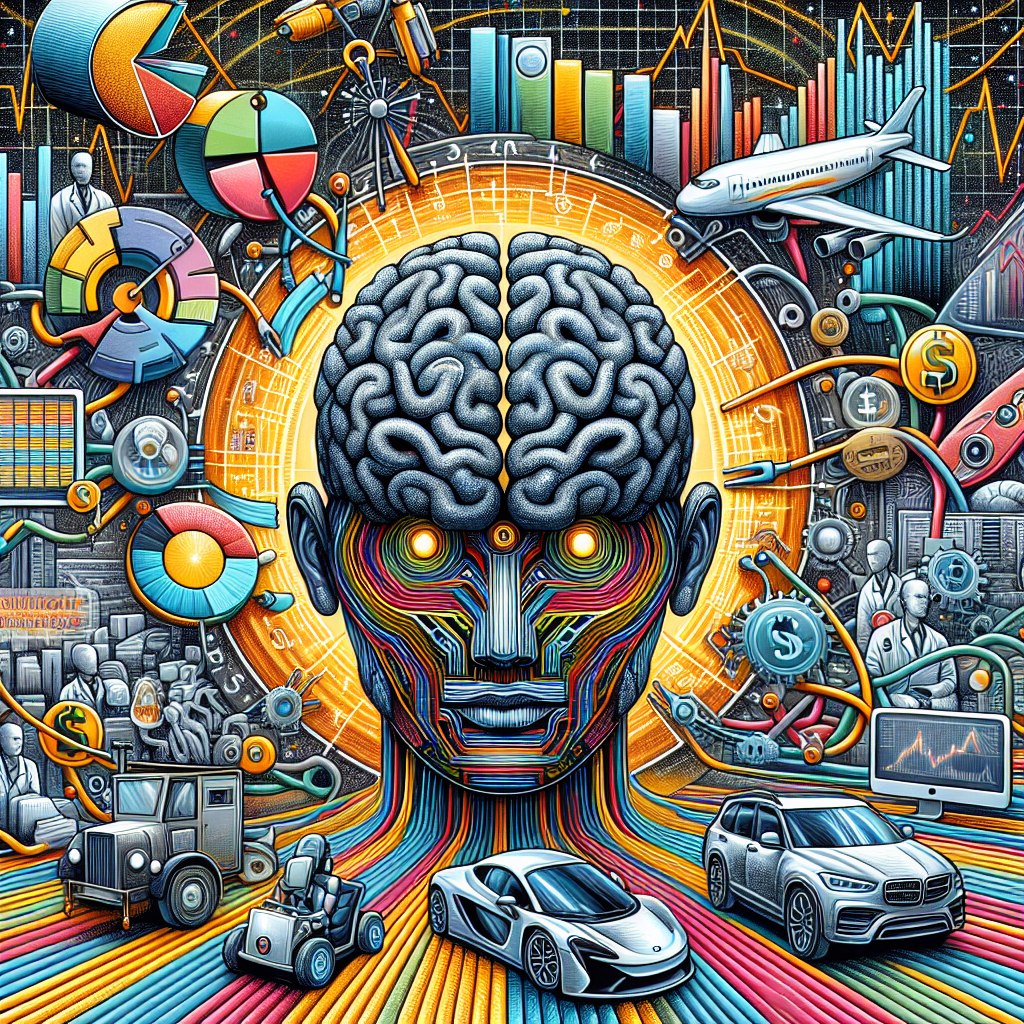
AI Revolution: How Artificial Intelligence is Reshaping Industries

The AI Revolution: How Artificial Intelligence is Reshaping Industries
Artificial Intelligence (AI) has become the driving force of innovation across numerous industries, fundamentally reshaping how we live and work. As someone deeply invested in the evolution of technology, I find it thrilling to observe the strides AI is making, pushing boundaries and redefining what’s possible. Whether in healthcare, finance, or education, the transformative power of AI is palpable.
Take healthcare, for instance. The integration of AI-driven tools like IBM Watson into diagnostic processes is a game-changer. Watson can analyze thousands of medical journals in seconds, providing healthcare professionals with the latest research and treatment options tailored to individual patients. This not only increases accuracy but also significantly reduces the time it takes to arrive at a diagnosis. A real-world application of this is seen in cancer treatment, where AI algorithms help in tailoring personalized therapies based on genetic information, improving patient outcomes.
In the finance sector, AI technologies are streamlining operations and enhancing security. Companies like JPMorgan Chase utilize machine learning algorithms for fraud detection systems, which analyze transaction patterns in real-time to identify anomalies that could indicate fraudulent activity. This significantly mitigates risks and protects consumers, allowing institutions to maintain trust while increasing efficiency in operations.
Furthermore, AI chatbots are transforming customer service. Brands like H&M and Sephora have integrated AI chatbots into their platforms, providing seamless assistance and personalized recommendations to customers. These bots not only improve the customer experience but also increase the operational efficiency of businesses, allowing human employees to focus on complex inquiries that require a personal touch.
Education, too, is undergoing an AI-driven transformation. Smart platforms such as Coursera and Duolingo utilize AI to create adaptive learning experiences, personalizing lessons based on a learner’s pace and preferences. This personalized approach boosts learner engagement and retention, making education more accessible and tailored to individual needs.
However, this revolution comes with its own set of challenges. Ethical concerns surrounding data privacy and job displacement are legitimate and warrant substantial consideration. For example, while automation enhances efficiency, it raises questions about the future roles of employees. The current trend sees machines taking over routine tasks, resulting in a shift in job requirements. Companies have a responsibility to invest in retraining and upskilling their workforce, ensuring that employees can adapt and thrive in this new era.
As AI continues to evolve, its impact on marketing and social media is noteworthy. Platforms like Facebook and Google deploy powerful machine learning algorithms to analyze user data, delivering hyper-targeted ads that enhance customer engagement rates. Businesses can leverage these insights to fine-tune their marketing strategies, making data-driven decisions that resonate more profoundly with their audiences. The actionable takeaway here is the importance of embracing these technologies not just as an operational tool but as a necessity for staying relevant in an increasingly competitive landscape.
The generative capabilities of AI also open new frontiers. For instance, tools like OpenAI’s ChatGPT can assist in content creation, enabling marketers and authors to produce high-quality written material efficiently. This redefines creativity’s boundaries, empowering content creators to generate ideas and drafts in a fraction of the time it traditionally takes.
As we navigate this AI-driven landscape, being proactive in understanding these technologies is critical. Professionals should not only familiarize themselves with the tools available but also engage in continual learning—attending workshops, webinars, or online courses.
In conclusion, the AI revolution is not a distant future; it’s unfolding before our eyes, transforming industries and creating new opportunities. Embracing this change involves recognizing the potential of AI as both a challenge and a solution. As we stand on the brink of this revolution, the most successful will be those who adapt, innovate, and harness the power of AI to enhance their industries and improve the quality of life for everyone.