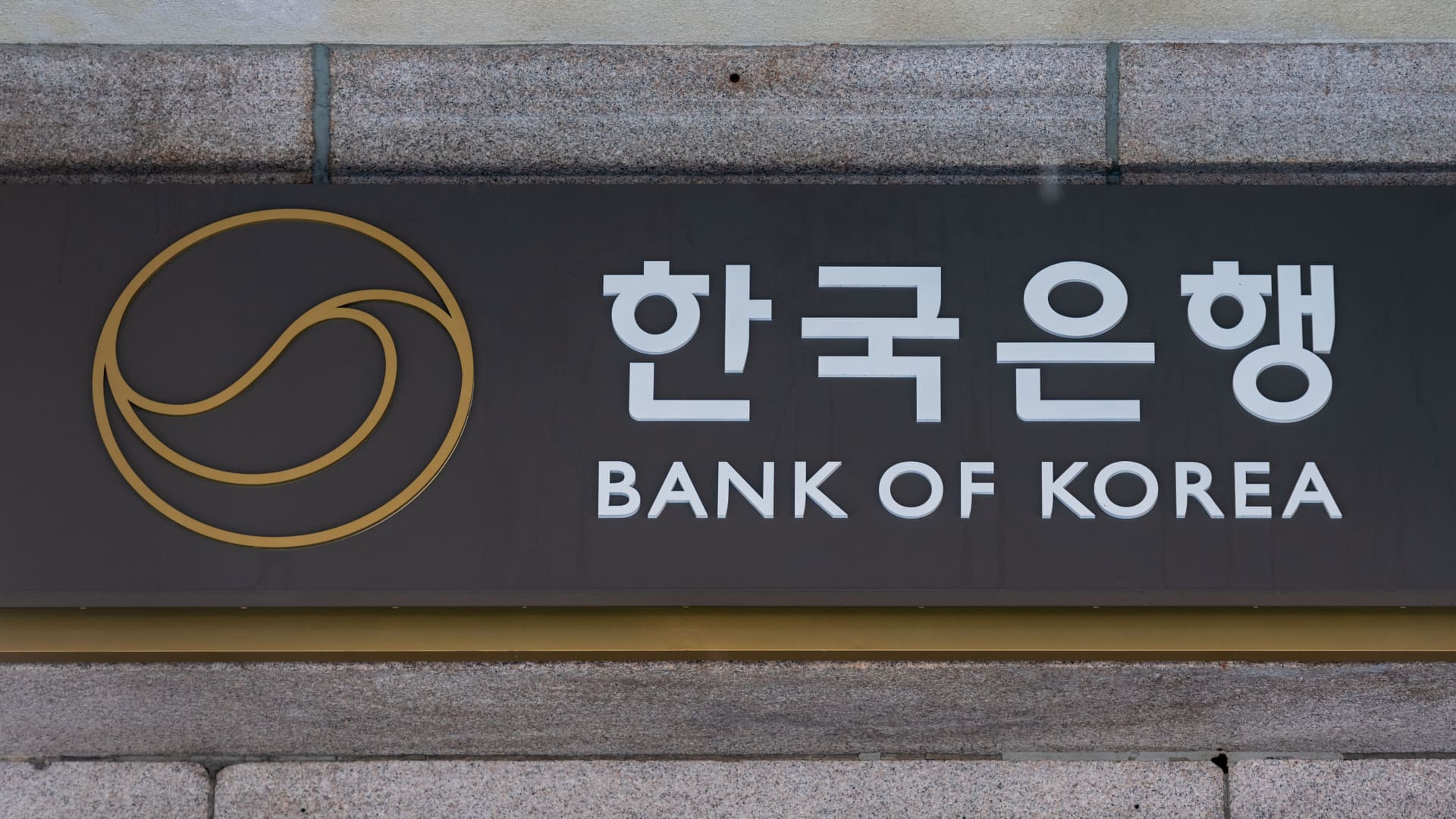

South Korea’s central bank, the Bank of Korea (BOK), decided to maintain its policy rate at 2.75% on Thursday, aligning with the forecasts from a Reuters poll of economists. This move underscores the bank’s focus on stabilizing its fluctuating currency amid a clouded economic outlook. The decision was articulated in the BOK’s monetary policy statement, which highlighted the need to evaluate shifts in both domestic and global conditions. One of the key concerns is the prevailing uncertainty, largely driven by evolving U.S. tariff policies and South Korea’s own government stimulus measures.
Earlier this year, on April 15, the South Korean government announced a substantial 12 trillion won ($8.45 billion) supplementary budget, prioritizing the pivotal semiconductor sector. The BOK emphasized the necessity of remaining vigilant regarding the impacts of heightened exchange rate volatility and the potential rise in household debt exacerbated by lenient monetary policies. Notably, U.S. President Donald Trump’s “liberation day” statements on April 3 stirred significant fluctuations in the value of the South Korean won, which seesawed dramatically against the U.S. dollar in the following days, reflecting the complex global financial interplay.
The BOK’s analysis indicates that Korea’s economic growth has fallen short of expectations. Domestic demand remains tepid, and export activities are hampered by extended political uncertainties and unfavorable trade conditions. Consequently, the GDP growth projection for 2025 is now revised to fall below the previously anticipated 1.5% as of February. Despite maintaining the current rate, the BOK expressed commitment to a “rate cut stance,” ready to adjust interest rates based on the evolving domestic and international policy landscapes.
This decision emerges amid South Korea’s efforts to manage the challenges of U.S. tariffs and an impending presidential election. Recently, Finance Minister Choi Sang-mok informed parliament of plans to negotiate delayed implementation of U.S. tariffs to mitigate uncertainty for South Korean businesses in international markets. Currently, South Korean exports face a 25% tariff on vehicles, steel, and aluminum. The nation’s automotive giants, Hyundai and Kia, rank among the top-selling brands in the U.S., and South Korea is the fourth-largest steel exporter to the U.S. Notably, a 25% reciprocal tariff imposed by President Trump is temporarily suspended for 90 days, excluding a baseline 10% tariff.
Adding to the nation’s political complexities, South Korea is set for a snap presidential election on June 3, following the April 4 removal of President Yoon Suk Yeol over his brief imposition of martial law in December. In response to these developments, the country’s Kospi stock index saw a 0.56% increase, although the won experienced a slight decline, weakening by 0.58% to trade at 1,422 against the dollar.
Through these turbulent times, the BOK and the South Korean government remain focused on navigating the layered challenges of economic stability, trade relations, and political transitions. By monitoring and adapting to external shocks and internal policy needs, South Korea aims to safeguard its financial health and sustain growth momentum in an unpredictable global landscape.
Original Source: https://www.cnbc.com/2025/04/17/bok-holds-rates-as-country-grapples-with-us-tariffs-and-election.html
Category :
Tags:
Publish Date: 2025-04-17 08:38:00