Architecting Trustworthy AI Systems for Neonatal Brain Monitoring

The quietest signals can carry the loudest consequences
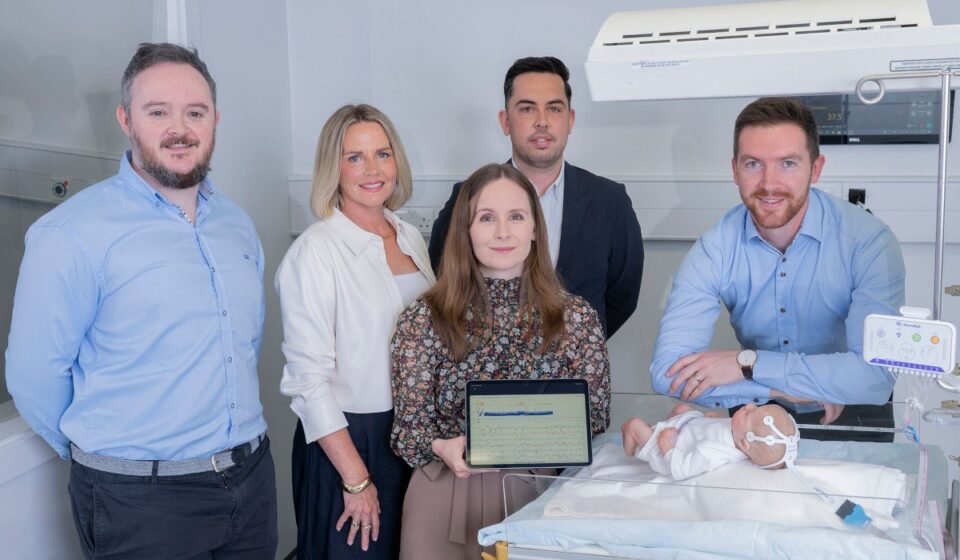
When care teams in neonatal intensive care units (NICUs) miss a non‑convulsive seizure, the downstream impact on a child’s neurodevelopment can be profound. I recently read a report about a startup building an AI-assisted neonatal brain monitor designed to detect seizures at the bedside and to scale into new markets. That single development highlights a broader technological and architectural shift worth every CTO, chief architect and health-systems planner’s attention.
A concise context
A medical‑device spin‑out has moved from academic research into an early commercial trajectory with funding and plans to seek foreign regulatory clearance. The device fuses low‑profile EEG capture with automated analytics and remote review workflows – effectively bringing continuous brain monitoring closer to routine NICU care.
What this signals for enterprise architecture and healthcare IT
-
Edge-first medical AI is now a systems problem, not just an algorithmic one.
Putting clinically actionable detection into the hands of bedside teams requires more than accurate models. It demands an architecture that reconciles constrained on‑device compute, deterministic latency for alerts, secure bi‑directional sync for remote review, and clear failover behaviour when connectivity or power are unreliable. For enterprises building or procuring such systems, the primary design decisions are: what runs on the device vs. what runs in the cloud, what guarantees of timeliness and availability will be contractually and operationally enforced, and how clinical workflows are instrumented to prevent alarm fatigue. -
Clinical validation and regulatory clarity drive technical debt.
Medical‑grade AI must survive not only validation studies but also regulatory scrutiny and post‑market surveillance. That pushes teams toward rigorous MLOps practices: versioned datasets, immutable model lineage, auditable inference logs, and automated re‑validation pipelines when models are retrained. Skipping these disciplines accelerates short‑term delivery but compounds long‑term technical and compliance debt. -
Explainability and human‑in‑the‑loop are not optional.
In high‑stakes care, clinicians need context – why an alert fired, what the confidence and failure modes are, and how the signal quality may affect the result. Architectures should bake-in explainability outputs and easy escalation paths to remote specialists. Designing for graceful human override and for traceable decision audits will be essential for clinician trust and legal defensibility. -
Data governance and privacy are fundamental design constraints.
EEG and neonatal health data are intensely sensitive. Any system architecture must ensure end‑to‑end encryption, strict role‑based access, clear data retention policies, and locality controls where regulations require. For multinational deployments, the design must accommodate differing data residency and consent regimes without fracturing the codebase.
The India connection (practical, not rhetorical)
There is a direct parallel to India’s needs. Many district hospitals and neonatal units lack continuous brain monitoring or specialist neurology access. Architectures that prioritise low‑cost, robust edge processing, intermittent‑connectivity sync, and lightweight remote review can materially improve access – but only if paired with training programs, maintenance ecosystems and regulatory pathways aligned with local health authorities. Frugal hardware choices must not shortcut validation and safety.
Practical takeaways for CTOs and healthcare founders
- Treat device + model + cloud as a single product: design contracts, SLAs and testing across all three.
- Invest early in MLOps and clinical QA to avoid crippling rework during regulatory review.
- Prioritise explainability and clinician workflows to accelerate adoption and reduce liability.
- Build data governance into the architecture to meet multi‑jurisdictional compliance and trust requirements.
- Consider service models that include training, maintenance and post‑market monitoring, not just hardware sales.
Closing thought
We are at a point where sensitive physiological monitoring can be widely distributed – but the real challenge is not miniaturising sensors or squeezing models onto chips. It is architecting trustworthy, maintainable systems that connect human expertise, regulatory rigor and resilient infrastructure. Get that right, and a small signal at the bedside can change a life.
About the Author: Sanjeev Sarma is the Founder Director and Chief Software Architect at Webx Technologies. With a core focus on Generative AI integration, Cloud-Native Scalability, and Enterprise Software Architecture, he has spent over two decades driving digital transformation across Northeast India and beyond. Beyond his corporate leadership, Sanjeev is deeply invested in shaping the future of the IT industry. He serves as an Industry Expert on the Board of Studies for Assam Don Bosco University’s School of Technology, advises state technology committees, and actively mentors emerging tech startups at STPI. He brings a unique, dual perspective of high-level enterprise execution and future-ready academic curriculum development.