Jonathan McDowell’s Heartfelt Farewell: Retiring from Harvard and Departing the U.S. for New Horizons

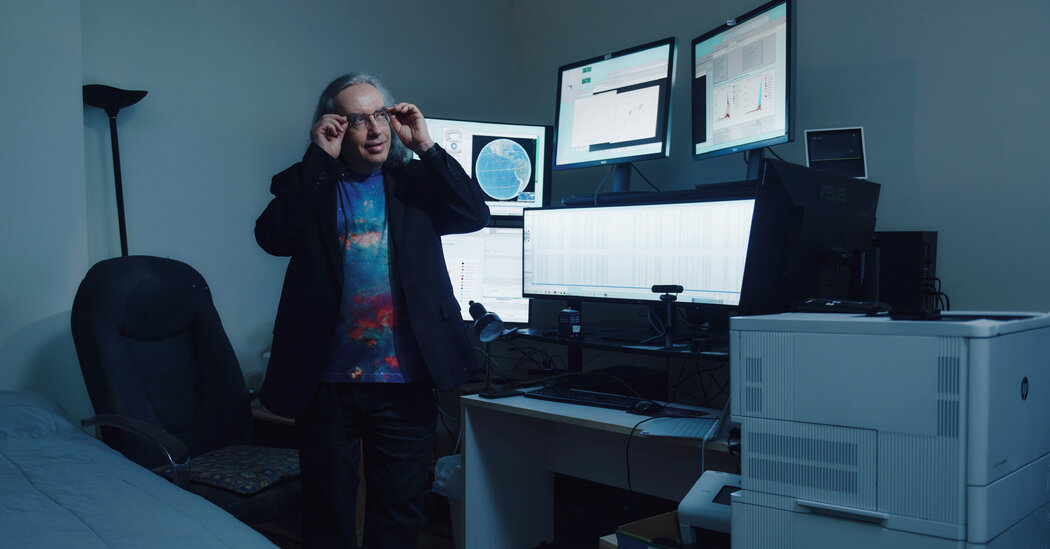
Jonathan McDowell, a celebrated figure in the spaceflight community, recently announced his retirement from his long-standing role as a specialist in X-ray astronomy at the Harvard-Smithsonian Center for Astrophysics. Known for his expertise and insightful contributions, McDowell has been a prominent voice in space exploration, both through his widely-read monthly newsletter, Jonathan’s Space Report, and frequent media appearances. After 37 years with the institution, McDowell is returning to Britain, motivated by concerns over the U.S. federal science budget and recent policy shifts.
Born with dual citizenship in the U.S. and Britain, McDowell’s fascination with space began as a child in England, inspired by the Apollo program and television shows like “Doctor Who.” This early passion grew into a distinguished career, including his leadership role with NASA’s Chandra X-ray Observatory project at Harvard-Smithsonian. Reflecting on recent years, McDowell expressed disillusionment, stating, “It just doesn’t seem like the opportunities are going to be there to be an effective scientist … in the U.S. anymore.” His move marks a new phase in his career where he intends to focus more intensively on documenting space activities.
McDowell’s journey into space reporting began defensively. With media underreporting space exploration in the late 1980s, he launched Jonathan’s Space Report on Usenet in 1989, initially as a resource for the public affairs staff inundated with questions. An international perspective set his reporting apart; he equally highlighted Russian, Chinese, and European space advancements alongside American achievements. His newsletter remains free, which McDowell believes maintains his independence and objectivity: “I am the No. 1 reader… I can only keep that reputation… if I don’t take direct money for it.”
Over the decades, McDowell has witnessed significant shifts in space exploration, from the Cold War dynamics of the 1960s to the commercialization and democratization of space technology in recent years. “The most important thing about space in 2025 is not that there are more satellites, but that there are many more players,” he observed, underscoring the increased competition and innovation in the field, which has expanded beyond traditional governmental domain to include universities, start-ups, and developing nations.
In retirement, McDowell plans to engage with the UK’s initiatives on space sustainability and continue his meticulous cataloging of space debris, particularly materials orbiting the sun that the U.S. Space Force doesn’t track. Committed to preserving the history of human activity in space for future generations, he has amassed an extensive library of documents related to space projects, hoping to eventually make it accessible for research. McDowell’s vision extends far into the future, aspiring to create a legacy of recorded knowledge that will inform and inspire humanity’s continued exploration of space.
Through McDowell’s passion and dedication, he symbolizes both the challenges and the endless possibilities intrinsic to human space exploration. His work not only chronicles the past and present but also lays a foundation for the future, ensuring that the story of our reach into the cosmos is preserved meticulously for generations yet to come.
Original Source: https://www.nytimes.com/2025/04/12/science/jonathan-mcdowell-retirement-space.html
Category : Space and Astronomy,Content Type: Personal Profile,Rocket Science and Propulsion,Satellites,Telescopes and Observatories,Newsletters,McDowell, Jonathan (1960- ),Harvard-Smithsonian Center for Astrophysics
Tags:
Publish Date: 2025-04-12 21:23:00