Unveiling the Soul of Vrishabhavathi: A Powerful Journey Through Collective Memories and Timeless Imaginations

During the first wave of COVID-19 in 2020, a surprising discovery reignited interest in Bengaluru’s Vrishabhavathi River—usually a polluted trickle. Kadambari Komandur noticed a rare image of the river appearing cleaner than usual, which sparked a conversation among friends, including Namrata Narendra, an urban researcher based in the Netherlands. Both Kadambari and Namrata have a shared history with the river, having often encountered it during their studies at the RV College of Architecture in Bengaluru. This connection inspired them to address the river’s neglected state.
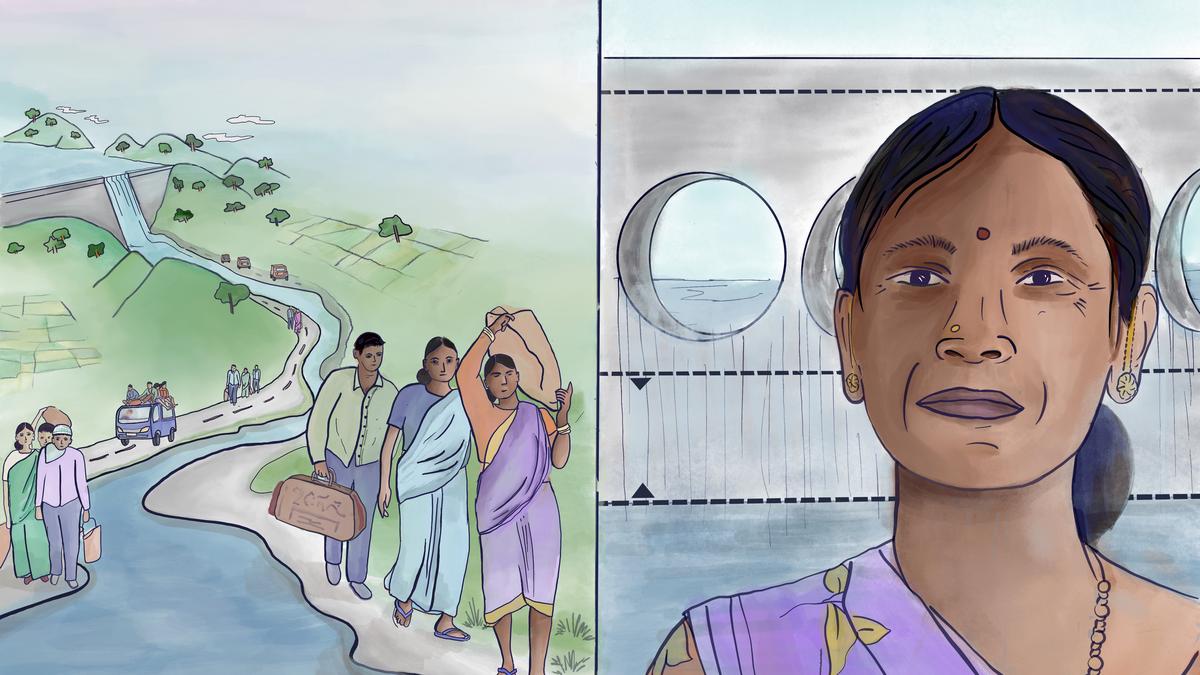
Initially, the duo envisioned creating a digital platform to connect the various stakeholders engaged with the river. However, they realized through discussions with experts like Shubha Ramachandran of Biome Environmental Trust and the team at Paani Earth that a more focused approach was needed. These interactions led to the creation of “Whose River is it Anyway?”, a graphic narrative co-authored by Kadambari, Namrata, and designer Megha Kashyap. The book seeks to communicate the challenges the river faces in a way that is accessible and engaging, overcoming the limitations of technical jargon that often shrouds environmental conversations.
Kadambari notes that while there’s substantial research on the Vrishabhavathi, it’s largely inaccessible to the general public. Thus, they decided to use graphic storytelling to illuminate the multifaceted issues around the river, which flows through important urban and rural areas before merging with the Arkavathi. Historically a vital part of social and religious life as noted in the book, the Vrishabhavathi is now largely seen as critically polluted, burdened with untreated waste from Bengaluru.
Despite its current state, the river remains crucial to the local ecosystem, supporting various forms of life and livelihoods. “Whose River is it Anyway?” emphasizes the river’s role in nurturing both human and non-human communities, highlighting locations like the Dodda Ganesha and Gali Anjaneya temples that line its path. As Kadambari explains, the project shifts focus from sterile academic analysis to the lived experiences and memories of the communities around the river.
The book also explores how changing perceptions of the river, from sacred to sullied, impact local practices. Megha illustrates this transformation by examining how annual floods, once considered divine, now bring unwanted debris. Ecologist Harini Nagendra and other collaborators underscore the threat pollution poses to biodiversity, using the endangered humpback mahseer as a poignant example of species at risk due to human actions.
By visiting key sites and engaging with local narratives, the authors delve into how the river’s decline affects both people and wildlife. “Whose River is it Anyway?” aims to give a voice to these diverse stories and foster a greater understanding, inspiring efforts to revive the Vrishabhavathi.
For more information, the team encourages interested readers to connect via email at vrishabhavatistoryproject@gmail.com. This initiative, supported by the Bengaluru Sustainability Forum, hopes to catalyze change by merging research with compelling storytelling, ensuring that the river’s voice resonates across digital platforms and beyond.
Original Source: https://www.thehindu.com/news/cities/bangalore/a-book-that-delves-into-the-collective-memories-lived-experiences-and-imaginations-of-the-people-who-live-along-the-vrishabhavathi/article69395699.ece
Category : Bengaluru
Tags:
Publish Date: 2025-04-01 09:00:00