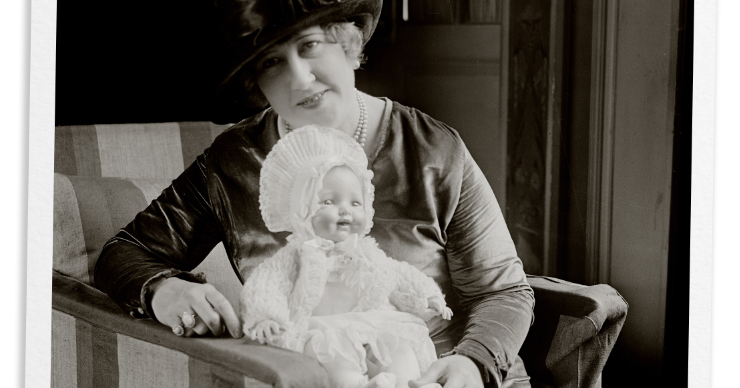

Beulah Louise Henry was an inventive force of nature whose remarkable career unfolded quietly but significantly, leaving an indelible mark on the world of innovation. Born on September 28, 1887, in Raleigh, North Carolina, Henry became a pioneering inventor in an era when women were seldom seen in such roles. Earning the nickname “Lady Edison,” she pursued a vision of making everyday life easier, eventually holding more patents than any other woman by the time of her death in the early 1970s.
Henry’s path began in her childhood, driven by an insatiable curiosity and a knack for envisioning practical solutions. At nine years old, she crafted a mechanism allowing a man to tip his hat while reading a newspaper. Although not all her early ideas succeeded commercially, she remained undeterred. Her first patent, awarded in 1912 while she was a college student, was for an innovative ice-cream maker requiring minimal ice, an invaluable feature in those times of scarcity.
Throughout her career, anything and everything captured Henry’s inventive eye: from toys and typewriters to sewing machines and kitchen gadgets. Despite lacking formal mechanical education, she surrounded herself with talented model makers and patent attorneys to bring her visions to life. Her inventive prowess was driven by what she described as an inner compulsion, admitting, “I invent because I cannot help it. New things just thrust themselves upon me.”
One of her notable creations was the “protograph,” a typewriter attachment allowing the production of multiple copies without carbon paper, enhancing the efficiency of document duplications. In addition, she revolutionized the sewing industry with her Double Chain Stitch Sewing Machine, which operated without the need for changing bobbins—a groundbreaking innovation at the time. Her parasol design with interchangeable covers gained commercial success after initial skepticism, leading her to establish the Henry Umbrella and Parasol Company. Lord & Taylor famously featured these parasols in their windows, highlighting her product’s demand and popularity.
Living and working often in hotel suites that doubled as her design studios, Henry was unorthodox in both her personal and professional life. Reporters frequently noted her vibrant personality and flair, describing her as stylish and almost theatrical, which only added to her mystique. Her professional spaces were known to have the ambiance of a boudoir more than a business site, filled with pets and a large telescope, suggesting her continuous search for inspiration beyond earthly designs.
Henry claimed a lineage tracing back to important American figures like President Benjamin Harrison and the Revolutionary War hero Patrick Henry. However, her inventive nature seemed innate, possibly influenced by synesthesia—a condition she believed linked her senses in unique ways, allowing her to picture her inventions vividly.
Despite leading a notably solitary personal life, remaining unmarried, Henry left behind a legacy through her patents and contributions to technology. She actively participated in organizations such as the American Museum of Natural History and the New York Women’s League for Animals, within which she shared her interests in science, nature, and animals.
Upon her death in February 1973, Henry had secured nearly 50 patents, with her 49th still pending, its details lost to history. Her posthumous induction into the National Inventors Hall of Fame in 2006 cemented her status as a pivotal figure whose innovations paved the way for future generations of inventors, making her truly deserving of being remembered as more than just “Lady Edison.”
Original Source: https://www.nytimes.com/2025/03/14/obituaries/beulah-henry-overlooked.html
Category : Henry, Beulah (1887-1973),Inventions and Patents,Toys,Typewriters and Typewriting,Biographical Information,Umbrellas,Dolls,New York City
Tags:
Publish Date: 2025-03-15 00:16:00