From Systems of Record to Systems of Action: The Agentic CRM Imperative

Beyond the Digital Filing Cabinet: Why Context and Protocols Will Define the Next Era of Enterprise Architecture
For over two decades, enterprise software-and Customer Relationship Management (CRM) in particular-has functioned essentially as an expensive digital filing cabinet. We built massive “systems of record” where human teams did the heavy lifting of manual data entry, and software passively waited to be queried. Today, that foundational paradigm is inverting.
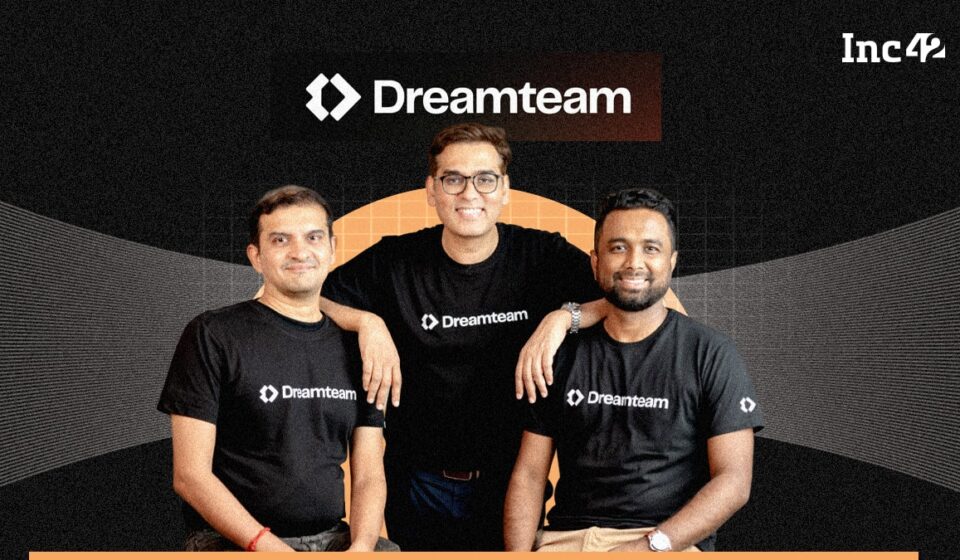
A recent $53 million Series A funding round for an emerging AI-native CRM challenger taking on entrenched global incumbents signals a broader inflection point in enterprise software. Rather than bolting conversational chatbots onto legacy databases, this new wave of platforms pairs specialized autonomous agents with a centralized “context layer” and open interoperability standards like the Model Context Protocol (MCP).
As an architect, the commercial battle between startups and legacy giants interests me far less than the underlying structural shift this represents: the transition from passive systems of record to autonomous systems of action.
The Context Layer is the True Architectural Moat
In my conversations with CTOs and engineering leaders, I often notice an over-indexing on which foundation model to deploy. From an enterprise architecture standpoint, however, Large Language Models (LLMs) are rapidly becoming interchangeable commodities. The real differentiator is state and context.
Consolidating unstructured, fragmented enterprise signals-emails, meeting transcripts, external market intelligence, and historical transactions-into a continuously updating semantic memory is an extraordinarily difficult data engineering problem. If an organization’s underlying data architecture is siloed or inconsistent, autonomous agents will simply automate mistakes at scale. Building a high-fidelity, low-latency context layer is the new core infrastructure challenge.
Decoupling Intelligence via Open Standards
Equally significant is the industry’s movement toward open standards like the Model Context Protocol (MCP). In traditional software engineering, tight coupling to a proprietary dependency is a classic recipe for long-term technical debt. In the AI era, where foundation model capabilities evolve almost weekly, hard-coding an enterprise platform to a single model vendor is fatal.
Architecting around open protocols decouples the reasoning engine from the enterprise data layer. It allows systems to connect seamlessly with external tools and swap underlying AI models without rewriting core business logic. For enterprises looking to modernize legacy stacks, this modularity is non-negotiable for long-term agility.
The Autonomy vs. Governance Tightrope
Moving from deterministic CRUD (Create, Read, Update, Delete) applications to probabilistic, agentic workflows introduces a profound architectural tension: speed versus stability.
When software moves from recording human decisions to taking autonomous actions-updating deal pipelines, flagging revenue risks, or triggering external communications-a single hallucination can corrupt data integrity or violate compliance standards. In my view, the biggest hurdle for agentic enterprise software isn’t capability; it is reliability.
Enterprise architects must design strict deterministic guardrails, human-in-the-loop checkpoints, and immutable audit trails before granting AI agents write-access to mission-critical systems. Observability and governance cannot be bolted on as afterthoughts; they must be baked into the execution layer.
A Lesson for Builders
When I mentor young tech founders and engineering students, I often remind them that disrupting entrenched software giants isn’t won by building flashier user interfaces or giving bots human names. Legacy platforms carry immense data gravity. Challenging them requires rethinking the underlying system design-solving for context quality, modular interoperability, and zero-trust governance at scale.
Strategic Takeaways for Tech Leaders:
- Fix Data Hygiene Before Deploying Agents: An autonomous workflow is only as reliable as the unified context layer feeding it.
- Architect for Model Agnosticism: Embrace open standards like MCP to prevent vendor lock-in and absorb rapid AI advancements seamlessly.
- Treat Governance as Core Infrastructure: Balance agentic autonomy with deterministic guardrails, strict permissions, and full auditability.
Ultimately, the future of enterprise software will not be defined by how fast AI can generate text, but by how reliably our architectures can turn fragmented context into governed, autonomous action.
About the Author: Sanjeev Sarma is the Founder Director and Chief Software Architect at Webx Technologies. With a core focus on Generative AI integration, Cloud-Native Scalability, and Enterprise Software Architecture, he has spent over two decades driving digital transformation across Northeast India and beyond. Beyond his corporate leadership, Sanjeev is deeply invested in shaping the future of the IT industry. He serves as an Industry Expert on the Board of Studies for Assam Don Bosco University’s School of Technology, advises state technology committees, and actively mentors emerging tech startups at STPI. He brings a unique, dual perspective of high-level enterprise execution and future-ready academic curriculum development.