Scarcity by Design: Nintendo’s Pricing Discipline as Platform Strategy

Why Great Platforms Don’t Race to the Bottom: Lessons in Ecosystem Architecture
In almost every software category today, price erosion is treated as an inevitability. Launch a product, watch competitors clone the features within months, and then spend the next three years fighting a war of attrition through seasonal discounts and promotional markdowns. Yet, every now and then, a legacy ecosystem reminds us that commoditization is not a law of physics-it is an architectural choice.
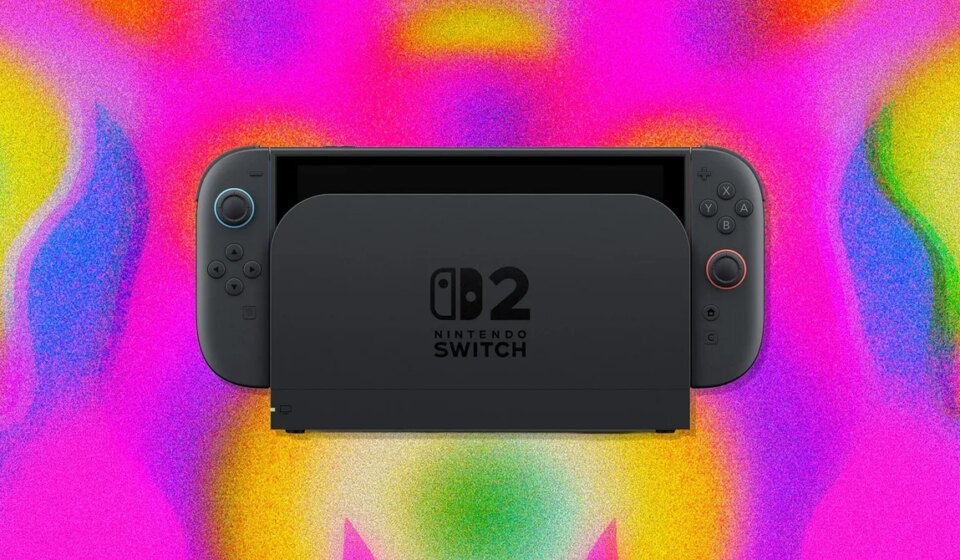
A recent holiday retail roundup caught my attention-not because of the consumer hardware deals themselves, but because of the stark contrast it highlighted in pricing discipline. While third-party digital titles routinely plummet in price shortly after launch, major proprietary platforms rarely discount their flagship intellectual property. Instead, they use selective hardware-plus-cloud-subscription bundles and massive, real-time multiplayer experiences as strategic gateways into a tightly controlled ecosystem.
The Architecture of Pricing Power
As an enterprise architect, I look past the retail tags and ask a fundamental engineering question: What allows a platform to resist commoditization?
The answer rarely lies in marketing alone; it lies in full-stack orchestration. In enterprise SaaS and cloud software, I frequently see organizations trapped in discount cycles because their underlying architecture is loosely coupled and easily replaceable. When your application is merely a thin UI layer over generic APIs or off-the-shelf foundation models, switching costs approach zero.
By contrast, when core workflows, proprietary data models, and execution environments are deeply integrated, the platform commands natural pricing power. In the era of Generative AI integration, this lesson is more urgent than ever. Enterprises that simply wrap third-party LLMs without building proprietary retrieval pipelines, domain-specific guardrails, and deeply embedded workflow logic will find themselves forced to compete on price. True value lives in the orchestration layer.
From Transactional Licenses to Cloud-Native Ecosystems
Another subtle signal in modern platform bundling is the quiet marriage of core software with recurring cloud connectivity. When a platform pairs a standalone product with a multi-month online service tier, it isn’t merely chasing subscription revenue-it is subsidizing the cloud-native infrastructure required to keep users engaged.
Consider the engineering reality behind scaling synchronous, open-world multiplayer environments to dozens of concurrent participants without perceptible lag. Achieving that level of responsiveness demands serious investment in distributed state management, edge routing, and fault-tolerant microservices. In enterprise software, we face the exact same trade-off between upfront simplicity and cloud-native scalability. Legacy monolithic systems are cheap to license once, but they collapse under modern real-time demands. Transitioning to event-driven, resilient cloud architectures requires continuous operational overhead-which is precisely why sustainable software ecosystems pair core capabilities with ongoing service layers rather than one-off transactions.
A Playbook for Young Founders and Builders
In my conversations mentoring emerging tech founders and engineering students, I often notice a premature obsession with pricing strategies and customer acquisition discounts. My advice is consistent: stop trying to out-discount the market and start engineering higher switching costs through genuine utility.
Whether you are building an enterprise SaaS platform or an AI-driven workflow tool, focus on three foundational pillars:
- Own the Orchestration, Not Just the Interface: Build deep integration between your domain logic and data layers so your product cannot be swapped out overnight.
- Design for Backward Compatibility: Just as successful hardware platforms preserve access to legacy libraries while introducing next-generation capabilities, enterprise architects must modernize systems without alienating existing user workflows.
- Tie Recurring Value to Real Infrastructure: Only introduce subscription models when backed by continuous cloud performance, security updates, and evolving intelligence-never as an artificial tollbooth.
Products built on fleeting hype need constant markdowns to survive. Platforms built on resilient architecture, disciplined ecosystem design, and undeniable user value rarely go on sale-because they don’t have to.
About the Author: Sanjeev Sarma is the Founder Director and Chief Software Architect at Webx Technologies. With a core focus on Generative AI integration, Cloud-Native Scalability, and Enterprise Software Architecture, he has spent over two decades driving digital transformation across Northeast India and beyond. Beyond his corporate leadership, Sanjeev is deeply invested in shaping the future of the IT industry. He serves as an Industry Expert on the Board of Studies for Assam Don Bosco University’s School of Technology, advises state technology committees, and actively mentors emerging tech startups at STPI. He brings a unique, dual perspective of high-level enterprise execution and future-ready academic curriculum development.