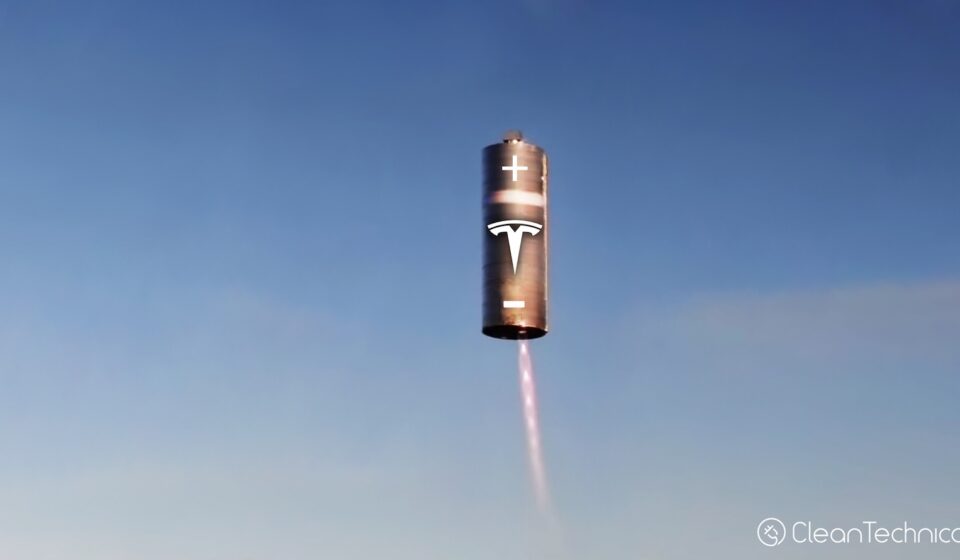
The Tesla-SpaceX Merger: Consolidation, Sovereign Risk, and National Security

When One Company Holds Everything: The Architecture of Concentrated Risk
Every architect eventually learns that the cleanest diagram is not always the safest system. Consolidation looks elegant on a whiteboard, but it often hides a single point of failure.
That lesson came to mind as I read about the reported Tesla–SpaceX merger talks. According to the Financial Times and Reuters, each company has appointed independent directors to explore a union: three from Tesla’s board and two from SpaceX’s. Elon Musk has called a combined AI, robotics, EV and aerospace entity “a good idea.” Critics have raised two concerns. Tesla’s heavy dependence on China could become leverage over a defense-critical supplier, and a merger would give Musk even more unchecked control.
I won’t speculate on the politics or the personalities. I want to look at the structural question, because any enterprise leader can learn from it.
Vertical Integration Is a Systems Design Decision
The strategic logic is easy to see. Autonomous vehicles, humanoid robotics, satellite connectivity, and large-scale AI training share a stack: compute, energy, sensors, manufacturing, and data. Owning all the layers promises tight feedback loops, shared infrastructure, and faster iteration. Anyone who has built a platform knows the appeal of removing integration friction.
But tight coupling has a cost. In distributed systems, we isolate failure domains deliberately. We use bulkheads so that a fault in one service does not cascade through the others. A corporate merger does the opposite. It merges the failure domains of supply chain, regulation, geopolitics, and reputation. A shock in one business, such as a tariff or a trade restriction, can then reach another business that was previously insulated from it.
Dependency Is a Security Posture
The most interesting issue in this story is dependency. One half of the proposed entity relies on a single foreign market for both sales and production. The other half supplies sensitive government and defense capabilities. Whatever one thinks of the merger, this is a textbook case of transitive trust: your risk profile is only as strong as your most exposed dependency.
In security architecture, we call this the blast radius. Zero Trust thinking asks us to assume that any component can be compromised or coerced, and to limit what that component can reach. Applied at corporate scale, this means asking what happens when a commercial dependency becomes a pressure point, and whether the architecture, legal and technical, can ring-fence the sensitive parts.
Governance Is Architecture Too
The other thread is governance. Special committees of independent directors are a control mechanism, much like code review or change-approval boards. They only work if they are truly independent and have real authority. A review process that approves everything is a rubber stamp, not a safeguard.
I have seen the same pattern in enterprise software. The strongest systems separate the power to build from the power to approve. When one actor controls both, you have not removed risk. You have only removed visibility into it.
The Lesson for Builders and Founders
I’ll skip a regional angle here, because the lesson is universal, and it matters most for young founders and students. When you scale, you will be tempted to consolidate: one vendor, one cloud, one key customer, one market. It feels efficient, but efficiency and resilience often pull in opposite directions.
Key Takeaways
- Map your dependencies honestly. Include suppliers, markets, and regulators, not just software libraries.
- Design for isolation. Integration should be a conscious choice, not a default. Keep sensitive capabilities separable.
- Make governance real. Oversight needs independence, authority, and transparency to count as a control.
- Treat concentration as technical debt. It pays off in speed today and charges interest when conditions change.
- Plan for coercion scenarios. Ask what happens if your largest dependency changes its terms overnight.
Closing Thought
Scale gives a company power, but it also magnifies every weakness it carries. The best architects design with both facts in mind.
About the Author: Sanjeev Sarma is the Founder Director and Chief Software Architect at Webx Technologies. With a core focus on Generative AI integration, Cloud-Native Scalability, and Enterprise Software Architecture, he has spent over two decades driving digital transformation across Northeast India and beyond. Beyond his corporate leadership, Sanjeev is deeply invested in shaping the future of the IT industry. He serves as an Industry Expert on the Board of Studies for Assam Don Bosco University’s School of Technology, advises state technology committees, and actively mentors emerging tech startups at STPI. He brings a unique, dual perspective of high-level enterprise execution and future-ready academic curriculum development.