The AI Buildout’s Hidden Infrastructure Bill: Power, Permits, and Public Trust

The AI Architecture Diagram Is Missing a Power Line
We talk about AI capacity as if it were measured only in GPUs. But a cluster that can be delivered in six months and powered in three years is a three-year project. The architecture diagram should say so.
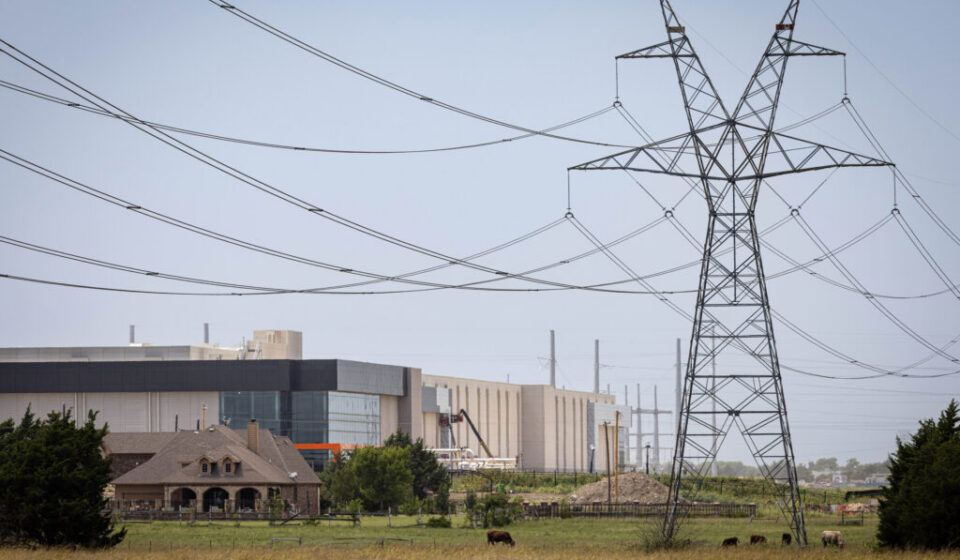
Reporting by Marianne Lavelle in Inside Climate News highlights a tension in the U.S. permitting debate: a proposed bipartisan bill would make data centers bear more of the cost of grid upgrades while accelerating approvals for infrastructure that could serve both renewables and natural gas. Critics argue that protecting electricity customers still leaves a blind spot: data centers building their own gas-fired power plants.
A faster permit is not an energy strategy
I read this as an architecture problem as much as a policy problem. When a grid connection becomes the bottleneck, building on-site generation can make sense for an individual operator. But if enough operators make the same decision, they can end up competing for the same gas supply and pipeline capacity. What looks like independence at the facility level becomes a shared dependency at the system level.
There is a familiar pattern here for software architects. A workaround that gets a system into production becomes permanent because everything built afterward assumes it will be there. With a power plant, the commitment is harder to unwind. A decision made to meet an AI launch date can shape fuel exposure, operating costs and emissions long after the original hardware has been replaced.
That is why I would ask for two separate business cases: one for the fastest path to launch, and another for the infrastructure the enterprise would willingly operate for the next decade. If the answers differ, the cost of moving from one to the other belongs in the first business case.
Design for the workload, not the peak forecast
Not every AI task needs the same model, location or response time. An interactive assistant may need low-latency inference close to users. A document classification backlog can often wait. Training or evaluation jobs may be movable across regions, provided data residency, security and transfer costs allow it. Treating all of those workloads as equally urgent turns a software design choice into a power procurement commitment.
Before approving more capacity, I would ask architecture teams to bring three things to the table:
- A workload map: Separate latency-sensitive services from jobs that can be queued, shifted or run on smaller models. Measure quality and energy per completed task, not just throughput.
- A power risk assessment: Stress-test the plan against delayed grid connections, higher fuel prices and slower-than-expected AI adoption. Include on-site generation in emissions and cost reporting rather than treating it as outside the boundary.
- A clear allocation of costs: Identify who pays for dedicated upgrades and who bears the cost if projected demand never materialises. A project can look efficient on an enterprise balance sheet while leaving a utility or its customers with underused infrastructure.
What this means closer to home
For enterprises and public institutions in India, the lesson is not that every region needs a hyperscale AI facility. In Northeast India, a citizen-facing service may gain more from reliable last-mile connectivity, lightweight local processing and a fallback when the network drops than from access to a larger model. Keep sensitive data where it must reside, use shared compute where it makes sense, and design the service to remain useful when connectivity is imperfect. That is frugal architecture in practice: spending on the constraint that actually determines whether the service works.
The real measure of AI readiness is not how much compute we can install. It is whether we can deliver useful services without locking ourselves-or the communities that host the infrastructure-into costs we never put on the diagram.
About the Author: Sanjeev Sarma is the Founder Director and Chief Software Architect at Webx Technologies. With a core focus on Generative AI integration, Cloud-Native Scalability, and Enterprise Software Architecture, he has spent over two decades driving digital transformation across Northeast India and beyond. Beyond his corporate leadership, Sanjeev is deeply invested in shaping the future of the IT industry. He serves as an Industry Expert on the Board of Studies for Assam Don Bosco University’s School of Technology, advises state technology committees, and actively mentors emerging tech startups at STPI. He brings a unique, dual perspective of high-level enterprise execution and future-ready academic curriculum development.