When Employee Loyalty Tests Board Governance

In enterprise software architecture, we spend decades obsessing over the elimination of a Single Point of Failure (SPOF). We build redundant cloud regions, deploy active-active database clusters, and design self-healing microservices so that if one node collapses, the system survives. Yet, when it comes to corporate governance and the global AI supply chain, the tech industry routinely celebrates building multi-trillion-dollar ecosystems around single, fallible human nodes.
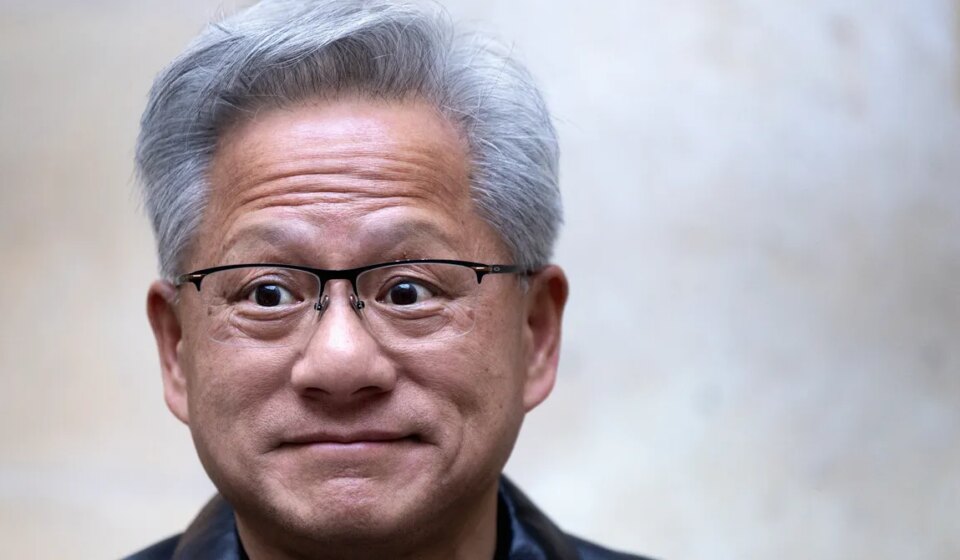
Recent reports emerging from Nvidia highlight a profound organizational crisis following longtime CEO Jensen Huang’s abrupt resignation amid personal misconduct allegations, national security inquiries, and a staggering $1 trillion wipeout in market value. Remarkably, despite investigations by US lawmakers and potential new chip export controls, internal correspondence reveals hundreds of employees actively lobbying the board to reinstate him.
When Visionary Leadership Becomes Architectural Debt
Looking past the headlines, this turmoil exposes a massive blind spot in how we evaluate enterprise resilience. When a company transitions from a scrappy Silicon Valley startup to the literal bedrock of global Generative AI infrastructure, its leadership model must evolve from founder-centric to institution-centric.
The internal pushback from engineers demanding transparency is understandable, yet the willingness of staffers to overlook severe governance breaches-and potential national security compromises-reveals a dangerous “cult of the founder.” In high-stakes technology sectors, human governance is a cybersecurity vector. We talk endlessly about Zero Trust architectures at the network and application layers, yet Zero Trust must extend to the boardroom. When critical intellectual property and sovereign compute capabilities are at stake, personal indiscretions involving potential intelligence assets are not merely HR matters; they are systemic vulnerabilities.
For global CTOs and Enterprise Architects, the immediate shockwave isn’t about who sits in Nvidia’s corner office-it is about the fragility of our downstream AI roadmaps. When leadership turbulence at a single hardware vendor triggers federal investigations and threatens tighter geopolitical export controls, every enterprise tightly coupled to that vendor’s proprietary stack inherits that volatility. Over-indexing on a single silicon ecosystem without hardware-agnostic abstraction layers is a massive strategic risk.
Building Institutions, Not Monuments
In my conversations with young startup founders at STPI and engineering students across our universities, we frequently discuss the romanticism of the “irreplaceable founder.” Early on, a founder’s sheer willpower is often the only thing keeping a venture alive. However, true scale requires deliberate obsolescence.
I often remind emerging entrepreneurs that corporate governance is not bureaucratic red tape designed to slow down innovation; it is the structural scaffolding that protects the mission from human fallibility. If an organization’s culture equates accountability with betrayal, the leadership has failed to institutionalize its values. Great architects don’t build systems that require their constant, heroic intervention to run-they design resilient frameworks that thrive independently.
Strategic Imperatives for Tech Leaders
As this situation unfolds, technology executives and founders should recalibrate their approach to systemic risk:
- Decouple Your AI Stack: Avoid deep, irreversible lock-in to a single hardware or proprietary software ecosystem (like CUDA) where geopolitical shifts or vendor crises can stall your R&D. Invest in open standards, multi-silicon compatibility, and portable model architectures.
- Extend Zero Trust to Governance: Insider risk does not stop at middle management. Organizations building foundational or dual-use technologies must enforce rigorous compliance and security guardrails at the highest executive levels, with zero exceptions for pedigree.
- Audit Your “Key-Person” Dependencies: Whether you are running a 20-person SaaS startup or a global enterprise, ask yourself what happens if your star architect or visionary CEO vanishes tomorrow. Institutionalize knowledge, decentralize decision-making, and prioritize cultural resilience over charisma.
Ultimately, the true measure of a visionary leader is not how desperately an organization clings to them in a crisis, but how seamlessly the architecture they built endures without them.
About the Author: Sanjeev Sarma is the Founder Director and Chief Software Architect at Webx Technologies. With a core focus on Generative AI integration, Cloud-Native Scalability, and Enterprise Software Architecture, he has spent over two decades driving digital transformation across Northeast India and beyond. Beyond his corporate leadership, Sanjeev is deeply invested in shaping the future of the IT industry. He serves as an Industry Expert on the Board of Studies for Assam Don Bosco University’s School of Technology, advises state technology committees, and actively mentors emerging tech startups at STPI. He brings a unique, dual perspective of high-level enterprise execution and future-ready academic curriculum development.