The Liability Firewall: Why Wildfire Litigation Threatens Prescribed Fire

The Paradox of Proactive Risk: What Wildfire Litigation Teaches Us About System Resilience
In enterprise architecture and public governance, we suffer from a quiet, expensive bias: we heavily penalize the operator who triggers a minor failure while trying to prevent a disaster, yet we rarely penalize the passive neglect that guarantees a catastrophe later. It is the classic “if you touch it, you own the blame” trap-one that turns proactive engineers and policymakers into risk-averse caretakers of decaying systems.
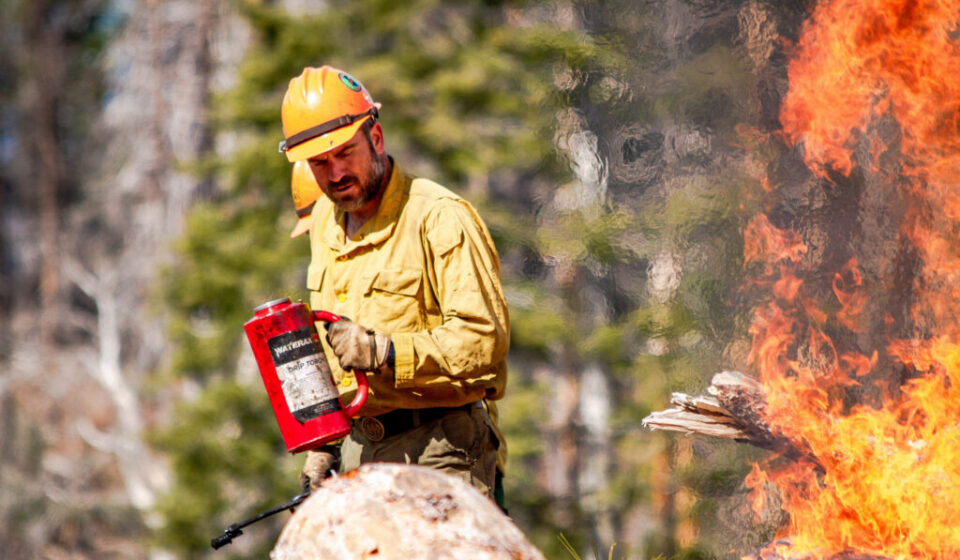
I recently read a compelling Inside Climate News investigation into the fallout of the 2022 Hermit’s Peak/Calf Canyon Fire in New Mexico-a government-led “prescribed burn” meant to clear hazardous brush that escaped containment and became the largest wildfire in the state’s history. Although data shows that over 99.9% of prescribed burns stay contained and sharply reduce megafire severity, the ensuing wave of multibillion-dollar lawsuits and soaring insurance premiums is creating a chilling effect. Fearing severe legal and financial liability, many practitioners are pulling back from strategic preventive burns near communities.
Observability Gaps and the Chaos Engineering Parallel
Looking at this through the lens of an Enterprise Architect, two operational lessons immediately stand out.
First, look at why that burn escaped: automated weather stations were unavailable, teams relied on broad spot forecasts rather than localized ground conditions, and incompatible radio frequencies severed communications. In systems engineering, we don’t just call that bad luck-we call it an observability and integration failure. You cannot execute high-stakes interventions in volatile environments using stale, macro-level data and siloed communication channels.
Second, prescribed burning is nature’s equivalent of Chaos Engineering and proactive technical debt retirement. When enterprises refuse to run controlled failovers, patch brittle legacy monoliths, or modernize core infrastructure because “a 0.1% mishap might violate an SLA,” they aren’t eliminating risk. They are silently compounding it.
A system left untouched under accumulating architectural fuel will eventually experience an unrecoverable “megafire.” Yet, when liability frameworks punish every visible spark, leaders naturally retreat into low-complexity “pile burns”-safe, cosmetic patches-instead of tackling the strategic modernization required to protect the enterprise perimeter.
Designing Governance for Resilience, Not Paralysis
What is encouraging in the report is how regions like California and Oregon are recalibrating the system: introducing certified practitioner programs, state-backed liability claim funds, and shifting legal benchmarks from simple to gross negligence when strict protocols are followed. They are pairing institutional “safe harbors” with better verification tools, such as thermal imaging drones that detect lingering embers.
This balance between telemetry and governance has direct relevance for India’s digital and climate-resilience journey-particularly in fragile, complex geographies like Northeast India. Whether we are deploying IoT-driven early warning systems for flash floods and forest fires across hilly terrain, or modernizing legacy state portals atop India’s Digital Public Infrastructure (DPI), our teams face similar asymmetric pressures.
If we want startups, researchers, and administrators to build genuinely resilient public systems, we cannot rely solely on compliance checklists. We need hyper-local, real-time edge telemetry combined with policy frameworks that distinguish reckless negligence from disciplined, preventive action.
Strategic Imperatives for Tech and Policy Leaders
- Invest in Hyper-Local Observability: Macro averages conceal edge failures. Resilient architectures-ecological or digital-demand real-time, localized telemetry rather than delayed, aggregated forecasts.
- Create Safe Harbors for Proactive Maintenance: Governance models and SLAs must protect teams that follow rigorous, certified protocols to retire systemic risk before it compounds.
- Automate Post-Action Verification: Just as thermal imaging helps forestry teams confirm no embers remain, enterprises must embed automated verification and continuous monitoring into every critical deployment.
True resilience is never achieved by banning fire altogether; it is built by mastering the telemetry, governance, and institutional courage needed to manage small flames before the whole forest burns down.
About the Author: Sanjeev Sarma is the Founder Director and Chief Software Architect at Webx Technologies. With a core focus on Generative AI integration, Cloud-Native Scalability, and Enterprise Software Architecture, he has spent over two decades driving digital transformation across Northeast India and beyond. Beyond his corporate leadership, Sanjeev is deeply invested in shaping the future of the IT industry. He serves as an Industry Expert on the Board of Studies for Assam Don Bosco University’s School of Technology, advises state technology committees, and actively mentors emerging tech startups at STPI. He brings a unique, dual perspective of high-level enterprise execution and future-ready academic curriculum development.