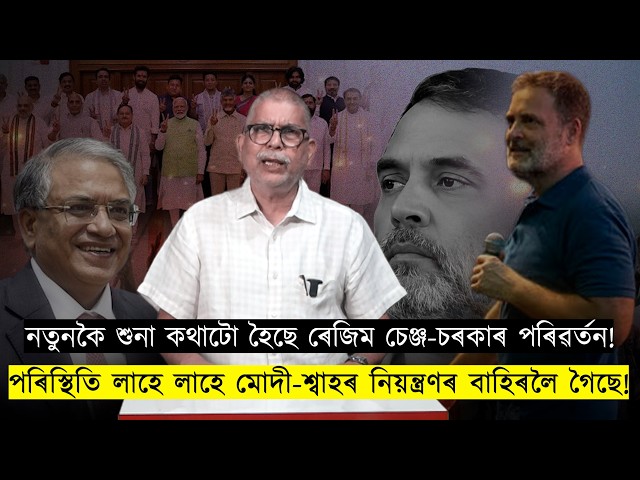

It began in the aftermath of the 2024 general elections. The BJP had stalled at 240 seats, the Congress hovering around the hundred mark. With the backing of Nitish Kumar and Chandrababu Naidu, the party stitched together a government. Yet there was no exuberance in the BJP as it took office; it was the Congress and the other anti-BJP parties-consigned to the opposition benches despite their own failure to form a government-who exulted, as though they, not the winners, were set to govern.
At exactly that moment I spoke of the situation with a friend in Delhi well versed in politics. “No, no,” he cautioned. “The opposition must not cobble together a government in haste. Even if it did, the BJP would devise a stratagem to bring it down within days. Far better for the opposition if friction breaks out between the BJP and its allies and the government collapses of its own accord; only then, and in a more organised form, could they attempt government formation.” The advice was given-and forgotten.
What followed was an altogether new political landscape. Despite running a minority government, Modi and the BJP grew more aggressive in their third term than ever before, and did three things: vote rigging through the Election Commission, the details of which surface day after day; deploying the Enforcement Directorate (ED) and the Central Bureau of Investigation (CBI) with cunning to divide and weaken the opposition as far as possible, co-opting sections of it-an exercise still under way; and spending public money on welfare schemes to court voters while winning state elections one after another.
The Congress and the opposition, meanwhile, lingered over the taste of their 2024 success, little imagining how the ground was slipping from under their feet. The public is displeased with the government, yet it is the BJP or its alliance, the NDA, that wins the elections.
How did it come to this? Everyone remains caught in the fog of half-knowledge, one issue arriving on the heels of another. The BJP has worked through various manoeuvres to shore up its government’s foundations. Rahul Gandhi has tried this and that, abandoning reliance on his own party to wade among the people and grind it out on the ground. Then came the leak of the NEET question paper, an issue Rahul carried forcefully to the public-just as Chief Justice Surya Kant’s ill-considered remark landed. What followed is history: Dharmendra Pradhan’s resignation. Matters settled somewhat after that, until Ritika Chopra’s report in The Indian Express appeared. The events since suggest that affairs are slipping, little by little, beyond the control of Modi and Shah. Chirag Paswan is unhappy; Y.S. Jagan Mohan Reddy, too, has said a thing or two. Rahul Gandhi, meanwhile, is raising the stakes, and the phrase now heard afresh is “regime change.” What lies ahead, no one can say-and I suddenly found myself recalling what my Delhi friend had said back in 2024.
Original Source: https://assam.nenow.in/india-modi-government-change-debate-grows-amid-reports-of-nda-tensions-neet-controversy-and-questions-over-the-bjp-led-governments-stability/
Category: Popular Stories,প্ৰাসংগিক প্ৰশ্ন,শীর্ষ সংবাদ
Tags:
Publish Date: 2026-10-22 16:13:00