Beneath the Burn: Permafrost Carbon and the Limits of Ecological Recovery

When Recovery Masks Collapse: What Permafrost Taught Me About Enterprise Resilience
We obsess over the green shoots after a crisis. A wildfire scorches a forest, but within a decade, saplings emerge and we declare victory. In the enterprise, we do the same: after a painful cloud migration or a major system outage, we see restored SLAs and normal latency and call it a success. But what if the real damage is happening below the surface, invisible to our dashboards? A stark case study from the Arctic suggests we need to rethink our definition of recovery.
Researchers studying the catastrophic 2007 Anaktuvuk River tundra fire initially found that subsequent plant growth “more than compensated” for the carbon released. Yet that apparent recovery was a mirage. As ice wedges thawed and the landscape sank, that thawed, decaying organic matter began releasing CO₂ and methane-and it’s still doing so nearly two decades later. The surface vegetation was recovering, but the permafrost below was collapsing. This is not an environmental story alone; it’s a parable for how we build and operate technology systems.
As a chief software architect, I see the permafrost in every organization I work with-the legacy APIs, the undocumented dependencies, the data silos that nobody owns. A disruptive event like a “digital transformation” is our wildfire. We measure the immediate gains: faster features, lower infrastructure costs, a shiny new UI. But what we often ignore are the hidden structural stressors in the soil underneath. The short-term uptake in “growth” (our KPIs) can be swamped by the long-term release of “carbon” (our technical debt, security vulnerabilities, and process entropy) if we don’t measure the whole system continuously.
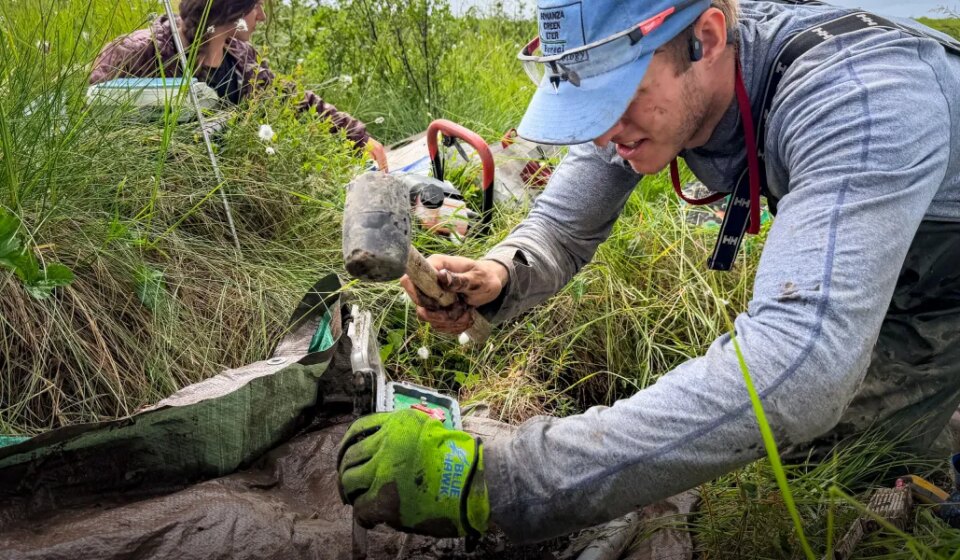
The research team at Northern Arizona University uses Eddy covariance flux towers to measure greenhouse gas exchange on a continuous basis. They don’t rely on a single seasonal snapshot. They also shipped physical soil cores back to the lab to understand what was happening below the surface. This is exactly the discipline enterprises need. We must deploy the equivalent of flux towers across our architecture-real-time observability that tracks not just application uptime, but institutional health: defect density, developer cognitive load, customer trust decay, and the latency of decision-making. And we must deliberately perform “core sampling”: chaos engineering, architecture reviews, and stress tests that expose where the ice wedges are weak.
Too often we design for speed and recovery, not for resilience. We treat outages as isolated events rather than symptoms of a strained substrate. In India, especially in our Northeast region, we see the same pattern in government systems and MSMEs-we celebrate the launch of a portal but ignore the crumbling data foundation underneath. The cost of that neglect is a “swamping effect”: a single latent failure that negates all the incremental optimizations we bragged about in the boardroom.
So what does this mean for the CTOs, founders, and public-sector technologists I mentor? Three takeaways:
- Don’t confuse short-term regrowth with long-term health. Establish multi-year telemetry that measures the entire system, not just the visible layer.
- Invest in deliberate destabilization. Run controlled “fires” to see what actually collapses-then reinforce those fragile dependencies before they disappear on their own.
- Budget for the hidden carbon. The biggest risks are often the ones not on your roadmap. Allocate engineering time and capital to measure and remediate them, or they will one day dictate your timeline.
The permafrost holds more carbon than all the world’s forests combined. Your legacy codebase holds more switchable risk than your newest feature holds user delight. We cannot afford to admire the saplings while the ground beneath them melts. Build your measurement culture now, or the thaw will decide the architecture for you.
About the Author: Sanjeev Sarma is the Founder Director and Chief Software Architect at Webx Technologies. With a core focus on Generative AI integration, Cloud-Native Scalability, and Enterprise Software Architecture, he has spent over two decades driving digital transformation across Northeast India and beyond. Beyond his corporate leadership, Sanjeev is deeply invested in shaping the future of the IT industry. He serves as an Industry Expert on the Board of Studies for Assam Don Bosco University’s School of Technology, advises state technology committees, and actively mentors emerging tech startups at STPI. He brings a unique, dual perspective of high-level enterprise execution and future-ready academic curriculum development.