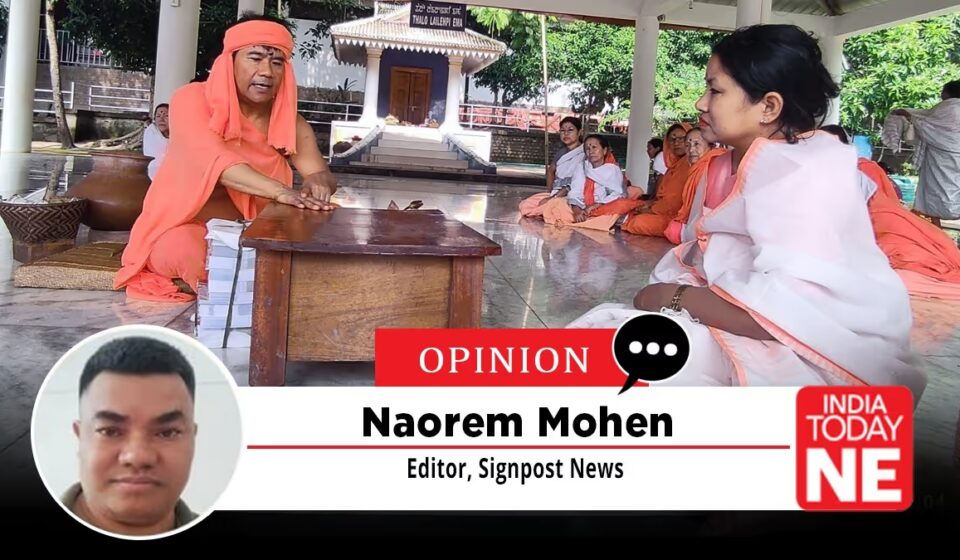

Divine Panthou’s latest message begins not with religious doctrine, but with memories of people who have died. Drawing on personal experiences of loss, the spiritual teacher says people remember the departed because of love and human connection, not simply because custom demands rituals after death. In his teaching, physical death ends bodily life but does not erase the soul, meaning that respect for the dead can continue as an expression of gratitude for a life once shared.
Divine Panthou says he has continued to honour departed souls throughout his religious journey, including by offering flowers and maintaining their memories. He believes remembrance should not end at the boundary between life and death. A person’s dignity, he says, does not disappear with the body, while love allows relationships to endure through the memories held by those left behind.
The reflection carries particular weight in Manipur, which has endured more than three years of death, displacement, separation and grief. Families across communities have lost relatives who never returned home. Behind figures often presented as statistics are individuals remembered by their families: a mother recalls a voice, a father remembers a face, a child recalls a touch, and a friend remembers conversations that can never take place again.
Panthou’s message extends beyond religious boundaries. Respecting those who have died does not require forgetting history, abandoning the pursuit of justice or denying differences within society. It instead calls for recognising the shared humanity of every victim, regardless of ethnicity, community, faith or political affiliation.
His words also carry a lesson for the living. People leave behind more than possessions, photographs or names; they leave behind the consequences of how they treated others. Hatred and cruelty survive as painful memories, while compassion, service and the courage to defend another person can become a lasting legacy.
Manipur’s traditions often connect the living with the departed and ancestors, presenting remembrance as part of a continuing human journey. In that view, each generation inherits not only families, history and land but also responsibilities. Those who are alive are temporary custodians of a world that existed before them and will continue after them.
For a state burdened by years of mourning, the most urgent lesson may be to recognise the dignity of every person while they are still alive. If the departed deserve grief and respect beyond the divisions created by conflict, the living should extend that same humanity to one another before loss makes them memories.
Original Source: https://www.indiatodayne.in/opinion/story/why-we-must-remember-the-dead-divine-panthous-message-of-love-beyond-death-1458689-2026-10-04?utm_source=rssfeed
Category:
Tags:
Publish Date: 2026-10-04 17:08:00