Capital Is Only the Start: Building Andhra Pradesh’s Deeptech Ecosystem

Deeptech Needs an Ecosystem Architecture, Not Just a Bigger Cheque
India’s deeptech challenge is too often framed as a funding problem. In my view, it is an ecosystem architecture problem: connecting discovery, patient capital, engineering, manufacturing, regulation and market access without forcing founders to compromise on technical rigor.
A Proposal with a Subtle but Important Shift
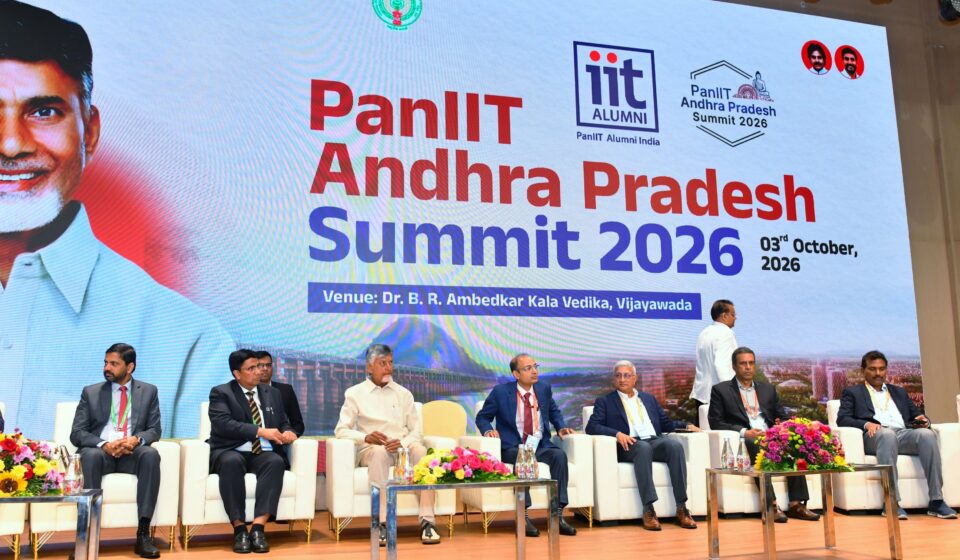
PanIIT Alumni India and the Andhra Pradesh government have proposed a ₹500-crore Amaravati Venture Fund, targeting a first close by July 1, 2027 and at least 25 Andhra Pradesh-based deeptech ventures by 2030. Its distinctive feature is an expectation that at least half of the companies funded would locate principal R&D or manufacturing operations in Andhra Pradesh, alongside a proposed Amaravati Council, technology-transfer pipeline, 100-member mentor network and the broader framework’s target of incubating 50 startups.
Capital Must Follow the Critical Path
A deeptech company is not a software startup with a longer runway. Its critical path may include validation, certification, tooling, production yields, customer qualification and regulatory approvals. Short-cycle funding can encourage premature revenue or technically attractive products that are not commercially viable.
The fund’s opportunity is to finance evidence, repetition and scale. I would favour a layered capital architecture: validation grants or fellowships, equity for productisation, and growth capital for manufacturing and market entry. Follow-on capital should reward technical progress, not force founders to manufacture a new narrative at every reporting cycle.
Beyond a Registered Address
The 50% local R&D/manufacturing expectation could be the proposal’s strongest idea. It challenges a model in which innovation is discussed in one state while high-value engineering, intellectual property and supplier relationships sit elsewhere.
But localisation must mean capability, not compliance. Core design authority, process engineering, quality systems, supplier networks and strategic jobs should be measurable. A rigid quota could deter investors or encourage nominal compliance; flexibility should be earned against evidence, not waived by default. Otherwise, the policy creates architectural debt by expecting a regional ecosystem to support scale before that ecosystem exists.
The Fund Is an Orchestration Layer
The Amaravati Council, technology-transfer pipeline and Global IIT Mentor Network may be the fund’s most strategic elements. Together, they can act as the orchestration layer of a regional innovation system: universities generate knowledge, alumni and mentors provide operating networks, startups translate it, industry validates it, and government enables infrastructure and demand.
This layer needs governance. Technology transfer requires clear IP ownership, licensing, spin-out rules and shared-facility access. Mentors need defined mandates and measurable roles-technical reviews, board participation, customer introductions or hiring support. The proposed ten industry chairs will matter only when they create accountable paths from research to pilots, rather than merely serving as prestige platforms.
My enterprise-architecture lens highlights the interfaces between institutions: how research is licensed, laboratories are accessed, milestones are verified, and failures generate learning rather than reputational damage. A fund can provide money; only a well-governed system can make innovation repeatable. Founders should map technical dependencies, validation milestones and manufacturing bottlenecks before the fundraising story hardens. Researchers, likewise, need credible routes from laboratory work to industry pilots.
For India, the larger prize is strategic autonomy. Semiconductors, quantum, aerospace, defence, healthcare and advanced manufacturing require a domestic learning loop linking research, production and deployment.
Guardrails Before the First Close
The Andhra Pradesh Chief Minister’s invitation to bring money and mentors-and match private contributions-captures the right catalytic intent. But because the precise mechanism remains unclear, design discipline matters before the first close. Governance should be independent, selection criteria transparent, and public money catalytic rather than crowding out private capital.
Success should be measured beyond money deployed or startups incubated. Better indicators include viable products, follow-on rounds, research reaching industry, manufacturing capability, skilled jobs and additional private capital mobilised. The state can be an anchor, enabler and, where appropriate, first customer-but not a permanent substitute for market discipline.
The Real Scorecard
Evaluating the fund’s success requires tracking several critical dimensions. Capital must follow the real technical and industrial critical path, while localisation should create capability and value rather than merely satisfy paperwork. Additionally, mentoring and research transfer need ownership, clear interfaces, and measurable outcomes. Ultimately, the fund should be judged by the strength of the ecosystem it produces, not only by the capital deployed.
The next Indian innovation platform will not be built by a funding announcement alone. It will emerge when knowledge, capital and execution finally operate as one coherent system.
About the Author: Sanjeev Sarma is the Founder Director and Chief Software Architect at Webx Technologies. With a core focus on Generative AI integration, Cloud-Native Scalability, and Enterprise Software Architecture, he has spent over two decades driving digital transformation across Northeast India and beyond. Beyond his corporate leadership, Sanjeev is deeply invested in shaping the future of the IT industry. He serves as an Industry Expert on the Board of Studies for Assam Don Bosco University’s School of Technology, advises state technology committees, and actively mentors emerging tech startups at STPI. He brings a unique, dual perspective of high-level enterprise execution and future-ready academic curriculum development.