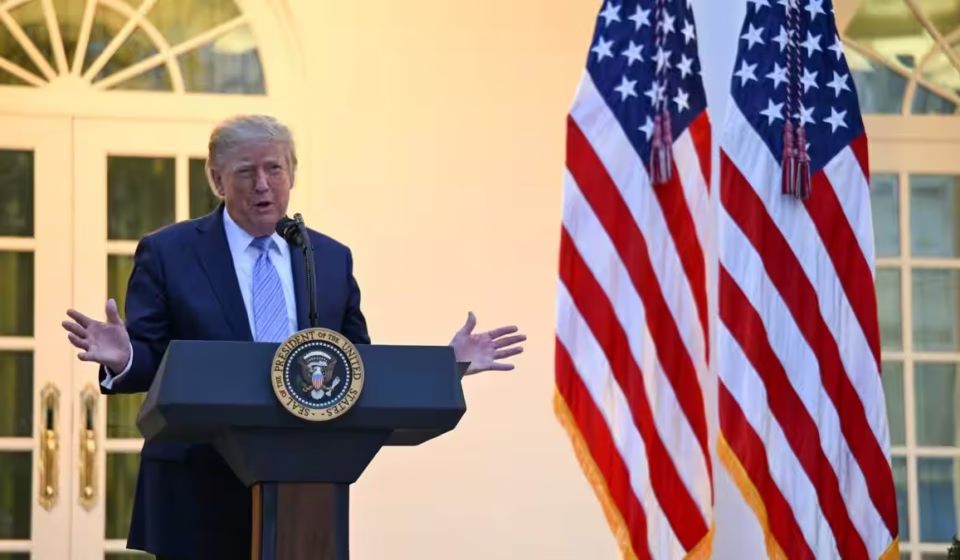

President Donald Trump is set to sign the Lindsey O. Graham Sanctioning Russia and Iran Act of 2026, a sweeping sanctions bill that grants him the authority to impose tariffs of up to 100 per cent on countries continuing to purchase Russian oil and gas. The move could place India’s reliance on Russian crude under significant fresh pressure at a time when New Delhi is already navigating delicate trade and diplomatic ties with Washington.
The US House of Representatives passed the legislation 262-159 on Wednesday, following Senate approval, with a White House official confirming that the President plans to sign the bill. Importantly, the legislation does not automatically impose any tariff on India or any other nation. Instead, it empowers Trump to decide whether and how to apply the sanctions on major buyers of Russian energy, with India and China among the most prominent targets.
India has moved to distance itself from the potential fallout. The Ministry of External Affairs said the country is closely monitoring developments and remains firmly committed to ensuring energy security for its 1.4 billion people. New Delhi has conveyed its concerns about the possible impact of the legislation on bilateral ties and international energy markets through senior-level discussions with US officials in recent months. India’s Ambassador to the US, Vinay Mohan Kwatra, defended the country’s approach, describing energy sourcing as a fundamental national responsibility tied to the needs of its population.
The stakes for India are considerable. The country imports more than 88 per cent of the crude oil it consumes, and Russian crude has become a major component of its supply since the Russia-Ukraine war reshaped global energy markets. Indian refiners have continued purchasing Russian oil based on price, availability, and market conditions. Any significant reduction in Russian supplies would force refiners to seek costlier alternatives, with the final expense depending on global oil prices and transport costs. Refiners have reportedly sought discussions with Washington over possible exemptions or quotas, warning that cutting Russian supplies could drive up costs when global markets are already under strain.
Russia has criticised the bill, with Kremlin spokesman Dmitry Peskov describing it as an unfriendly action that could complicate efforts to reach a peaceful resolution in Ukraine. The legislation targets Russia’s energy and defence sectors, officials, financial institutions, and vessels linked to what Washington calls its shadow fleet.
China, another major buyer of Russian energy, also pushed back, rejecting what it termed US long-arm jurisdiction and opposing unilateral sanctions lacking international legal basis or UN Security Council authorisation.
The bill arrives at a sensitive moment for India-US trade relations, as the two countries work toward a broader bilateral agreement. For Indian exporters, the concern extends beyond the potential tariff itself to the uncertainty over which products could be targeted and at what rate. The legislation gives Trump the power to impose tariffs of up to 100 per cent, but it does not require him to impose the maximum rate on India. The actual impact will hinge on whether and how the administration chooses to exercise its new authority.
Original Source: https://www.firstpost.com/business/trump-russia-sanctions-bill-100-tariff-india-14046737.html
Category: India
Tags:
Publish Date: 2026-09-18 06:17:00