Architecting Cyber Resilience for AI-Driven Development at Machine Speed

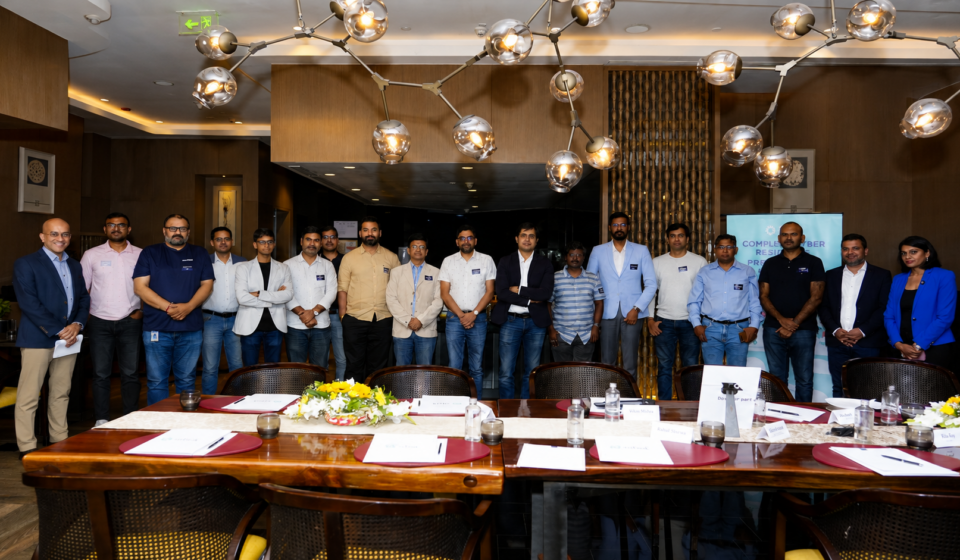
The speed of delivery has become the enemy of certainty. At a roundtable in Bengaluru on July 10, 2026, security and engineering leaders discussed an unavoidable truth: AI is accelerating software development and, at the same time, expanding the attack surface in ways conventional controls were never designed to handle. That conversation is more than a wake-up call – it should change how we design systems.
Why prevention alone is no longer enough
Organisations have historically focused budget and attention on preventing breaches. The roundtable made a clearer distinction: modern incidents rarely look like simple outages. Attackers can and do contaminate production and backups, subvert identities (including non-human ones), and exploit AI-generated artefacts. When backups can be poisoned and agents act autonomously, asking “Can we stop every attack?” is the wrong question. The right question is “How quickly and confidently can we restore business operations from trusted sources?”
Architecture implications for CTOs and Chief Architects
This shift has deep architectural consequences:
- Treat AI agents as principal identities. Non-human agents must have the same lifecycle controls as human accounts: short-lived credentials, scoped tokens, attestation, auditing, and revocation. Design architectures that authenticate and authorise agents separately from human flows (consider mTLS, OIDC/OAuth scopes, or SPIFFE-style identity fabrics).
- Embed security into the developer loop. With AI-assisted coding, the pipeline becomes a new threat vector. Push security left: pre-commit and CI-time SCA, SBOM generation, signed builds, reproducible artifact pipelines, and policy-as-code (e.g., OPA) gates for any AI-generated code.
- Build an immutable, isolated cyber-recovery plane. Disaster recovery is operational; cyber-recovery requires air-gapped, cryptographically verifiable backups and a documented, practiced recovery playbook. Assume attackers may reach backups and design for multi-site isolation with periodic integrity attestations.
- Improve observability and provenance. When change velocity increases, so does the need for provenance tracing: who/what changed a model, prompt, or service? Capture inputs, model versions, prompt hashes, and execution traces so you can reconstruct events during incident response.
- Accept non-determinism in testing. AI agents are non-deterministic – adversarial testing, fuzzing prompts, sandboxed execution, and continuous behavioural monitoring should be standard engineering practices for systems that rely on LLMs or agents.
Trade-offs and the hidden costs
Speed vs. stability is no longer theoretical. Guardrails (policy engines, hardened coding agents) impose latency and require engineering bandwidth. Isolated recovery environments increase storage and operational cost. But these are not optional taxes – they are the cost of delivering reliable services in an AI-native world. The real failure is deferring these costs until after a breach, when they are exponentially higher.
A Bharat note – why this matters for Indian enterprises
The cultural tendency to treat security as a checkbox amplifies risk. For India’s startups and MSMEs, the pragmatic route is to prioritise recovery-readiness over perfect prevention: maintain minimal immutable backups, run routine tabletop drills, and use cloud-native primitives for identity and observability to keep costs manageable. State and DPI projects should mandate recovery drills and provenance logging in procurement standards – resilience must be an operational SLA, not an audit item.
Practical next steps (for CTOs and Boards)
- Reclassify AI agents as first-class identities and enforce scoped, short-lived credentials.
- Require SBOMs and signed, reproducible builds for all deployable artefacts.
- Create a cyber-recovery environment: isolated, integrity-verified backups and tested restore procedures.
- Institutionalise adversarial testing and chaos engineering for AI flows.
- Elevate resilience to the board: recovery RTO/RPO must be a business metric, not a security footnote.
Closing thought
We are entering an era where resilience is the primary business differentiator. Speed built on brittle foundations is not innovation – it’s systemic risk. The safer path is rapid delivery with provable recovery.
About the Author: Sanjeev Sarma is the Founder Director and Chief Software Architect at Webx Technologies. With a core focus on Generative AI integration, Cloud-Native Scalability, and Enterprise Software Architecture, he has spent over two decades driving digital transformation across Northeast India and beyond. Beyond his corporate leadership, Sanjeev is deeply invested in shaping the future of the IT industry. He serves as an Industry Expert on the Board of Studies for Assam Don Bosco University’s School of Technology, advises state technology committees, and actively mentors emerging tech startups at STPI. He brings a unique, dual perspective of high-level enterprise execution and future-ready academic curriculum development.