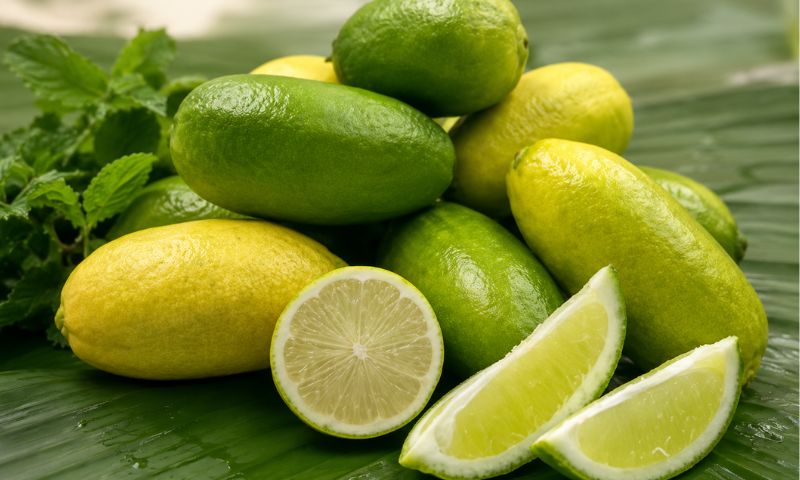

Assam’s Kaji Nemu — the oblong, aromatic Assam lemon (Citrus limon) — is positioned to move beyond backyard gardens into a commercially significant agro-industrial crop thanks to its Geographical Indication (GI) tag, proven profitability and emerging export interest. An empirical study of growers in Tinsukia district found a Cost‑Benefit Ratio (CBR) of 1.96, a payback period of 5.7 years, an Internal Rate of Return (IRR) of 28% and a Net Present Value (NPV) of Rs 11,06,861 — indicators the crop can be financially attractive for commercial cultivation.
The fruit’s biochemical profile suits juice, zest and essential-oil production, opening markets in food processing, beverages, cosmetics and pharmaceuticals. Its sour flavour also matches culinary preferences in neighbouring Myanmar and Indonesia, and it has attracted buyers in parts of Europe and Russia. Early export consignments reportedly included 1,000 kg sent to Dubai and 5,000 lemons shipped to London, signalling nascent international demand that could grow if quality and supply are sustained.
However, several structural barriers limit scaling. Supply-chain inefficiencies — notably heavy dependence on intermediaries — depress farmgate prices. Growers also contend with pest attacks, weak regulated markets, wide price swings, labour shortages, limited storage, restricted access to institutional credit and rising pesticide costs. About 80% of farmers sell directly from their farms, reflecting a lack of organised marketing channels and leaving producers vulnerable to exploitation and post-harvest losses.
Developing an integrated value chain would raise returns and reduce risk. Processing Kaji Nemu into value-added products can diversify incomes, but processing units must be paired with better market linkages, cold-storage facilities and reliable refrigerated transport to connect producers with domestic and global buyers and to preserve quality.
Assam’s agro-climatic conditions favour citrus expansion. The state’s alluvial plains, lateritic hills and sandy soils formed under heavy rainfall, along with adequate temperature and humidity, are suitable for citrus. Kaji Nemu can be propagated by stem cuttings, leaf-bud cuttings and air layering. Planting is usually done between May and August before the monsoon in 0.5 m × 0.5 m × 0.5 m pits with three-metre spacing. The tree bears fruit year-round with two peak seasons, and ripe fruits often remain on the tree, giving farmers harvesting flexibility.
Production varies by district. National Horticulture Board data show Nalbari leading with 7,013 thousand tonnes across 815 thousand hectares and a productivity of 8,605; other major producers include Tinsukia, Sivasagar, Baksa and Dima Hasao, the latter reporting the state’s highest productivity at 9,027. A recent MoU between Assam Agricultural University and SRD Group aims to strengthen processing and commercialisation, potentially bridging research, private investment and farmer support.
Kaji Nemu’s GI identity, year-round fruiting and demonstrated profitability provide a strong foundation. With coordinated investment in technology, finance, processing, cold chain and organised markets, the lemon could evolve from a backyard staple into a valuable horticultural export that boosts farmer incomes and Assam’s agro-processing sector.
Geeta Upadhyaya is an assistant professor at Arunachal University of Studies, Namsai.
Original Source: https://nenow.in/opinion/the-kaji-nemu-opportunity-turning-assams-citrus-heritage-into-green-gold.html
Category: Opinion,Top News
Tags:
Publish Date: 2026-08-02 23:34:00