Architecting Platform Resilience for the BEV Market Shift

Why this month matters: a market tipping point, not just a spike
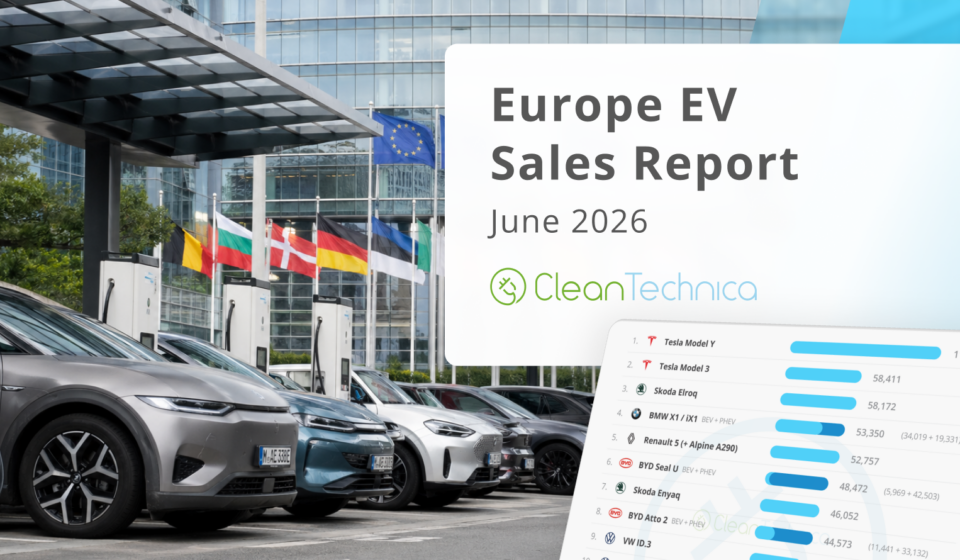
A recent market analysis of European registrations shows an inflection: plugin vehicles captured roughly 37% of June sales, with battery-electric vehicles (BEVs) taking an ever-larger share of that growth. Tesla reclaimed headline positions, while Chinese OEMs – with aggressive price and product strategies – materially expanded their footprint. These are not transient leaderboard changes; they expose systemic pressures and choices that will determine which manufacturers thrive over the next decade.
From volume to architecture: the real battle beneath sales numbers
What appears to be a competition of models is really a competition of architectures, supply chains and digital stacks. Three structural shifts are clear and consequential for CTOs, product heads and enterprise architects:
-
Platform modularity wins. Cheaper BEVs and rapid model rollouts from new entrants are possible because of modular, scalable EV platforms and standardized battery packs. Legacy OEMs tied to ICE-biased platforms or bespoke architectures face higher retooling costs and longer time-to-market. The strategic response is to accelerate modular architecture roadmaps and design-for-reuse across vehicle families.
-
Lineup depth is a strategic moat. The data shows brands with broad portfolios – multiple segments, powertrain variants and regional models – capture more market share. That’s not just product management; it’s an operational and data problem: forecasting, variant manufacturing, software release management and OTA deployment at scale. Enterprises must treat vehicle software and telematics as first-class products with CI/CD pipelines, observability and SRE practices.
-
Software and services determine margin, not just hardware. As price-competition compresses margins on the chassis and battery, monetizable services (fleet telematics, energy integration, maintenance-as-a-service) become the differentiator. That requires a secure, scalable data platform, standardized APIs for partners (charging, mobility services, insurers), and strong identity/consent models for vehicle telemetry.
Design trade-offs CTOs must weigh
Speed vs. Stability – Rapid modular launches accelerate market entry but risk quality regressions without mature engineering tooling. Invest early in test automation, digital twins and homologation pipelines.
Vertical integration vs. partner ecosystems – Owning battery manufacturing or software stacks increases control but also capital intensity. Strategic partnerships (e.g., localized battery plants, contract manufacturing) can bridge the gap if contract terms preserve agility.
Data sovereignty & supply chain resilience – Sourcing globally reduces costs but heightens geopolitical risk. Manufacturers must map critical suppliers, replicate capacity regionally, and bake resiliency into procurement systems.
A practical lens for India (and Northeast India)
The European surge offers instructive parallels for India. Compact and city EV segments are emerging as high-volume opportunities – areas where frugal engineering and low-cost platforms can compete effectively. For regional ecosystems like Northeast India, the relevant plays are:
- Localize value where it matters: assembly, battery pack integration and software calibration for local conditions.
- Build charging and operations platforms aligned with Digital Public Infrastructure (payments, identity) to reduce friction for fleet and last-mile operators.
- Invest in workforce upskilling (software, BMS, OTA) through local institutes and industry programs – the talent gap will be the bottleneck, not demand.
Takeaways for enterprise leaders
- Reframe product strategy as platform strategy: prioritize common modules, standard interfaces and software reuse.
- Treat vehicle software as core product: adopt DevSecOps, OTA processes and telemetry-driven feature iteration.
- Build supply-chain visibility and scenario playbooks for regional disruptions and rapid volume shifts.
- Monetize data and services to offset hardware margin erosion, but do so with clear consent and privacy architectures.
- For Indian leaders: pursue localization where it reduces lead times or compliance risk, and embed DPI-compatible services early.
Closing thought
The current surge in BEV adoption is less a single market event and more a rehearsal for a future where industrial design, software architecture and digital ecosystems compete as much as mechanical engineering. Those who re-architect their organizations – not just their vehicles – will capture the long-term value.
About the Author: Sanjeev Sarma is the Founder Director and Chief Software Architect at Webx Technologies. With a core focus on Generative AI integration, Cloud-Native Scalability, and Enterprise Software Architecture, he has spent over two decades driving digital transformation across Northeast India and beyond. Beyond his corporate leadership, Sanjeev is deeply invested in shaping the future of the IT industry. He serves as an Industry Expert on the Board of Studies for Assam Don Bosco University’s School of Technology, advises state technology committees, and actively mentors emerging tech startups at STPI. He brings a unique, dual perspective of high-level enterprise execution and future-ready academic curriculum development.