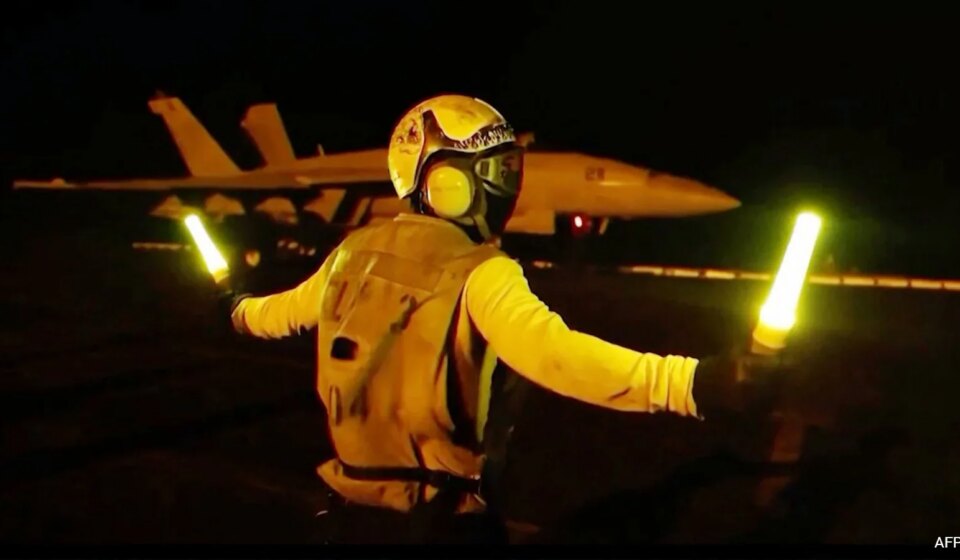

The U.S. military announced it was carrying out a 12th consecutive night of strikes against Iran, saying the attacks aim to blunt Tehran’s ability to threaten commercial shipping as Washington seeks to restore safe passage through the Strait of Hormuz. The strikes come amid escalating exchanges in which both sides have increasingly targeted civilian infrastructure across the region.
U.S. Central Command said the strikes were intended to “further degrade Iran’s ability to threaten civilian mariners and commercial vessels transiting regional waters,” part of an effort to regain control of the strategically vital strait and reopen disrupted international shipping lanes.
Earlier the same day, former President Donald Trump warned on social media that “From this point forward, any time the Islamic Republic of Iran shoots at a ship in the Strait of Hormuz, whether it be by Missile, Rocket, Drone, or any other device or weapon, the United States will bomb and destroy ONE BRIDGE OR POWER PLANT.”
Iranian officials vowed strong retaliation. Foreign Minister Seyed Abbas Araghchi said Tehran would follow an “eye for an eye” doctrine, posting that “Any aggression against Iran, including our infrastructure, will compel a powerful and decisive response.” Parliament speaker Mohammad Bagher Qalibaf dismissed U.S. threats on social media, saying that if Iran’s security is not ensured “no infrastructure will be safe” and that the strait’s situation “will not return to prewar conditions.”
Overnight strikes and air defenses were reported across Iran, including over Tehran. Iran launched a missile attack on a Jordanian city near Israel and triggered alerts in Bahrain and Saudi Arabia. Jordan’s military said it intercepted four missiles over Aqaba and four drones, while videos from nearby Eilat showed plumes of smoke. The attack on Aqaba-within sight of Israel-heightened fears of a wider regional spillover.
With negotiations stalled, both sides have increasingly targeted civilian energy and water infrastructure. Iran has struck energy facilities and desalination plants in neighbouring Gulf states. United Nations Secretary-General António Guterres called such attacks “unacceptable,” and international law generally bars strikes on civilian infrastructure unless it is being used for military purposes.
The closure of the Strait of Hormuz — a route through which about one-fifth of traded oil and gas passed in peacetime — has jolted markets. Benchmark Brent crude rose above $93 a barrel from under $72 earlier this month, and gasoline prices are climbing. Meanwhile, Iran‑backed Houthi rebels in Yemen have threatened Saudi shipping in the Red Sea, risking a second major trade chokepoint.
U.S. officials say the campaign has been costly. Trump visited Dover Air Force Base for the return of four U.S. service members, and Defense Secretary Pete Hegseth estimated in a Senate hearing that the U.S. has spent $37.5 billion on the war so far. The Pentagon earlier reported finishing an 11th night of strikes that hit aircraft hangars and drone storage sites; Iran’s state media reported explosions across several provinces. Iran’s Health Ministry says U.S. strikes over the past 11 days have killed 53 people, including six women and three children, and wounded nearly 600.
Diplomatic channels remain open but fragile. Iranian Interior Minister Eskandar Momeni visited Pakistan seeking mediation, and Interior Ministry spokesman Ali Zeinivand said “diplomacy isn’t called off” and messages were still being exchanged, according to IRNA. An Arab diplomat said Gulf states, Pakistan and Turkey continue to push for de‑escalation but that prospects appear bleak. At a regional summit in the Philippines, U.S. Secretary of State Marco Rubio warned against allowing a state to control an international waterway, saying it would set “a very dangerous precedent,” and added the U.S. remained open to talks though Iran did not “seem to be serious about that.”
Washington has reimposed a blockade on Iranian ports. From the Oval Office, Trump said the U.S. had “no interest in meeting” and signaled U.S. forces might target an under-construction nuclear site known as Pickaxe Mountain near Natanz. Iran maintains its nuclear program is peaceful, but the U.S. and others say Tehran resumed enrichment toward near weapons‑grade levels after the 2015 deal collapsed.
Original Source: https://www.ndtv.com/world-news/iran-war-us-launches-fresh-wave-of-strikes-against-irans-military-infrastructure-11808586#publisher=newsstand
Category:
Tags:
Publish Date: 2026-07-23 04:52:00