Architecting Intent-Driven Revenue Intelligence for Developer-Focused Enterprises

We celebrate scale-the bigger the dataset, the louder the applause. But scale alone is not a strategy. My contention: most conversations around AI-enabled go-to-market tools focus on model performance or fundraising milestones; far less attention goes to the engineering, governance and product trade-offs that convert raw signals into dependable, enterprise-grade action.
Context
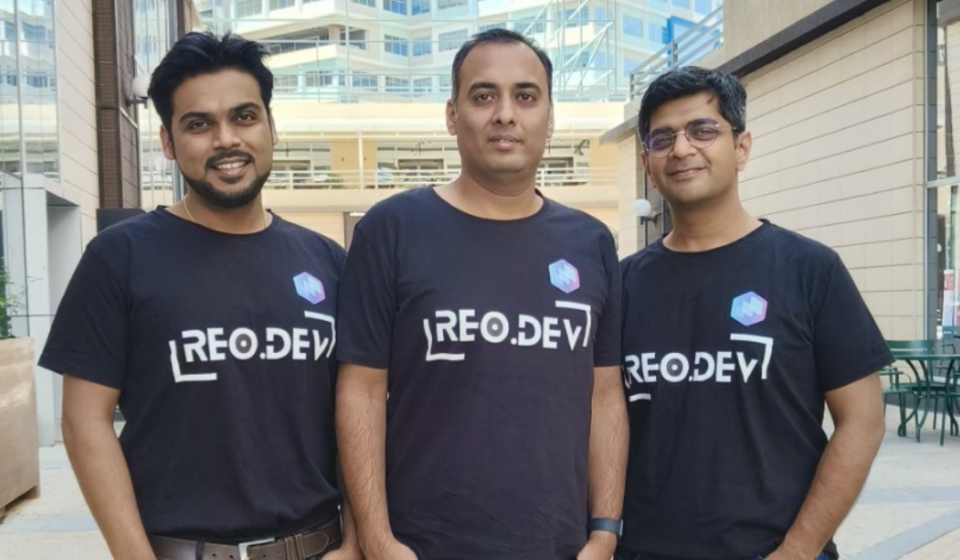
Reo.Dev – an AI-driven sales-intelligence startup that mines developer activity across public platforms – recently closed a Series A to expand US sales and accelerate AI product development. The company’s pitch rests on a massive proprietary dataset (claimed developer profiles and billions of intent signals) and models tuned for technical buying intent.
What this means for enterprise architecture and founders
-
Data is a moat-but an expensive moat to maintain
Collecting 90+ billion signals and stitching 100+ million profiles is an engineering triumph. But the costs show up in many places: ingestion pipelines, identity resolution, storage, snapshot/versioning, and continuous retraining. For architects, the imperative is to treat the dataset not as a static asset but as a continuously evolving product requiring SLAs, observability and capacity planning. If you’re building similar systems, anticipate the operational overheads early-cost forecasting for storage and embedding indices, compaction strategies, and cold/hot data tiers are not optional. -
Signal quality beats signal quantity for downstream impact
Enterprises buying go-to-market intelligence want reliable signals they can act on in CRM workflows. That requires deduplication, temporal weighting (how fresh is a signal?), source credibility scoring, and false-positive mitigation. Architectures that blend real-time event streams with batch-verified enrichment pipelines tend to hit the right balance between responsiveness and precision. -
Model governance and explainability are business requirements, not academic luxuries
Sales teams need to understand “why” a lead is prioritized. This means investing in explainability layers, feature attribution, and human-in-the-loop feedback for model calibration. Without transparent scoring and drift detection, adoption stalls-because commercial teams will distrust “black-box” recommendations that cannot be audited. -
Privacy, compliance and market concentration risk
Mining developer activity from public platforms sits in a grey area of law and expectation. Serving global customers (especially in the US and Europe) requires robust privacy controls, data retention policies, and a playbook for cross-border data issues. Architecturally, this argues for clear data contracts, consent metadata tagging, and region-aware processing pipelines. Also, heavy revenue concentration in a single geography is a commercial risk-diversify go-to-market early. -
Product integration beats point solutions
The value of sales intelligence multiplies when it plugs seamlessly into CRM, engagement automation, and sales workflow tooling. Build modular, API-first systems, with pluggable enrichment and scoring services, so enterprise customers can integrate without rearchitecting their stacks.
Relevance for Indian startups and regional talent
There is a genuine opportunity for Indian product firms to lead globally in this niche. India offers deep engineering talent and cost arbitrage, but success will hinge on doing the hard things right: rigorous data governance, enterprise-grade reliability, and a customer-centric integration strategy. For teams in Northeast India, this is a moment to lean into specialized skill-building-data engineering, MLOps, and privacy engineering are high-leverage areas where young engineers can create outsized value for global products.
Practical takeaways
- Treat data as a live product: instrument, version and own SLAs for freshness and quality.
- Build a canonical identity graph and invest in entity resolution early.
- Combine real-time signals with batch verification to balance speed and precision.
- Implement model governance: drift detection, explainability and human feedback loops.
- Design API-first, modular services for easier enterprise integration and faster adoption.
- Prioritize compliance by design: metadata-driven consent, regional processing flags, and retention policies.
Closing thought
Scale attracts attention; reliability wins customers. If you’re building AI products for enterprises, your competitive edge will come less from adding more signals and more from engineering trust-repeatable, auditable, and integrated intelligence that sales teams can act on.
About the Author: Sanjeev Sarma is the Founder Director and Chief Software Architect at Webx Technologies. With a core focus on Generative AI integration, Cloud-Native Scalability, and Enterprise Software Architecture, he has spent over two decades driving digital transformation across Northeast India and beyond. Beyond his corporate leadership, Sanjeev is deeply invested in shaping the future of the IT industry. He serves as an Industry Expert on the Board of Studies for Assam Don Bosco University’s School of Technology, advises state technology committees, and actively mentors emerging tech startups at STPI. He brings a unique, dual perspective of high-level enterprise execution and future-ready academic curriculum development.