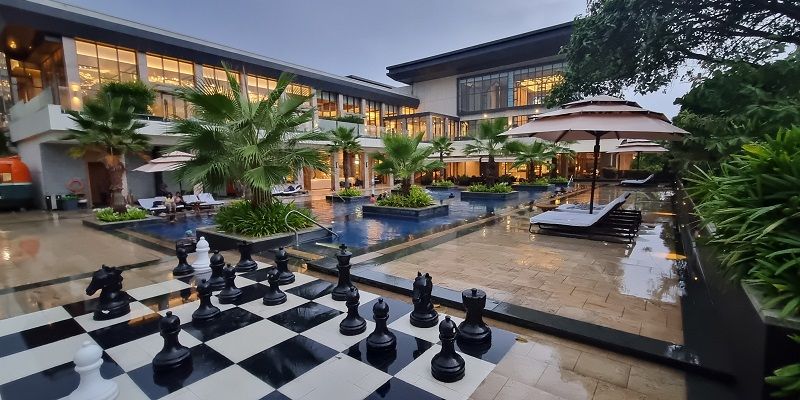

We obsess about features – bigger pools, more F&B outlets, AI-driven loyalty programs – and miss a quieter lever that actually drives willingness to pay: design. The case of a thoughtfully designed luxury resort outside Bengaluru is a useful reminder that design is not decoration; it is a strategic system that shapes perception, behaviour and business outcomes.
The signal
I recently came across a photo essay showcasing a high‑end resort where architecture, landscape, interiors, lighting and curated experiences (farm‑to‑table dinners, sunset boat rides, stargazing) are composed to create distinct emotional moments. Those moments – arrival, discovery, intimacy – are the product, not merely an accessory to it.
What this means for enterprise architecture and product leaders
Design as a differentiator is an old marketing line; treating design as an architectural discipline is less common. For enterprises, the lesson is to move from isolated “UI/branding” activities to experience architecture – a cross‑disciplinary blueprint that binds physical spaces, services, staff interactions and digital touchpoints.
Several implications follow:
-
Experience is systemic. In the resort example, scent, lighting and spatial flow prepare a guest’s emotional state before any service interaction. In digital products the equivalents are onboarding flows, latency, error states, and default content. They must be designed together, not patched later. Architect your systems so telemetry from every touchpoint (mobile app, front‑desk, in‑room tablet) feeds a single experience model.
-
Trade‑offs: bespoke versus scale. A distinctive design demands custom work – local materials, curated landscape – which increases CAPEX and operational complexity. The enterprise trade‑off is clear: commoditised features are cheaper to scale, unique design yields pricing power and organic virality. CTOs and CFOs must evaluate lifetime value uplift (RevPAR/ARPU/NPS) against added operating and maintenance costs.
-
Operability and tech debt. Unique experiences often rely on heterogeneous systems (legacy PMS, specialty lighting controls, bespoke sensors). Without a service‑oriented architecture and clear integration contracts, you accumulate brittle technical debt. Prioritise API‑first modernization and bounded contexts so the “experience layer” can evolve without breaking core operations.
-
Measurable experience. Design decisions must be measurable. Beyond occupancy and room rate, use experience KPIs – time‑to‑first‑delight, micro‑drop‑off points in guest journeys, social amplification rate of curated moments – to justify design investment. A/B test temporary installations, menus or lighting schedules before committing to permanent infrastructure.
-
Personalisation with guardrails. Curated, place‑based experiences benefit from personalization (e.g., table‑side herbs selected to guest taste), but personalization needs consented data and privacy safeguards. Build personalization engines that respect data minimisation and clear opt‑ins; this reduces regulatory and reputational risk.
How leaders should act
- Treat design as a platform: create a cross‑functional “experience studio” that includes architects, operations, brand, data science and engineering.
- Prototype fast: pilot pop‑up experiences (seasonal menus, temporary landscapes) instrumented end‑to‑end for metrics.
- Invest in integration: standardise APIs and event schemas that map physical events to digital journeys.
- Model ROI holistically: include marketing uplift (UGC and earned media), yield management benefits and loyalty lift when evaluating design spend.
Local relevance (a brief note)
For Indian hospitality and experiential businesses – whether in Bengaluru, the Western Ghats, or the Northeast – the payoff from place‑rooted design is especially high. Local materials, craft narratives and climate‑sensitive landscaping can reduce operating costs and amplify authenticity for both domestic and international travellers. Startups building hospitality‑tech should partner early with designers, not as an afterthought.
Takeaways
- Design is strategy: it creates defensible differentiation, not just aesthetics.
- Experience architecture needs APIs, telemetry and measurable KPIs.
- Balance the short‑term cost of bespoke design against long‑term yield uplift.
- Prototype, measure, and then scale; keep personalization privacy‑first.
Closing thought
If you want customers to pay a premium, don’t sell them features – design the moments they’ll willingly remember and share.
About the Author: Sanjeev Sarma is the Founder Director and Chief Software Architect at Webx Technologies. With a core focus on Generative AI integration, Cloud-Native Scalability, and Enterprise Software Architecture, he has spent over two decades driving digital transformation across Northeast India and beyond. Beyond his corporate leadership, Sanjeev is deeply invested in shaping the future of the IT industry. He serves as an Industry Expert on the Board of Studies for Assam Don Bosco University’s School of Technology, advises state technology committees, and actively mentors emerging tech startups at STPI. He brings a unique, dual perspective of high-level enterprise execution and future-ready academic curriculum development.
