Civic Alignment as Infrastructure: Building Resilient Tech Hubs

When prosperity becomes an assumption, strategy becomes optional
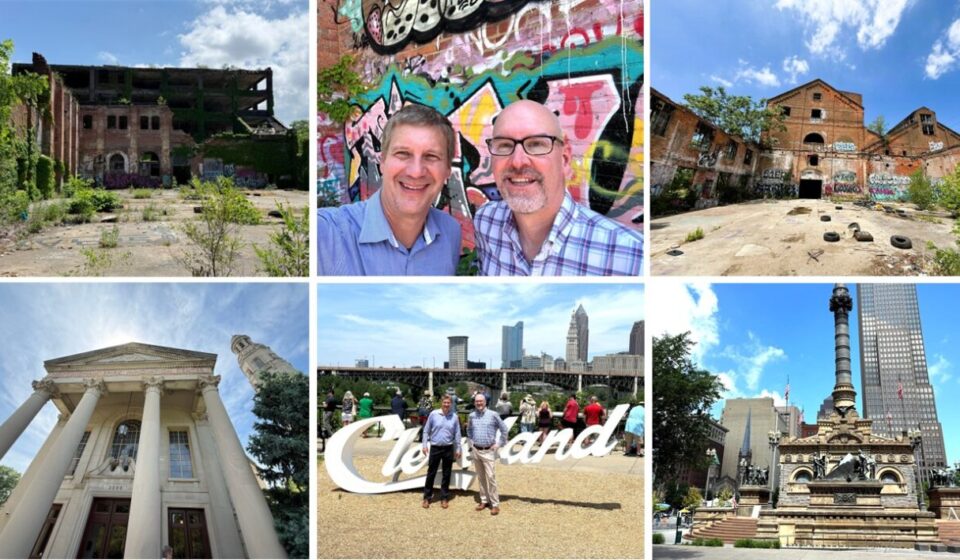
I recently came across a commissioned report and podcast episode about Cleveland’s comeback – and the warning it carries for established tech hubs like Seattle. The core signal was simple: long-term advantage is not an entitlement. It is the product of aligned civic leadership, realistic economic policy, and deliberate technical and organisational design. For technology leaders and architects, that lesson translates directly into how we build systems, teams, and regional strategies.
Why the story matters for architects and CTOs
The narrative that a city’s growth will automatically continue feeds two dangerous behaviours: concentrating dependencies (single-region talent, one dominant industry) and under-investing in resilience (single datacenter, monolithic ops). At the same time, municipal policy moves – such as temporary moratoria on data-centre permits – are often less about the specific projects and more about signalling local priorities. Leaders inside companies need to read those signals and treat them as architecture requirements, not political noise.
Architectural implications (speed vs stability, locality vs scale)
-
Geographic diversification is now a strategic requirement. Design multi-hub deployments that separate training-heavy, energy-intense workloads from inference and latency-sensitive services. This reduces exposure to local policy shifts, energy constraints, or rising real-estate costs. Hybrid cloud + edge + on-prem footprints become the norm for resilient AI and data platforms.
-
Treat policy as part of your non-functional requirements. Moratoria, incentives, zoning rules and public sentiment impose latency, cost, and availability constraints. Your architecture should be configurable: infra-as-code, multi-region CI/CD pipelines, and automated failover to alternate regions when a jurisdiction becomes hostile or expensive.
-
Avoid monoculture tech-stack and talent risk. Over-reliance on a single metro for hiring increases operational fragility. Invest in training, remote-first engineering practices, and platformisation that allow distributed teams to contribute without centralized tacit knowledge bottlenecks.
-
Sustainability and adaptive reuse should be factored into site-selection and ops decisions. The industrial renaissance examples – old factories repurposed as innovation districts – show how lower-cost, locally-rooted spaces can host data, labs, and startups. For enterprise planners, this means considering power mix, on-site resilience, and community integration as selection criteria.
-
Manage architectural debt versus innovation appetite deliberately. Rapid scaling in a buoyant market is seductive, but it creates long-term coupling. Prioritise modularity, bounded contexts, and API-first designs so parts of your business can move to different geographies or partners if the local ecosystem changes.
A pragmatic Bharat connection
For leaders in India – and especially in the Northeast – the lesson is encouraging and actionable. State governments and STPI-managed centres can be the alignment mechanism that Cleveland found useful: coordinated policy, vocational pipelines, and public-private projects create the conditions for sustainable tech clusters. Instead of chasing the top metros, enterprises and founders should evaluate multi-hub models that pair talent programs, affordable infrastructure, and DPI-compatible services to create resilient growth corridors.
Practical takeaways for CTOs and founders
- Treat municipal and regulatory signals as architecture inputs; map them to concrete design changes.
- Build multi-hub deployment patterns: separate training, inference, and edge workloads.
- Invest in platform tooling (IaC, multi-region CI/CD, observability) to make geographic moves fast and low-risk.
- Create talent pipelines and apprenticeship programs tied to regional campuses to reduce hiring concentration.
- Factor sustainability, power resilience, and community impact into site-selection criteria.
Closing thought
Cities and platforms both succeed when incentives, institutions, and engineering are aligned – and they both unravel when we assume continuity instead of designing for it. The more deliberately we treat public policy, geography, and human capital as architectural constraints, the more resilient our organisations will be to the next regional shift.
About the Author: Sanjeev Sarma is the Founder Director and Chief Software Architect at Webx Technologies. With a core focus on Generative AI integration, Cloud-Native Scalability, and Enterprise Software Architecture, he has spent over two decades driving digital transformation across Northeast India and beyond. Beyond his corporate leadership, Sanjeev is deeply invested in shaping the future of the IT industry. He serves as an Industry Expert on the Board of Studies for Assam Don Bosco University’s School of Technology, advises state technology committees, and actively mentors emerging tech startups at STPI. He brings a unique, dual perspective of high-level enterprise execution and future-ready academic curriculum development.