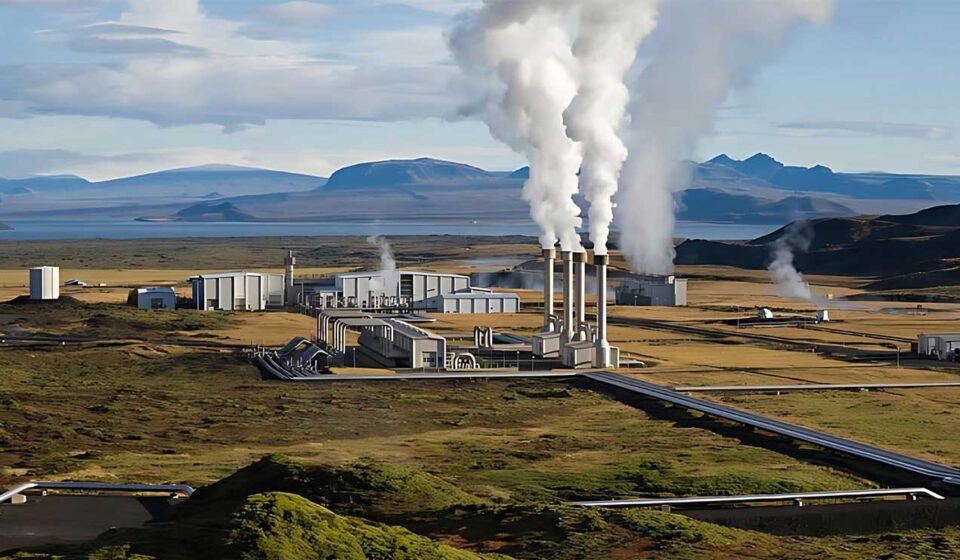
Scaling Geothermal: Architecting a Distributed, Always-On Clean Energy Platform

We worship solar and wind for their falling LCOE and rapid deployment. That focus is sensible – but it also creates a blind spot: we underweight technologies that deliver firm, always‑on low‑carbon power. The Mountain West Geothermal Consortium’s recent push – pooling state resources, oil‑field expertise, and new digital tools to unlock “hundreds” of gigawatts – is a timely reminder that the energy transition is as much about diversity of firm capacity as it is about scale.
Why this matters now
A group of western U.S. states has organized to commercialize advanced geothermal approaches that borrow heavily from oil & gas: directional drilling, reservoir stimulation, subsurface fiber optics, and AI‑driven exploration. What started as niche geothermal capacity is morphing into a potential baseload contender because engineering hacks from one sector (oilfield services) are being repurposed to create human‑made geothermal reservoirs where natural ones are shallow or absent.
What it means for architects and CTOs
Treat this as infrastructure architecture, not just energy news. Geothermal’s maturation changes assumptions that many enterprise planners take for granted:
- Firm capacity changes capacity planning. An always‑on, low‑carbon source reduces reliance on short‑term battery storage and demand‑response programs. For energy‑intensive enterprises and hyperscale data centers, this matters: PPA structures, resilience models, and disaster recovery assumptions should be revisited to include baseload renewables beyond hydro and bioenergy.
- Technology transfer creates new supply‑chain and skills vectors. Horizontal drilling, real‑time downhole telemetry, and AI subsurface models are converging. Enterprises that consume large amounts of electricity should start mapping potential industrial partners (drillers, geoscience platforms, analytics vendors) into their procurement playbooks, and factor in multi‑disciplinary project timelines and permitting risk.
- Data + governance = competitive advantage. Fiber‑optic sensing and digital twins will generate continuous, high‑velocity subsurface data. Organizations that can ingest, model, and secure this data chain-while satisfying environmental and community governance-will command better commercial terms and lower development risk.
- Risk trade‑offs need explicit modeling. Enhanced geothermal systems can raise concerns (induced seismicity, water use, subsurface contamination). These are not deal breakers, but they require integrated risk-management: seismic monitoring, staged stimulation protocols, and transparent community engagement baked into every project’s architecture.
Operational and strategic actions for leaders
- Revisit your energy strategy: include firm‑renewable options in scenario planning and PPA negotiations; model impacts on OpEx and resiliency.
- Invest in digital subsurface capability: partner with geoscience and AI firms, or sponsor pilots that demonstrate how downhole telemetry feeds operational decisions.
- Redesign contracts: longer‑term offtake with staged milestones, conditional clauses around environmental triggers, and shared investment for grid upgrades.
- Build cross‑sector coalitions: consortia work. Public‑private and inter‑state governance frameworks accelerate permitting, raise capital, and reduce duplicative technical risk.
A pragmatic note for India and Northeast considerations
There is a natural parallel for India: we should not copy‑paste the U.S. playbook, but the principle of technology transfer rings true. India’s oilfield and geothermal research capabilities could be aligned to pilot enhanced geothermal in geologically appropriate pockets, with an emphasis on low‑footprint, water‑sensitive designs and community consultation. A focused consortium approach – combining state energy offices, national labs, and private services firms – would shorten learning curves and make projects investible.
Takeaways
- Geothermal is moving from niche to strategic because of cross‑industry engineering and data science.
- Firm, low‑carbon capacity alters enterprise energy architecture and resilience planning.
- Digital subsurface data will be a competitive differentiator; treat it as critical infrastructure.
- Regulatory, environmental, and community risk must be designed into contracts and technical architecture from day one.
- Consortia accelerate learning and de‑risk capital deployment – a model worth exploring beyond the Mountain West.
Closing thought
Energy transitions are not only about cleaner electrons; they are about enlarging the palette of reliable, investible infrastructure. When we broaden our architectural imagination to include geothermal alongside solar and storage, we make decarbonization both faster and more robust.
About the Author: Sanjeev Sarma is the Founder Director and Chief Software Architect at Webx Technologies. With a core focus on Generative AI integration, Cloud-Native Scalability, and Enterprise Software Architecture, he has spent over two decades driving digital transformation across Northeast India and beyond. Beyond his corporate leadership, Sanjeev is deeply invested in shaping the future of the IT industry. He serves as an Industry Expert on the Board of Studies for Assam Don Bosco University’s School of Technology, advises state technology committees, and actively mentors emerging tech startups at STPI. He brings a unique, dual perspective of high-level enterprise execution and future-ready academic curriculum development.