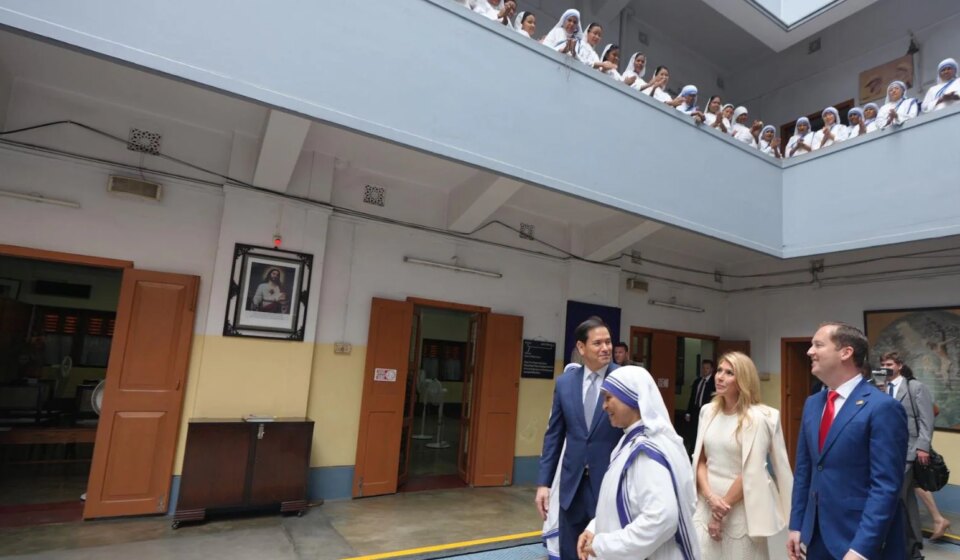

Kolkata has again become a focal point of diplomacy as US Secretary of State Marco Rubio arrived in the city on May 23 as part of a four-day India visit running through May 26. Rubio — described in the source as one of President Donald Trump’s closest foreign policy advisers and serving as Acting National Security Adviser — is visiting Kolkata, Agra, Jaipur and New Delhi to discuss energy cooperation, trade, defence and regional security. The stop in Kolkata is the first by a serving US secretary of state in fourteen years and comes weeks after a major political change in Bengal that ended a 15‑year-old regime.
Rubio’s flight landed at Kolkata airport at about 7:30 am on May 23. He paid visits to the Missionaries of Charity and the Victoria Memorial before continuing his itinerary. Ahead of the trip he called India a “great partner” and indicated Washington was prepared to expand energy exports substantially — remarks that underline the strategic tone of the visit.
Diplomatic schedules are negotiated between governments, but host priorities shape the public agenda. Bengal now has what officials describe as a “double‑engine” government, and political circles say Delhi encouraged greater engagement with Kolkata at this moment. The state administration is promoting an investment‑friendly image; officials expect the visit to bolster that narrative. There are indications Chief Minister Suvendu Adhikari will brief foreign stakeholders on Bengal’s economic prospects, including infrastructure and industrial projects such as the Falta Export Zone.
Kolkata’s relationship with American diplomacy has been long and complex, marked by ideological resistance and periodic pragmatism. During the Left era, anti‑American sentiment was prominent in public discourse, with protests greeting visits by US officials — notably when former US Defence Secretary Robert McNamara faced demonstrations on arrival yet still met state officials at Writers’ Building. Over time, pragmatism gained ground: Jyoti Basu, who governed from 1977 to 2000, actively courted foreign investment, visited the United States in 1994 and pursued technology partnerships linked to projects like Haldia Petrochemicals in the mid‑1990s.
Tensions resurfaced at times — for example in 2011 when then chief minister Mamata Banerjee publicly claimed US officials regularly visited Alimuddin Street — but diplomatic engagement persisted. In 2012, then‑Secretary of State Hillary Clinton visited Kolkata and met Mamata Banerjee before travelling to Bangladesh, a stop many analysts saw as part of a wider regional strategy.
The current political context, with Suvendu Adhikari in office and support from Delhi, has led sections of the administration to hope for increased American investment. Rubio’s Kolkata visit is being viewed through that lens and will culminate in New Delhi on May 26 with the Quad Foreign Ministers’ meeting involving the United States, Japan and Australia. Beyond bilateral trade and investment, the trip occurs amid shifting regional alignments involving China, Pakistan and Russia, with Bangladesh also playing a growing role in regional diplomacy.
(The author is Contributing Editor, NDTV)
Disclaimer: These are the personal opinions of the author.
Original Source: https://www.ndtv.com/opinion/opinion-kolkatas-diplomatic-return-why-rubios-visit-signals-bengals-new-era-11537910#publisher=newsstand
Category:
Tags:
Publish Date: 2026-05-23 19:15:00