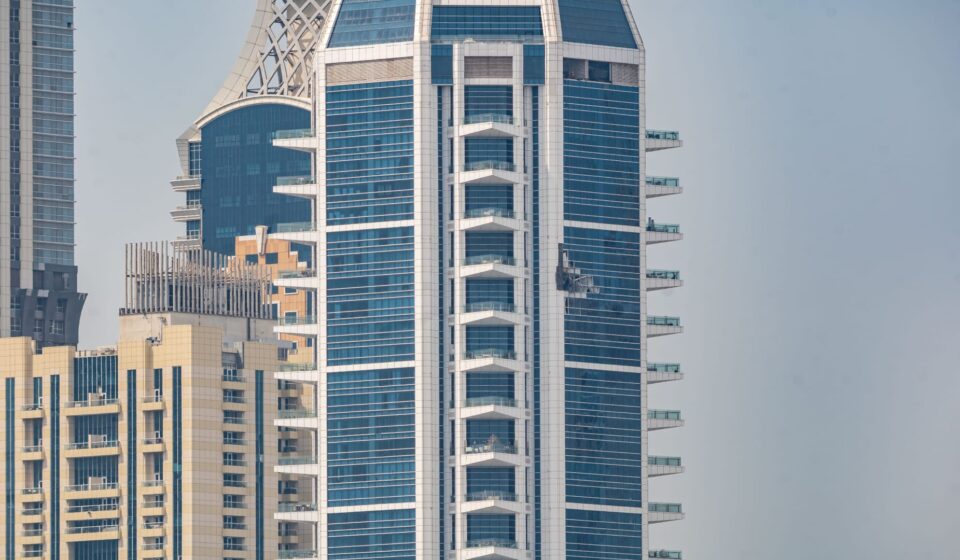

On March 8, 2026, significant damage occurred in Dubai’s Marina as debris from a drone interception struck the 23 Marina building, coinciding with escalating tensions in the region. Iran’s ongoing retaliatory strikes against U.S. and Israeli forces have led to increased infrastructure damage across the Gulf states, with the UAE confirming it is actively responding to missile and drone threats from Iran.
The UAE Ministry of Defense announced on social media that its air defenses are engaged, successfully intercepting ballistic missiles while fighter jets tackle drones and other aerial threats. During the height of the tensions on Saturday evening, alarms rang across Dubai and Abu Dhabi, prompting residents to seek shelter due to missile threats. Although there were no reported injuries from the building damage, an unfortunate incident involved aerial debris that caused the death of a Pakistani driver in Al Barsha.
In a further escalation, passengers at Dubai International Airport were ushered to safety in train tunnels as fears mounted over missile threats. Reports indicate that Iran has claimed responsibility for attacks on various radar and air defense systems in the region, targeting nations including Qatar, Jordan, and Saudi Arabia, in response to previous U.S. strikes.
Bahrain reported a drone attack that hit a water desalination plant, causing material damage but no disruption to water supplies, according to the country’s electricity and water authority. Additionally, missile fragments from Iranian retaliatory strikes injured three people in Muharraq.
Kuwait also faced drone attacks over the weekend, with two fuel depots at its international airport set ablaze, resulting in significant damage. Furthermore, the Public Institution for Social Security in Kuwait reported material damage to its headquarters due to these ongoing strikes.
Meanwhile, Israeli airstrikes continued against Iranian military infrastructure over the weekend, as the Israel Defense Forces (IDF) announced strikes on several fuel storage complexes linked to the Iranian Revolutionary Guard Corps (IRGC). The IDF emphasized that their operations aim to significantly undermine Iranian military capabilities.
In the political arena, Iran’s Mehr news agency reported the appointment of a new leader to replace the late Supreme Leader Ayatollah Ali Khamenei, who was killed during initial combat operations. Eyewitness accounts describe swift elections facilitated to select Khamenei’s successor, instigating discussions among influential clerics regarding the leadership transition. Ayatollah Seyyed Ahmad Alam al-Huda confirmed that rumors suggesting indecision within the Assembly of Experts were unfounded.
As discussions unfold regarding the new leadership, the IDF has issued a stern warning, declaring its intent to target anyone involved in appointing a successor to Khamenei. Former President Donald Trump has suggested that the U.S. should play a role in selecting the new Iranian leader, a proposal that Iran has outright rejected.
As the situation develops, the Gulf states remain on high alert, with the United States and its allies continuing their military responses amid the rising threats. The geopolitical landscape is rapidly evolving, raising concerns for regional stability and international involvement in what is becoming a significant crisis.
Original Source: https://www.cnbc.com/2026/03/08/iranian-projectiles-continue-to-strike-gulf-countries-infrastructure.html
Category :
Tags:
Publish Date: 2026-03-08 17:03:00