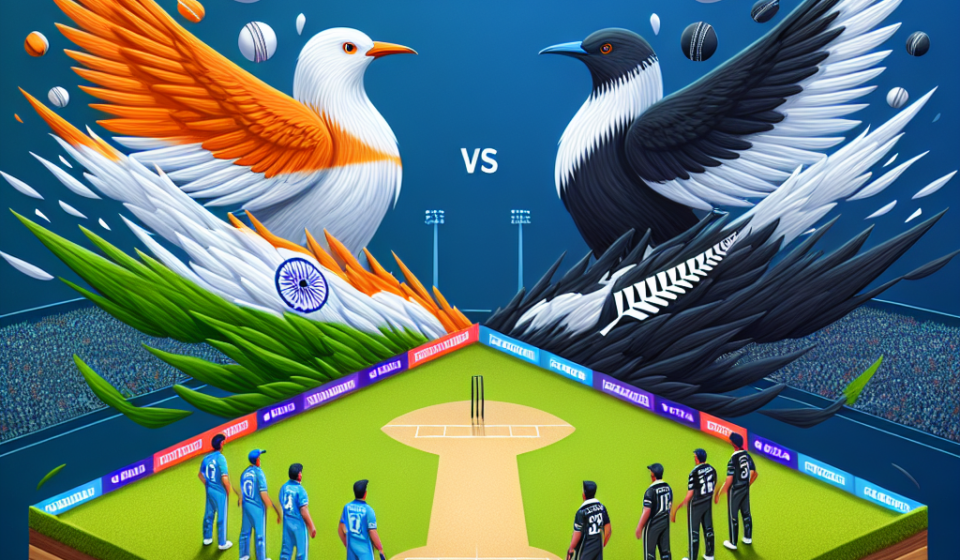

We cheer for giant moments – the roar of a packed Narendra Modi Stadium, a 33-ball hundred, the final over of a World Cup – but the technology that delivers those moments to millions is rarely part of the conversation. Instead, viewers notice only two things: the picture is brilliant, or it freezes and they open a VPN. That mismatch between expectation and experience is the strategic fault line broadcasters and platform architects must fix.
Context
A recent piece summarising where to watch the India vs New Zealand T20 final highlighted a familiar ecosystem: multiple regional broadcasters, geo‑restricted free streams, and routine advice to “use a VPN” to bypass territorial locks. That pattern – fragmented rights, conditional free access, and consumer workarounds – is not just a rights-management problem. It’s a systems-design and trust problem at internet scale.
Analysis – what this means for architects and leaders
1. Live events are an operational stress test, not a marketing exercise. Handling millions of concurrent viewers requires architecture that anticipates extreme concurrency, bursty traffic, and heterogeneous network conditions. Reliance on a single CDN or a monolithic origin will surface as outages or severe QoE degradation during the first big spike. Multi-CDN strategies, dynamic origin failover, and running realistic chaos/load tests are non‑negotiable for any service hosting live sports.
2. Geo‑restriction friction drives shadow behaviors that erode trust. When legitimate viewers are nudged toward VPNs to access paid or free coverage, the platform loses control over experience, telemetry, and monetisation. That leakage impacts advertising and subscription economics and complicates legal compliance. Product and legal teams must align: if access is limited by rights, design the UX to explain the why and provide clear, legal alternatives (e.g., day passes, local partners) rather than leaving viewers to find workarounds.
3. UX for real networks ≠ lab UX. In markets with inconsistent last‑mile connectivity, adaptive bitrate algorithms, low‑latency codecs, and progressive playback heuristics matter more than polished overlays. Offering explicit low‑bandwidth streams, prefetching key content, and hybrid delivery (CDN + edge caching + P2P augmentation where appropriate) improves inclusivity and reduces churn.
4. Observability and edge telemetry are the new UX tools. Real‑time visibility into player errors, CDN health, and regional latency allows on‑the‑fly remediation – route traffic, spin extra edge capacity, or selectively degrade features to preserve the live feed. Investing in fine‑grained telemetry and an incident runbook for major broadcasts pays for itself in reduced customer support load and higher retention.
5. Build vs Buy: It’s a strategic choice. OTT platforms can stitch together third‑party streaming services, SSAI, DRM and analytics using managed vendors to accelerate time‑to‑market and reduce risk. But for organisations that need tight control over monetisation, data, or custom features (regional language streams, ultra‑low latency feeds for betting platforms), owning parts of the stack – especially DRM and edge orchestration – becomes necessary despite higher operational cost.
Localization – why this matters for India and the Northeast
In India, the scale opportunity is huge but so are connectivity disparities. From urban 5G to rural 2G/3G pockets, any national broadcast must intentionally support “frugal streaming” modes: aggressive ABR ladders, audio‑first streams, and lightweight progressive web apps that work on low‑end devices. For regions like Northeast India, where last‑mile reliability can be intermittent, delivering a usable experience is not a luxury – it’s essential for inclusion and the broadcaster’s brand.
Actionable takeaways for CTOs and founders
– Design multi‑CDN and hybrid delivery with automated failover and real‑time routing.
– Invest in end‑to‑end observability (player → CDN → origin) and publish a public status/UX guide during events.
– Build clear product/legal flows for geo‑restricted content to reduce VPN-driven churn.
– Offer explicit low‑bandwidth and audio‑only options; test on the cheapest devices common in target regions.
– Decide early which components to outsource vs. own based on control, data needs, and long‑term TCO.
Closing thought
Live sports expose a simple truth about digital product design: scale plus expectation equals unforgiving scrutiny. If you design for the peak and for the poorest connection, you win the trust that keeps viewers coming back long after the trophy has been lifted.
About the Author
Sanjeev Sarma is the Founder Director of Webx Technologies Private Limited, a leading Technology Consulting firm with over two decades of experience. A seasoned technology strategist and Chief Software Architect, he specializes in Enterprise Software Architecture, Cloud-Native Applications, AI-Driven Platforms, and Mobile-First Solutions. Recognized as a “Technology Hero” by Microsoft for his pioneering work in e-Governance, Sanjeev actively advises state and central technology committees, including the Advisory Board for Software Technology Parks of India (STPI) across multiple Northeast Indian states. He is also the Managing Editor for Mahabahu.com, an international journal. Passionate about fostering innovation, he actively mentors aspiring entrepreneurs and leads transformative digital solutions for enterprises and government sectors from his base in Northeast India.