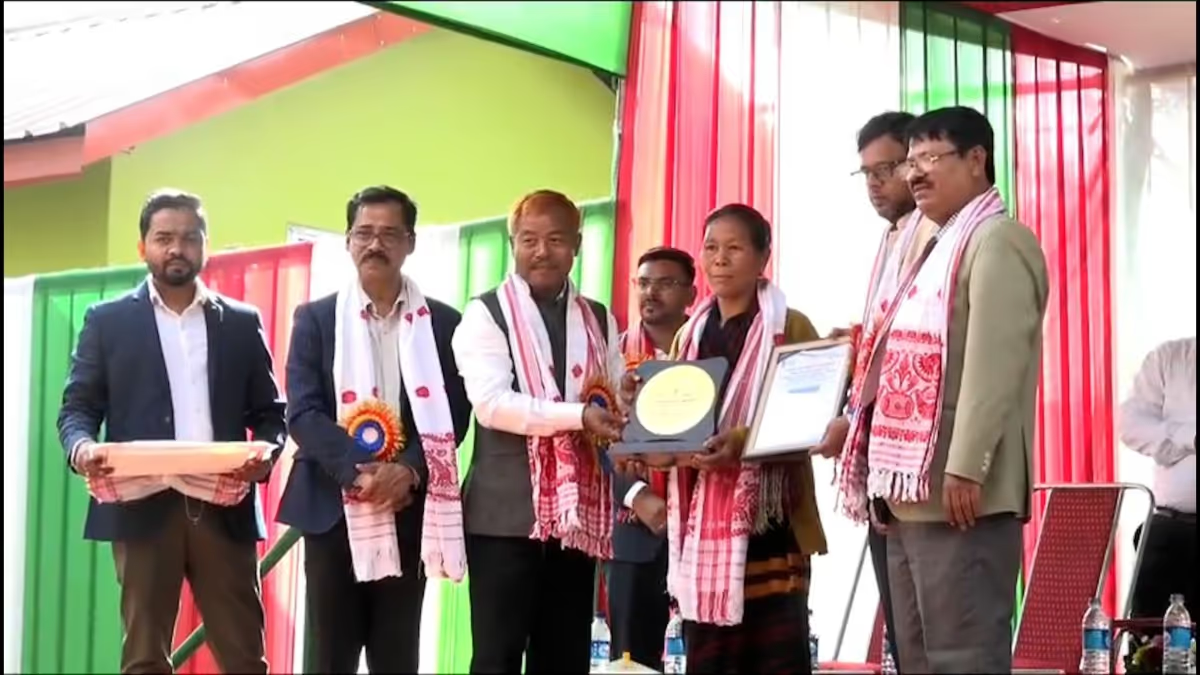

The Vanya Resham Krishi Mela at Boko on Tuesday, February 10 put Assam’s sericulture potential and the rising global demand for muga silk in the spotlight, while highlighting policy measures aimed at shielding farmers from market exploitation. The day-long event, organised by the Regional Sericultural Research Station (RSRS) under the Central Silk Board, Ministry of Textiles, brought together farmers, scientists, policymakers and industry stakeholders to promote sustainable practices and value addition in the state’s traditional silk economy.
The mela was inaugurated by Tankeswar Rabha, Chief Executive Member of the Rabha Hasong Autonomous Council (RHAC), Dudhnoi. The programme was presided over by Dr Kartik Neog, Director, CSB-CMER & TI, Lahdoigarh, and attended by senior officials including Kajori Rajkhowa, ACS, Secretary HTS-cum-Director of Sericulture, Assam; Dr Tapan Dutta, Principal of Jawaharlal Nehru College, Boko; Dr M. Maheswari, Director, CSB-MESSO, Guwahati; and B. B. Singha, retired Scientist-D of the Central Silk Board.
Addressing participants, Dr Tapan Dutta urged farmers to move beyond selling raw cocoons and to prioritise weaving, processing and product diversification. He said silk-based entrepreneurship-from fabrics to finished lifestyle products-can markedly increase incomes and strengthen rural livelihoods.
Nearly 250 muga and eri rearers from Kamrup and Goalpara districts took part, underscoring the region’s deep-rooted engagement with traditional sericulture. Outstanding practitioners were recognised during the programme: Fonola Marak won the Best Farmer Award in the Eri Pre-Cocoon segment; Bharat Rabha was honoured in the Muga Pre-Cocoon category; and Narmohan Das received the award for the Post-Cocoon segment. The chief guest praised the farmers as the backbone of Assam’s silk economy.
On market opportunities, Narmohan Das said Japan remains the largest buyer of Assam’s muga silk. He noted his participation in exhibitions across seven countries, successful exports of eri and muga products to multiple international markets, and his planned participation in an international exhibition in Mexico later this year.
RHAC Executive Member Aditya Rabha outlined several welfare schemes to promote eri and muga cultivation, including one-time financial assistance, housing support for rearing activities, and the provision of essential materials to farmers.
Tankeswar Rabha highlighted structural and policy challenges, noting that about 65 percent of Assam’s eri silk comes from Kamrup, Goalpara and parts of Bodoland, while muga production concentrates along the Assam–Meghalaya border due to favourable ecology. He warned of policy gaps in cultivation and trade and urged cultivators to leverage government schemes and strengthen self-reliance.
Rabha also raised concerns about middlemen exploitation that drives farmers away from sericulture. To counter this, the RHAC has launched a scheme with the government to ensure fair pricing and reduce intermediaries, aiming to protect cultivators’ interests.
The mela concluded with a technical session on innovations, sustainable practices and market strategies. Organisers said the Vanya Resham Krishi Mela is expected to improve coordination among farmers, researchers and policymakers and bolster Assam’s position as a global hub for indigenous silk.
Original Source: https://www.indiatodayne.in/assam/video/vanya-resham-krishi-mela-highlights-assams-silk-potential-push-for-fair-pricing-and-global-markets-1344364-2026-02-10?utm_source=rssfeed
Category:
Tags:
Publish Date: 2026-02-10 22:03:00