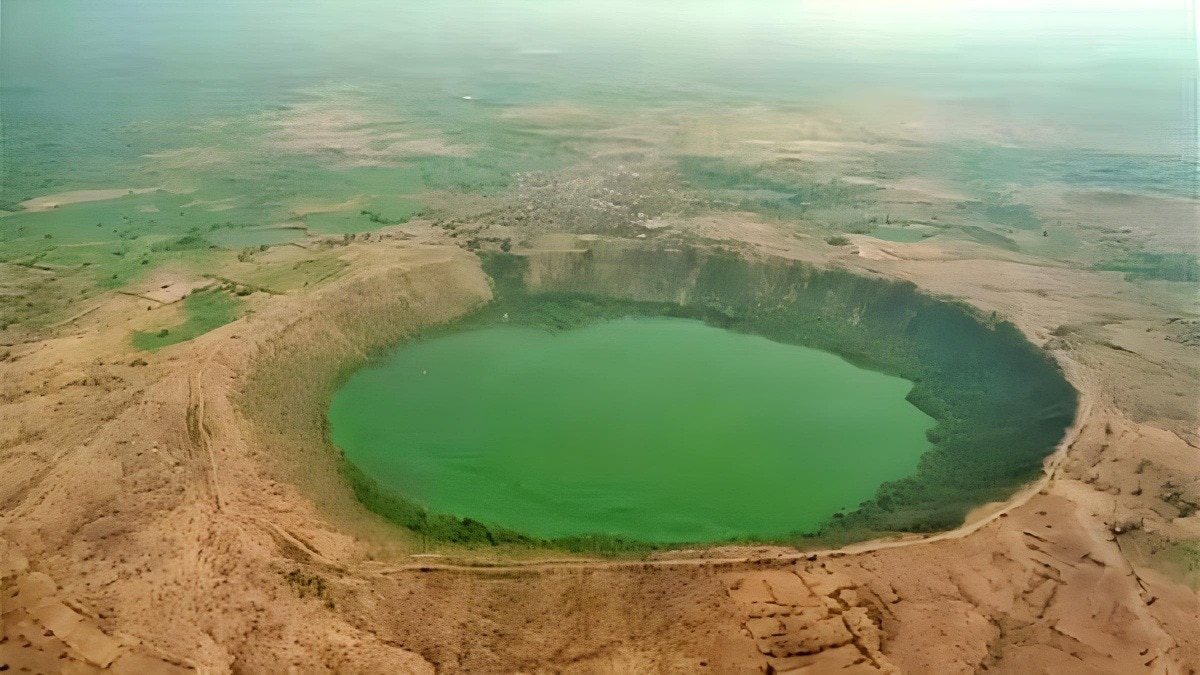

Researchers studying sediments from the Ramgarh crater in southeastern Rajasthan say they have found microscopic magnetic particles that may help identify the type of asteroid that struck the region thousands of years ago. The findings, presented at the Lunar and Planetary Science Conference (LPSC) 2026, strengthen the case that the roughly 3.5-kilometre circular landform near Ramgarh village in Baran district is an impact crater and suggest the impactor may have been iron-rich.
In the study, teams dug two shallow trenches inside the crater and collected about 30 sediment samples for laboratory analysis. Scientists used magnets to isolate tiny magnetic grains, then examined them with microscopes and chemical analysis tools. Many particles measured under a millimetre and had smooth, rounded shapes consistent with molten droplets that cooled quickly after being ejected during an impact.
The particles resemble microtektites-small, glassy fragments formed when an impact’s intense heat melts target rock and flings it into the atmosphere. Chemical tests detected iron, nickel and silicon in several grains. Investigators note that nickel is important because it is commonly found in meteorites but is rare in the sandstone that makes up the Ramgarh surroundings. Some grains also showed very high iron content and iron-rich mineral pockets, which further raises the possibility that pieces of the impacting body are preserved in the sediments.
Researchers say the results provide new, though not yet definitive, evidence that an iron-rich meteorite created the Ramgarh structure. Identifying traces of an impactor is often difficult-fragments can vaporize or fragment on arrival-so microscopic remnants such as these can be crucial. The study underlines how impact craters record episodes of the Solar System’s history and help scientists understand how high-energy collisions reshape Earth’s surface.
The team recommends more extensive sampling, mineralogical study and precise dating of crater materials to confirm the impactor’s composition and to establish when the collision occurred. The work, reported by Sibu Kumar Tripathi on Feb 9, 2026, highlights Ramgarh as a scientifically valuable but relatively little-known Indian impact site.
Original Source: https://www.indiatoday.in/science/story/tiny-particles-reveal-new-clues-about-asteroid-behind-rajasthans-ramgarh-crater-2865375-2026-02-09
Category:
Tags:
Publish Date: 2026-02-09 13:53:00