Architecting Resilient Energy Management Systems for Industrial Hybrid Microgrids

Strategic Zoom-Out: Why a 155-hour renewable run at a gold mine matters for enterprise design
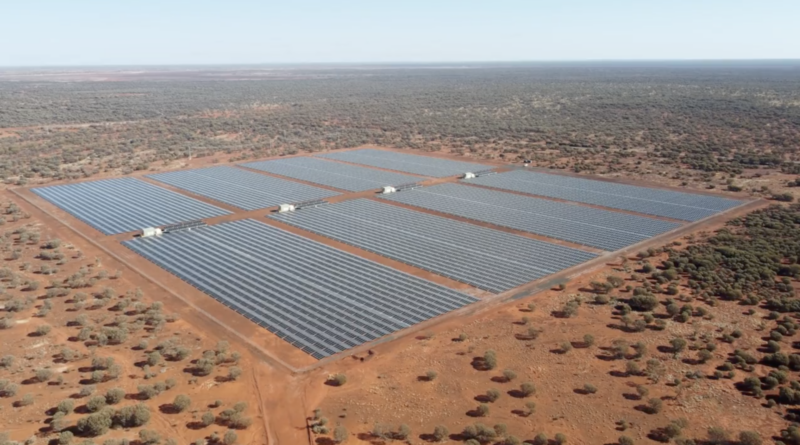
I recently came across an interesting case where a remote gold mine in Western Australia operated for roughly 155 hours (about 6½ days) on 100% renewable energy, using a hybrid microgrid of solar, wind, batteries and thermal backup. That achievement is notable not because it is a one-off headline, but because it exemplifies a maturing architectural pattern that enterprise leaders need to understand: power infrastructure is becoming an integral part of systems design, not a commodity to be outsourced without technical oversight.
The signal, in two sentences
Bellevue Gold – operating a 90 MW hybrid power station composed of 27 MW solar, 24 MW wind and 15 MW/33 MWh battery storage with thermal as standby – demonstrates how remote heavy-industry sites can reach extended periods of fossil-free operation. The pragmatic lesson is that renewables+storage at scale are now an architectural option for mission-critical, off-grid operations.
What this means for enterprise and systems architects
-
Energy as infrastructure, not as utility: For remote industrial sites (mines, large campuses, industrial parks), power becomes a first-class system component. That shifts responsibility from facilities teams to cross-functional engineering leadership. Architects must include energy systems within reliability models, SLAs, and incident response plans-just as they do for networks and data centers.
-
Rethink control planes and observability: Microgrids are cyber-physical systems. Effective operation depends on forecasting (weather, load), real‑time energy management systems (EMS), and deterministic control logic that coordinates generation, storage and backup. From an enterprise standpoint, demand-level telemetry, edge compute for low-latency control, and tight integration with asset-management and ERP systems are non-negotiable. Design for open interfaces and data models to avoid vendor lock-in.
-
Trade-offs: overprovisioning, resilience and cost: The economics that enabled the 155-hour run combine diversified generation (solar + wind), energy storage, and oversizing relative to average load. That reduces fuel dependence but increases capital complexity and requires lifecycle thinking-depreciation, battery degradation, replacement cycles, and spare-part logistics. Architects must balance CAPEX-for-resilience vs OPEX-for-flexibility and model those trade-offs explicitly.
-
Verification and emissions accounting: Operational claims like “100% renewable for 155 hours” or “net-zero Scope 1 & 2” need robust telemetry, immutable logging, and independent verification. For enterprises reporting sustainability metrics, the digital architecture must provide auditable chains of evidence: timestamped generation/consumption records, backup kick-ins, and emissions factors.
-
Cyber-physical risk and standards: As energy control systems converge with IT, the attack surface broadens. Zero Trust principles, network segmentation between ICS/OT and IT, secure OTA updates for inverters/EMS, and incident playbooks that cover both cyber and physical failure modes become essential.
Localization – why this resonates for India (including Northeast)
Many Indian industries operate in remote, diesel-dependent environments: mines, tea estates, telecom towers, and micro-enterprises supplying critical rural services. The architectural principles demonstrated here-diversified renewable portfolios, edge control, local O&M capability and auditable carbon accounting-are directly applicable. For the Northeast, where terrain and logistics increase operational fragility, microgrids offer a path to resilience and lower lifecycle cost, provided programs invest in local skills and supply chains.
Practical takeaways for CTOs, Founders and Infrastructure Heads
- Treat power systems as part of the product architecture: include energy SLAs in availability and incident response planning.
- Specify open EMS APIs, edge compute capability, and telemetry requirements in procurement to avoid black‑box vendor lock-in.
- Model lifecycle costs: include battery cycle life, replacement logistics, and ancillary service needs (frequency, inertia).
- Build auditable telemetry and independent verification into sustainability reporting from day one.
- Harden OT environments with Zero Trust, segmented networks, and cross-disciplinary drills combining cyber and physical failures.
Closing thought
When remote industrial sites begin to think of energy as a programmable, observable layer of their stack, we move from isolated sustainability pilots to resilient, enterprise-grade decarbonization.
About the Author: Sanjeev Sarma is the Founder Director and Chief Software Architect at Webx Technologies. With a core focus on Generative AI integration, Cloud-Native Scalability, and Enterprise Software Architecture, he has spent over two decades driving digital transformation across Northeast India and beyond. Beyond his corporate leadership, Sanjeev is deeply invested in shaping the future of the IT industry. He serves as an Industry Expert on the Board of Studies for Assam Don Bosco University’s School of Technology, advises state technology committees, and actively mentors emerging tech startups at STPI. He brings a unique, dual perspective of high-level enterprise execution and future-ready academic curriculum development.