
A violent incident involving a Christian pastor in Odisha has surfaced online, with a video showing a man identified as a Hindu extremist harassing him inside a church. This follows a disturbing pattern of attacks on Christians in India, highlighted by vandalism of Christmas decorations by Hindu nationalist groups at a shopping mall in Chhattisgarh on December 24, 2025. Such incidents raise pressing questions about the increase in violence against the Christian community in the country.
This issue is not isolated; for decades, Christians in India have faced ongoing violence, social ostracism, and even death, frequently met with silence rather than outrage. The silence does not always reflect acceptance but often signifies a restrained faith, a painful choice to endure rather than retaliate. Many Christians continue to uphold their belief in the Indian Constitution, despite its failures to protect them, opting for dignity and peace over discord. However, when a community consistently faces violence yet is expected to prove its patriotism through silence, it calls into question the very meaning of religious freedom. Endurance should never justify injustice, as a democracy cannot rely on minorities’ patience to cover the erosion of their rights.
The Constitution of India guarantees the Right to Freedom of Religion through Articles 25–28, promising every citizen the freedom to profess, practice, and propagate their faith without fear. Yet, in daily life, religion often feels less like a personal choice and more like a source of anxiety and conflict. If this right still exists on paper, why does it feel so fragile in practice?
On January 26, the country celebrated Republic Day, marked by parades, patriotic songs, and widespread pride in the Constitution. Just weeks before, however, the vandalism of Christmas decorations and disruptions of church celebrations had instilled a sense of fear. This raises a critical question: can constitutional rights be eroded not through formal law but through societal silence and complicity?
Celebrating the Constitution while ignoring its violations poses a significant contradiction. How many citizens can recall Article 25, which guarantees every individual’s right to practice their faith? This freedom should equally apply to Christians, Muslims, Sikhs, and Hindus alike. Republic Day represents not merely a symbolic event but a commitment to a Constitution founded on liberty and equality. If these ideals are affirmed in speeches yet denied in everyday interactions, can we truly call this patriotism?
The Constitution does not exclusively safeguard the beliefs of the majority; it protects everyone, particularly minorities, as a foundation of a democratic republic. When citizens cheer on constitutional values during Republic Day celebrations but remain silent about the destruction of religious symbols, what does this inaction reveal? Is it forgetfulness, fear, or selective respect for rights? Are we remembering constitutional promises in words yet forgetting to act on them?
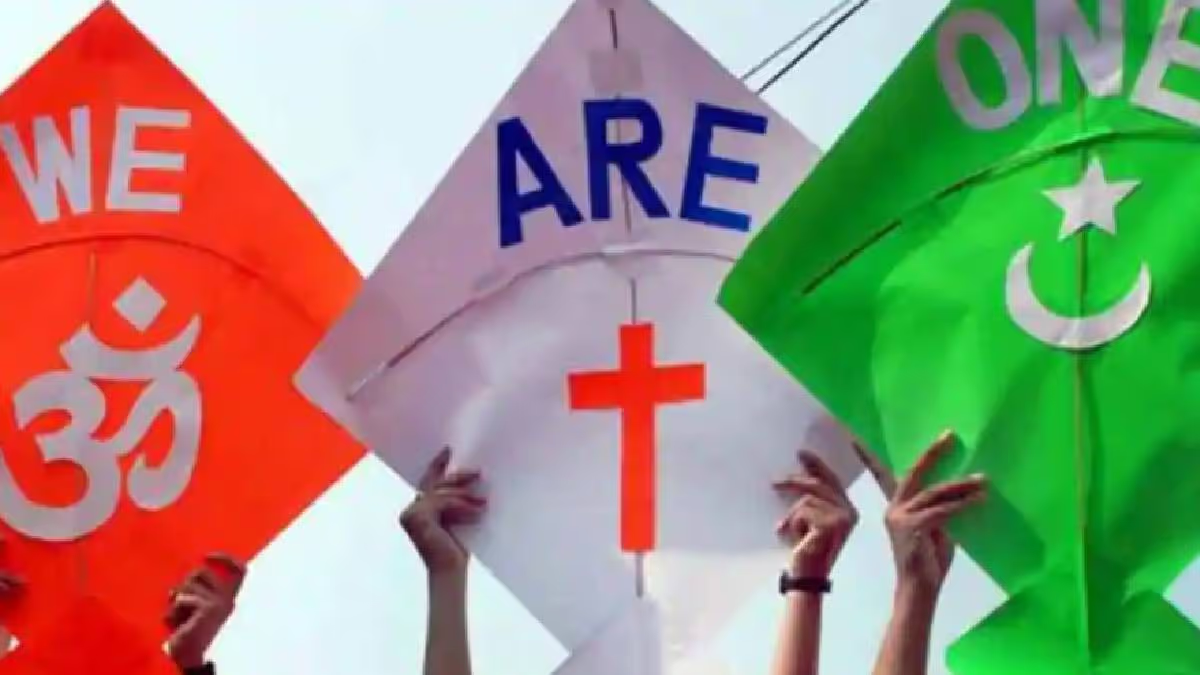
The Indian flag, symbolized by its tricolor, does not represent a single religion, language, or identity. It embodies a promise that India belongs equally to all its inhabitants. When any community feels unwelcome in expressing its faith, does that promise remain credible? If constitutional rights are acknowledged only on specific occasions and ignored throughout the rest of the year, are we genuinely honoring the Republic or diminishing its integrity?
When we overlook attacks on religious freedom, what message does that send about the future of such liberties? A right that is not defended is at risk. The core question for every citizen is: does practicing faith in India still require permission?
Original Source: https://www.indiatodayne.in/lifestyle/story/is-india-forgetting-the-right-to-freedom-of-religion-1339921-2026-02-01?utm_source=rssfeed
Category:
Tags:
Publish Date: 2026-02-01 21:58:00