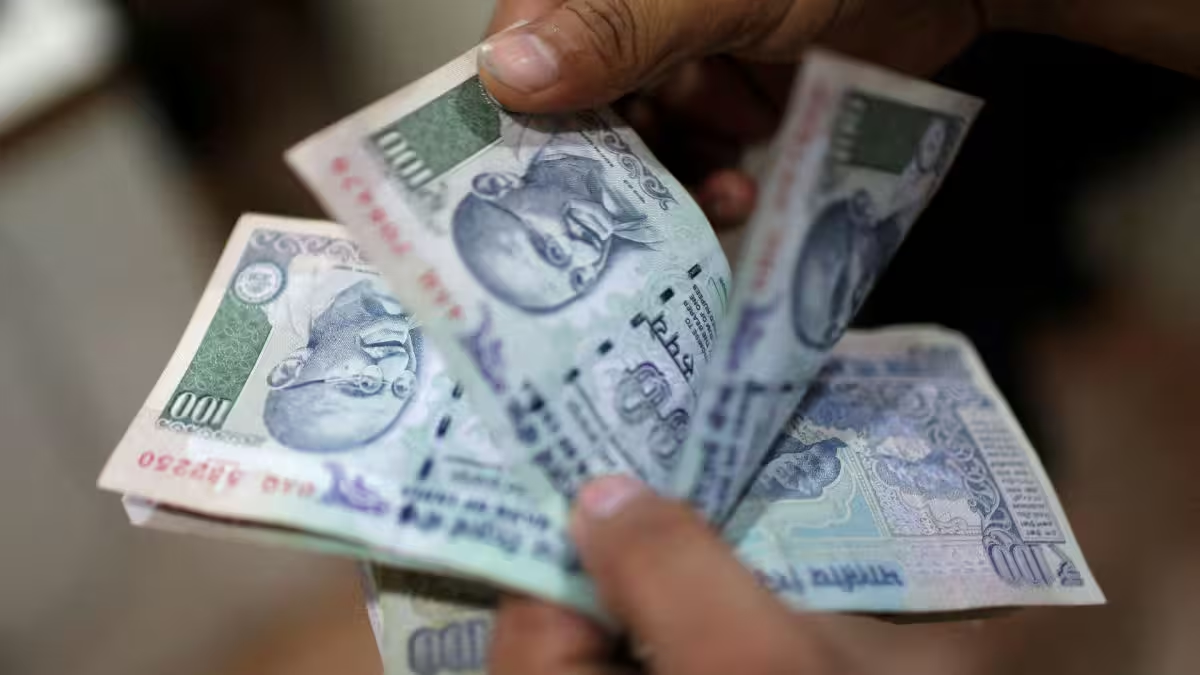

Twelve Indian states have announced plans to spend Rs 1.68 lakh crore on women’s unconditional cash transfer (UCT) schemes for the financial year 2025-26. This initiative aims to empower women from economically weaker sections by providing cash benefits to eligible women based on income levels, age, and other criteria.
Three years prior, only two states had implemented such schemes, according to a report from PRS Legislative Research. However, the rapid expansion of these programs has raised concerns about the financial sustainability of state budgets. The report highlights that six of the twelve states planning these cash transfers are currently experiencing revenue shortages, drawing attention to the fiscal pressures associated with expanding women-focused financial assistance.
States like Assam and West Bengal have significantly increased allocations for women’s UCTs, with respective rises of 31% and 15% compared to the previous year. Despite the noble intentions behind these schemes, financial strain is evident, as many states are juggling multiple programs, leading to potential mismanagement and budgetary complications.
The report also notes that out of the twelve states, six are projected to face revenue deficits in 2025-26. Some states have already implemented additional schemes, such as the CM Ladki Bahin Yojana and CM Maiyan Samman Yojana, which further complicates their financial landscapes.
Furthermore, the Reserve Bank of India has cautioned that increasing subsidies targeted at women may limit the fiscal space available for essential productive spending. Specific to Karnataka, which was initially expected to have a revenue surplus of 0.3% of its Gross State Domestic Product (GSDP), is also likely to shift to a deficit once UCT expenditures are factored in. The financial estimates for Delhi are not available, making it difficult to assess its situation in this context.
As the landscape of state budgets becomes increasingly strained, the implications of these cash transfer schemes will be closely monitored to ensure fiscal responsibility alongside social welfare objectives.
Original Source: https://www.firstpost.com/india/when-indias-poorest-states-make-promises-they-cant-afford-13948100.html
Category: India
Tags:
Publish Date: 2025-11-05 16:15:00