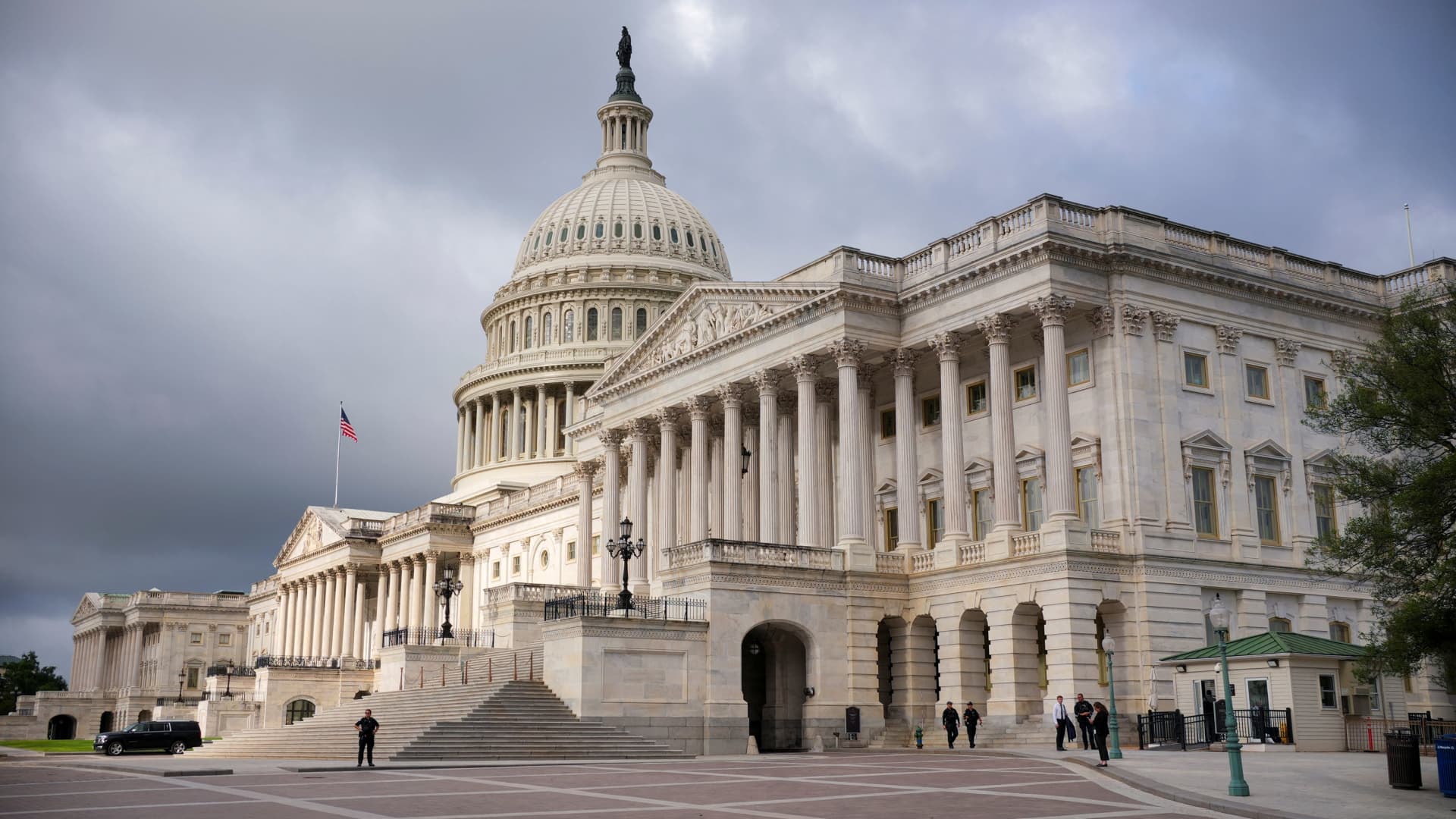

The U.S. Capitol is poised for a contentious return as Congress reconvenes this September after its August recess, with a government shutdown looming. Congressional Republicans celebrated a significant achievement over the summer with the passage of President Donald Trump’s controversial tax and spending cuts, done without any Democratic support. However, as lawmakers return, they face the pressing need to work collaboratively-or around-Democrats to prevent a federal funding lapse.
The most urgent challenge is to prevent a government shutdown on September 30, the deadline for federal funding. Congressional leaders must negotiate a short-term spending bill to sustain government operations while they finalize budgets for the fiscal year. However, achieving bipartisan agreement remains uncertain, as Republicans will require Democratic votes to pass any extension. Recent actions by Senate Minority Leader Chuck Schumer have led to backlash within his party, complicating negotiations further.
There is also mounting tension surrounding Trump’s attempts to roll back previously approved funding, including about $9 billion in foreign aid and public broadcasting allocations. The administration’s latest move to block $4.9 billion in foreign aid has prompted warnings from Democrats. “Trump is rooting for a shutdown,” stated Senator Chris Murphy, underscoring potential roadblocks to broader negotiations.
Another focal point as Congress reconvenes will be the ongoing battle over Senate nominations, which has been fraught with partisan conflict. Republicans, frustrated by delays in confirmations, are exploring possible changes to Senate rules to tackle what they perceive as Democratic stalling tactics. Tensions erupted before the recess when Trump expressed his annoyance over the nomination process, urging decisive action as lawmakers return.
In foreign policy, discussions are intensifying regarding new bipartisan sanctions against nations supporting Russia’s aggression in Ukraine. Senator Lindsey Graham has been a key advocate for these tariffs, with 85 senators backing the proposal. However, without Trump’s endorsement, Republican leaders have been hesitant to advance the legislation.
Additionally, the oversight of health policies will command attention as Health and Human Services Secretary Robert F. Kennedy is scheduled to answer questions from the Senate Finance Committee. His recent decision to oust CDC Director Susan Monarez has led to controversy, with critics alleging that Kennedy’s proposed policies deviate from established scientific research.
In the House, tensions within the Republican conference have escalated concerning the investigation into the late Jeffrey Epstein. As pressure mounts for increased transparency, bipartisan support is emerging for legislation that mandates the release of the Department of Justice’s findings related to Epstein’s case.
Meanwhile, investigations into President Joe Biden’s time in office will continue, with the House Oversight Committee set to conduct interviews with key former aides. This inquiry reflects ongoing efforts by Republicans to scrutinize the administration.
Amidst these developments, Congress is also grappling with proposals to restrict stock trading by lawmakers to avoid conflicts of interest. Republican Senator Josh Hawley has advanced legislation aimed at curbing stock transactions among current and future presidents, although some resistance remains.
As Congress prepares to navigate these complex issues, the ability to forge bipartisan agreements will be essential in shaping the national agenda for the upcoming months. The stakes are high, and the eyes of the nation are firmly fixed on Capitol Hill as lawmakers return to work.
Original Source: https://www.cnbc.com/2025/08/31/government-shutdown-looms-as-congress-returns-after-monthlong-august-recess.html
Category :
Tags:
Publish Date: 2025-08-31 21:31:00