
Researchers at Simon Fraser University have introduced a groundbreaking artificial intelligence framework designed to revolutionize drug development and expedite the discovery of new pharmaceuticals. This pioneering method, detailed in a study released on the arXiv preprint server, seeks to address one of the pharmaceutical sector’s most persistent hurdles: crafting effective drug molecules.
The potential of AI in drug design has been evident for years, offering solutions for constructing complex molecular structures that interact with disease-related targets. However, many theoretically ideal molecules fall short when faced with practical laboratory manufacturing challenges. The newly developed approach promises to significantly slash the time required to identify and create drugs aimed at treating common ailments, including cancer.
Martin Ester, a computing science professor at SFU, emphasized the urgency of improving drug development timelines. He noted, “The development of a new drug is an extremely time-consuming and expensive process. As a rule of thumb, people always say that it takes 10 years and $1 billion USD to bring a new drug to market. Our hope is that our method will significantly shorten this process so that new drugs can be discovered, produced, and made available in a much shorter timeframe in order to help cure diseases.”
A major obstacle in AI-driven drug design is the synthesis pathway, which is the ability to formulate a realistic chemical recipe for building a molecule. Without this capability, many promising AI-generated molecules end up being discarded, wasting valuable time and resources. Tony Shen, a Ph.D. student at SFU and lead author of the study, explained, “The fight against disease starts with identifying the disease-causing protein. In the lab, computer models are then used to design molecules that will bind to the disease-causing protein, often deactivating it and stopping its harmful activity. The whole process is a bit like trying to design a key that will fit into a lock.”
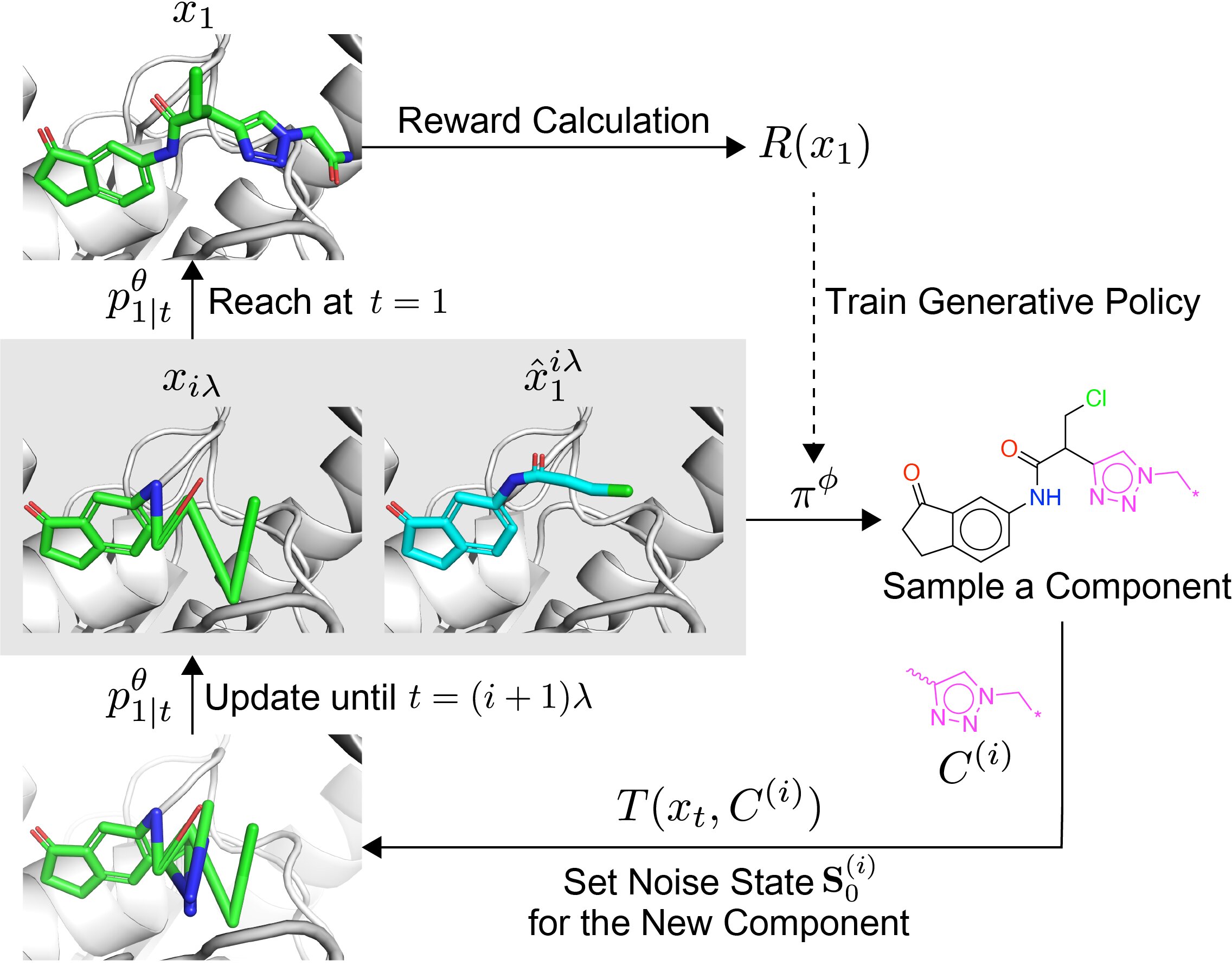
The innovative method introduced, known as CGFlow, employs a dual-design strategy that allows AI to concurrently model a molecule’s construction and its three-dimensional structure. This integrated approach is crucial for generating molecules that are both biologically effective and feasible for chemical production. Ester further elaborated, saying, “We have developed a machine-learning method that practically guarantees that the molecule generated can be created through chemical synthesis in the real world. This is a hugely important aspect in translating the results of these generative models into practical applications. It is very exciting.”
CGFlow operates incrementally, assembling molecules step by step, similar to sculpting a statue from clay. At each stage, the AI learns how new components affect the overall design, resulting in more precise and efficient outcomes. This innovative process is already garnering interest beyond academic circles; several companies are exploring the adoption of the CGFlow framework for early-stage cancer drug development, offering renewed hope in battling complex diseases.
Looking ahead, Ester expressed enthusiasm about collaborating with industry stakeholders to refine CGFlow for practical applications. “The next step is to take our method to industry so it can be used and improved. We’re really interested in working with industry to evaluate and further develop CGFlow in practical applications,” he stated. This promising research was showcased at the International Conference on Machine Learning 2025 in Vancouver.
For more insights, refer to the original study published by Tony Shen et al. in arXiv: DOI: 10.48550/arxiv.2504.08051, highlighting the significant strides made in AI-driven drug design and synthesis.
This document is subject to copyright. It is intended strictly for informational purposes.
Original Source: https://techxplore.com/news/2025-08-ai-tool-medical-drugs-scientists.html
Category :
Tags:
Publish Date: 2025-08-14 00:34:00