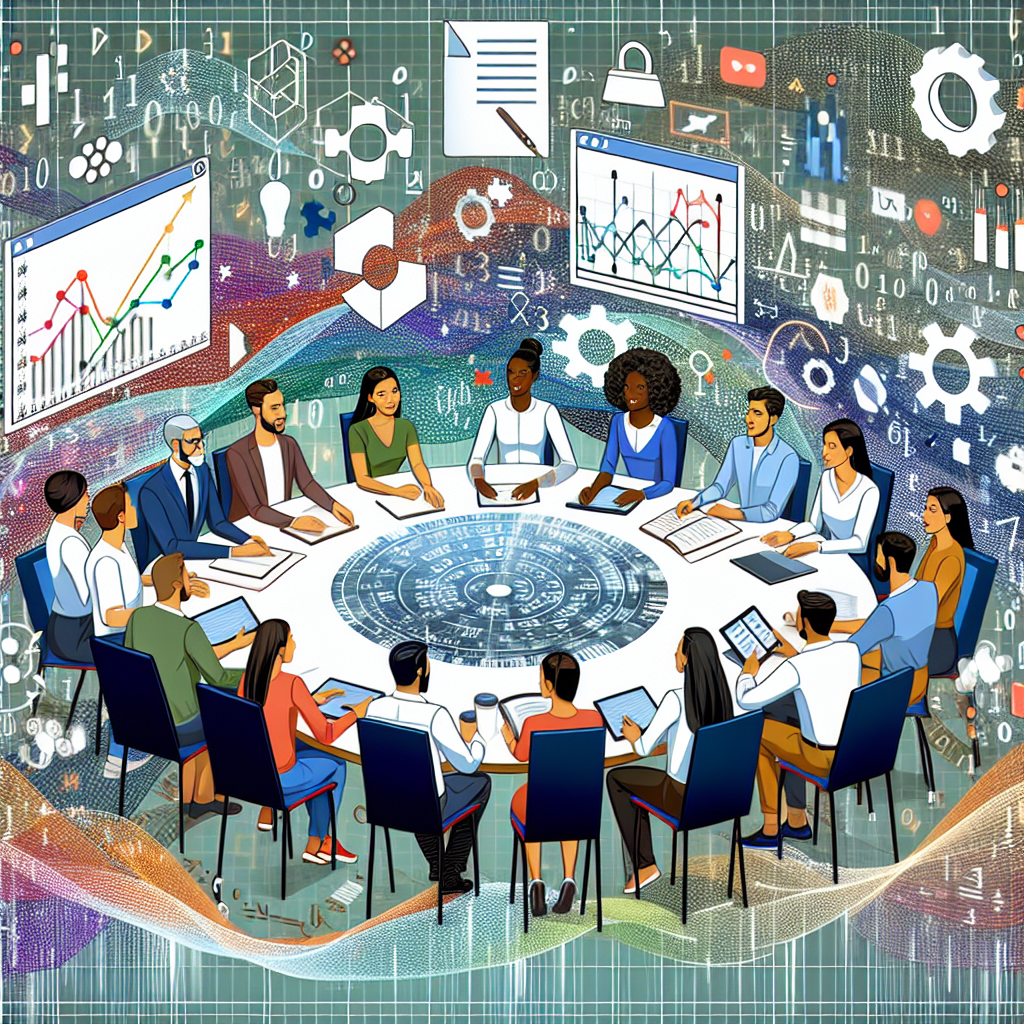

Have you ever wondered how the same numbers that make up a business report can also foster social change? This isn’t a question often posed in the mathematics community, where abstract equations usually reign supreme. However, the fascinating intersection of data science and social justice is reshaping both how we perceive numbers and their profound impact on our world.
Imagine this scenario: a small nonprofit in India aiming to improve access to clean drinking water in rural villages. They collect data on water quality, availability, and even local health reports. But here’s where it gets interesting—they partner with a group of data scientists who help make sense of those numbers. By employing predictive analytics, they can identify which villages are most at risk and prioritize interventions. This isn’t just data; it’s empowerment distilled into actionable insights.
Now, consider the broader implications. The mathematics community has a responsibility that extends beyond formulas and theories. When we think about social justice through the lens of data science, we begin to see how numerical literacy can fuel activism. The algorithms we create often reflect the biases that exist in our societies. For instance, a study on predictive policing revealed that algorithms were disproportionately targeting certain community demographics based on flawed data inputs. This sheds light on the urgent need for human oversight in algorithmic processes. Mathematics isn’t just about finding the right answers; it’s about questioning the very questions we ask.
In my work as a Chief Software Architect, I’ve encountered various data-driven projects that push the boundaries of what’s possible—yet they often overlook an essential principle: inclusion. The beauty of data science lies not just in the sophistication of the algorithms but in their potential to give a voice to the voiceless. Engaging marginalized communities while developing data-driven solutions creates a collaborative effort that can result in more equitable outcomes.
One practical example comes from the world of healthcare. The COVID-19 pandemic forced hospitals to rely heavily on data science, resulting in swift vaccine distribution in some regions while others lagged behind, often due to systemic inequities. The differences weren’t merely about access to resources but how data was collected and utilized in decision-making. Those hospitals that approached data with a social justice lens were more effective in reaching communities hit hardest by the pandemic. This kind of awareness needs to be embedded in the fabric of every data science initiative.
So, what can we take away from this? First, as data practitioners, we need to approach our work with a sense of responsibility. The insights we derive can either amplify voices or silence them; it’s our duty to choose wisely. Second, incorporate a diverse range of perspectives when analyzing data. Engaging with communities ensures that we’re not just creating solutions for them but with them. Lastly, educate others about the ethical implications of data science; the more people understand its power, the more effective we can all be in using it for social change.
Here’s the thing: data science can be a catalyst for social justice, as long as we approach it thoughtfully. We get to decide whether our numbers serve as tools for liberation or oppression. This isn’t merely a call to action; it’s an invitation to redefine our relationship with mathematics. So next time you encounter a dataset, consider what story it’s telling and who’s left out of the narrative. What kind of impact could you help foster by integrating social justice into your data science projects? The numbers are waiting—let’s ensure they’re telling the right story.
Author Profile:
Sanjeev Sarma is the Director of Software Services and Chief Software Architect at Webx Technologies Private Limited. With a robust background in IT and a passion for social impact, he thrives at the intersection of technology and societal dynamics. An avid writer and thought leader, Sarma aims to inspire others to harness the power of technology for meaningful change, especially in fields like AI, ML, and cybersecurity. A proud Northeastern Indian, he brings a unique perspective to the global tech conversation.