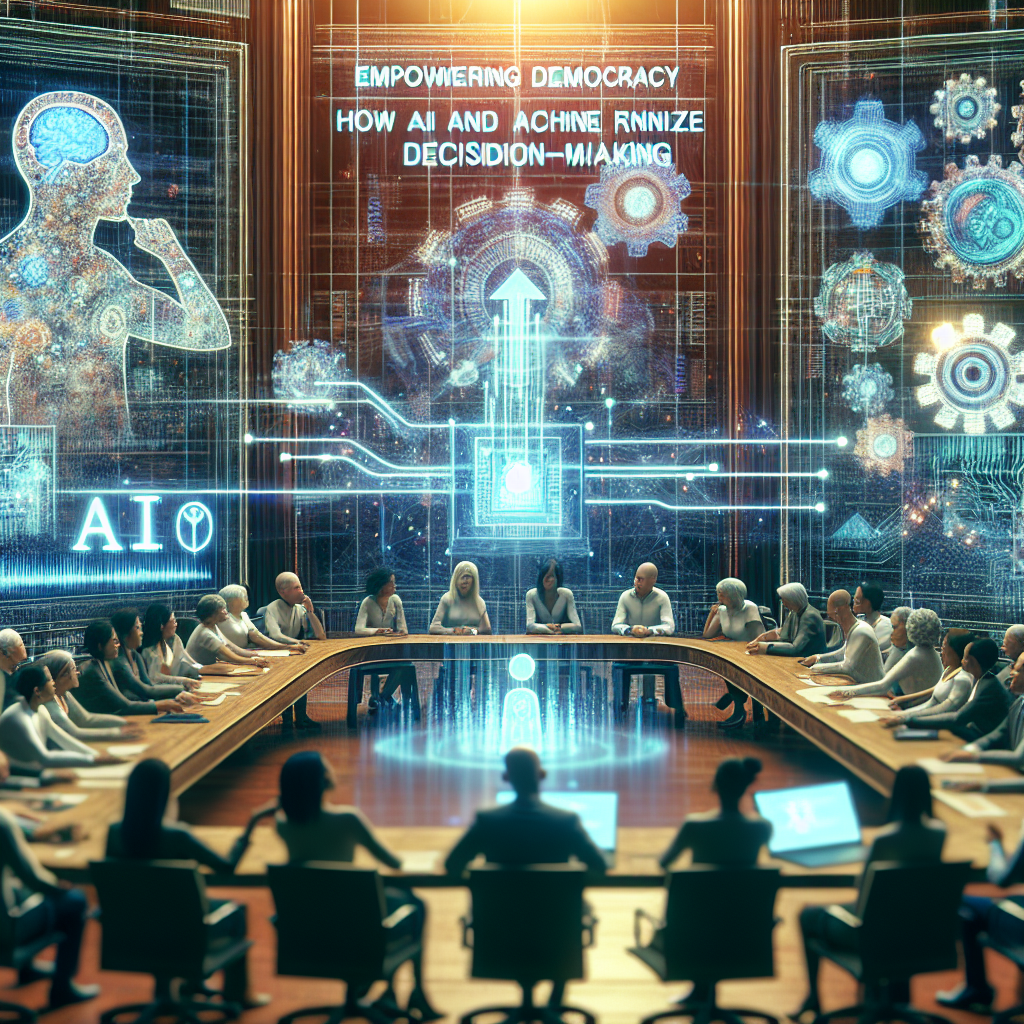
Empowering Democracy: How AI and Machine Learning Revolutionize Public Decision-Making

In recent years, the intersection of artificial intelligence (AI) and democracy has gained considerable attention, transforming how public decision-making occurs. Machine learning, a subset of AI, is quietly reshaping our democratic processes—making them more efficient, data-driven, and attuned to the needs of citizens. As someone passionate about technology’s impact across various sectors, I find this evolution particularly exciting.
Consider the case of smart cities like Barcelona, where machine-learning algorithms analyze real-time data to optimize public services. From traffic management to waste collection, these systems help city officials make informed decisions that maximize citizen satisfaction and resource efficiency. Involving AI in decision-making not only enhances public services but also encourages transparency. Citizens can access data, see how policy decisions are made, and engage more actively in democratic processes.
Another stunning example is the use of AI in public surveys and consultations. Governments have begun deploying machine learning tools to gather public opinions on issues ranging from healthcare to urban development. By analyzing data from diverse sources—social media sentiment, online surveys, and public forums—these algorithms provide nuanced insights into public preferences, which can guide policy creation. For instance, the City of New York has effectively utilized machine learning to analyze social media data, enabling it to craft better community engagement strategies and address specific concerns voiced by residents.
An often-overlooked area is how machine learning models can help predict election outcomes and inform campaign strategies. Traditional polling methods are not only time-consuming but can also be less accurate in certain demographics. AI-driven analytics can process vast amounts of data—including voter behavior, social media interactions, and historical election results—yielding insights that help candidates tailor their messages more effectively. A prominent illustration of this is the use of predictive analytics in the 2020 U.S. Presidential elections, where campaigns employed AI tools to optimize outreach strategies effectively.
However, there are challenges and ethical dilemmas associated with AI in democracy. Misuse of data analytics can lead to manipulation of public opinion or exacerbate division among communities. The Cambridge Analytica scandal serves as a cautionary tale; it highlighted how targeted advertising and data misuse can undermine democratic integrity. Consequently, ethical considerations are paramount when implementing AI tools in governance. Transparency, accountability, and citizen engagement must remain at the forefront of these initiatives.
Interestingly, educational institutions are beginning to highlight the role of machine learning in public decision-making. Universities like Harvard and Stanford offer courses focused on AI ethics, encouraging future leaders to understand the responsibilities tied to technological advancement. This educational investment is crucial for nurturing informed decision-makers capable of navigating the ethical complexities of AI-driven governance.
Moreover, embedding AI in public policy isn’t solely about technology; it emphasizes collaboration. Various stakeholders, including tech companies, civil society, and local governments, must come together to create a holistic framework for democratic engagement. Project governance should promote multidisciplinary input to ensure diverse perspectives are considered in AI implementations. This is exemplified through initiatives like the European Union’s AI Act, which aims to regulate AI usage while upholding citizens’ rights.
As professionals in the tech space, we can engage with policymakers, emphasizing the importance of ethical AI in governance. Participating in discussions, offering workshops, and advocating for transparency can catalyze the responsible integration of machine learning in public decision-making. Engaging in these conversations fosters an environment where technology acts as a facilitator of democracy rather than a disruptor.
Ultimately, AI’s role in shaping democracy is just beginning, but its impact is already palpable. By harnessing the power of machine learning, we can build a more responsive and inclusive political landscape—one that not only meets the modern citizen’s needs but actively engages them in the democratic process.
Author Profile:
Sanjeev Sarma is an emerging thought leader in technology, serving as Chief Software Architect at Webx Technologies. His passion for artificial intelligence, machine learning, and cybersecurity drives his work as he explores their transformational impact on diverse fields. With a keen interest in digital transformation, Sanjeev advocates for the responsible and ethical integration of technologies in public sectors like education, health, and entrepreneurship. Through workshops and discussions, he aims to demystify complex tech topics, fostering collaboration among professionals, policymakers, and the public.