Boosting India’s Public Health: Should Mumps Vaccine Be the Next Addition to Universal Immunisation Logistics?

As India grapples with a resurgence in mumps outbreaks, public health experts are debating whether the disease has become a significant enough public health problem to warrant prevention through immunization. The debate has taken on a new hue in Kerala, where cases have spiked to alarming levels, with over 74,000 cases reported in 2024 and over 16,500 cases already reported this year as of March 25.
Mumps, a self-limiting, airborne, viral disease, is known to present as fever and headache in mostly children and adolescents, with painful swelling of the salivary glands (parotid glands) on both sides of the face. The patient usually recovers with rest and symptomatic management in about two weeks. However, complications can occur, including encephalitis, sensorineural deafness, and infertility, making it a vaccine-preventable disease.
The insecticides have been absent from India’s Universal Immunisation Programme, with measles deemed a higher priority for elimination. However, as mumps cases continue to surge, with over 85 schools and several tribal hostels forced to close in 2024, there is growing pressure to introduce the mumps vaccine as part of the immunisation schedule.
Dr. I. Riaz, State president of the Kerala chapter of the Indian Academy of Paediatrics, questions why the disease is being allowed to “run through the community” and notes that “when mumps is a vaccine-preventable disease, should we allow the disease a run through the community?” In a research paper published in 2016, S.R. Vaidya and V.S. Hamde argued that mumps is indeed a significant public health problem in India, but that it does not garner attention due to the absence of a surveillance and documentation system.
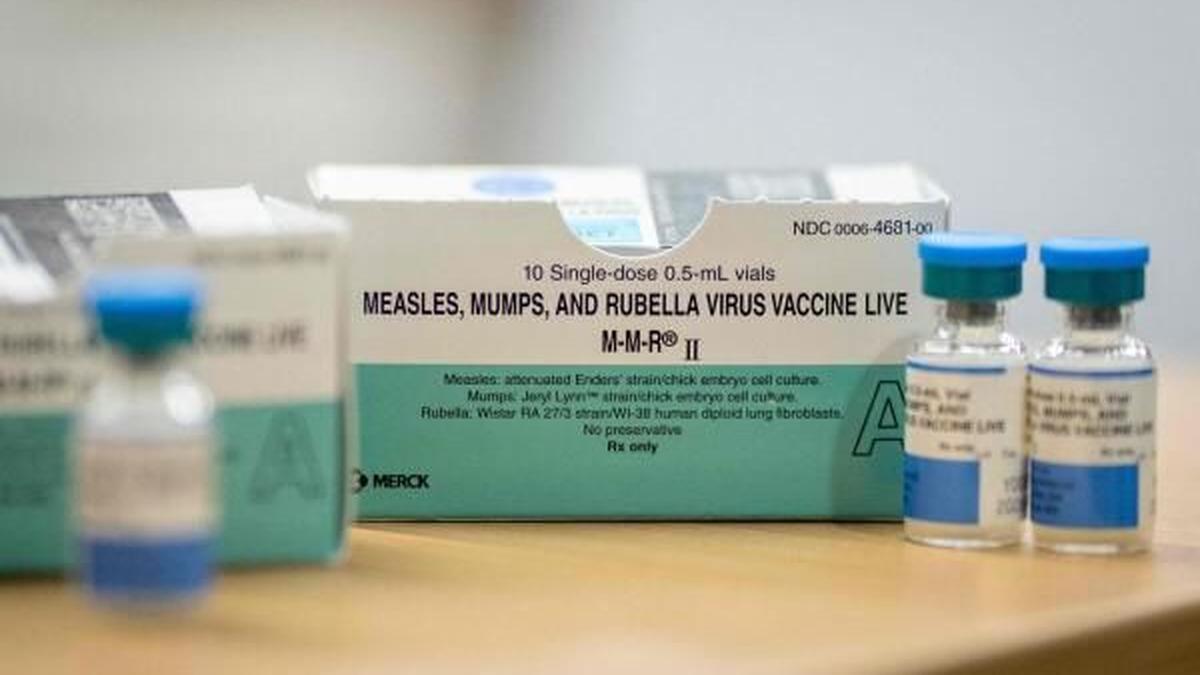
The MMR vaccine, which protects against measles and rubella, is the only vaccine currently available against mumps. In several countries, including private hospitals in India, the MMR vaccine is provided in combination with the MR vaccine, as the Mumps-Measles-Rubella (MMR) vaccine. Following a recent meeting of Kerala’s State Technical Advisory Group on Immunisation (STAGI), the Additional Chief Secretary (Health) and the Director of Health Services had written separate letters to the Union Health Ministry asking for the inclusion of the mumps vaccine in the UIP schedule, through the MMR vaccine, to prevent future mumps outbreaks.
Several states that have been experiencing huge mumps outbreaks have also made similar requests to the Centre, that MMR vaccine be introduced in place of the MR vaccine in the UIP schedule. In December, Tamil Nadu’s Health Department also wrote to the Union Health Ministry in this regard. “However, introducing a new vaccine in the community is a long process as innumerable factors – vaccine availability, price, supply and most importantly, the possible side effects of the vaccine – will have to be studied ahead,” a senior Kerala Health official said.
The Kerala Health Department is currently exploring the possibility of introducing the MMR vaccine in the UIP schedule, with the State Technical Advisory Group on Immunisation (STAGI) recommending that the State retain the MR vaccine at nine months, while the MR dose at 18-24 months is replaced by MMR, to be followed by a booster dose of MMR at five years.
Public health experts point out that improving general immunisation cover is important, as mumps is primarily being reported in un-immunised children and adolescents. Isolating patients for three weeks and using face masks can prevent the spread of the disease in the community. Most importantly, a public awareness campaign on mumps is in order so that people learn to recognise the disease and understand the importance of isolation to prevent community transmission.
As India grapples with the resurgence of mumps outbreaks, the debate on whether the disease is an emerging public health problem could not be more timely. With the world’s second-most populous nation already struggling with significant public health issues, the need for a coordinated response to this threat could not be more pressing.
Original Source: https://www.thehindu.com/sci-tech/health/does-india-need-to-include-the-mumps-vaccine-in-its-universal-immunisation-programme/article69385302.ece
Category :
Tags:
Publish Date: 2025-03-30 13:47:00