Unveiling the Truth: Crucial Insights into the Gaza Cease-Fire Deal That Could Shape the Future

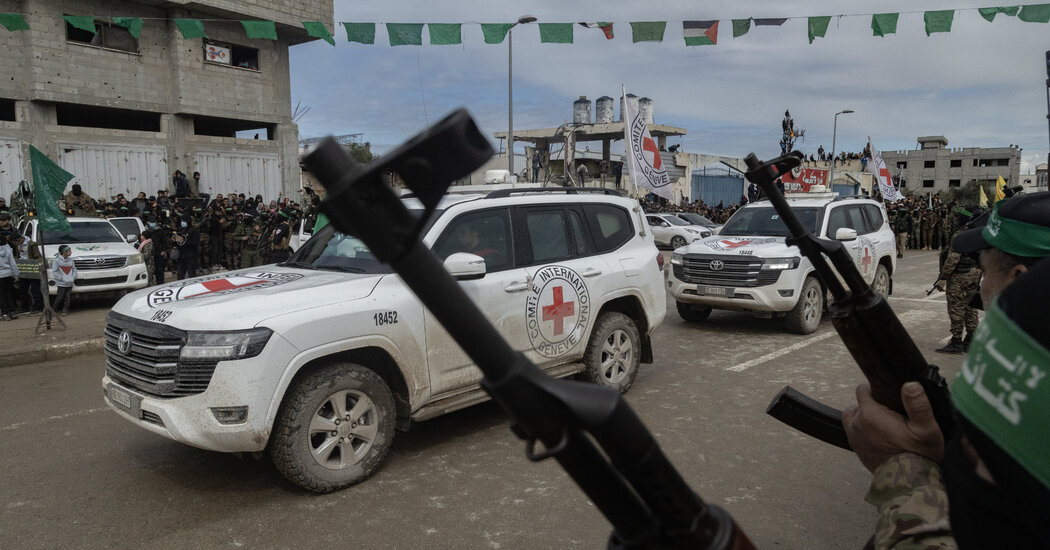
Nearly a week after the expiration of the initial stage of the cease-fire between Israel and Hamas, uncertainty looms over the fragile truce holding both parties in limbo. The ongoing negotiations involving the Trump administration, Arab nations, Israel, Hamas, and other stakeholders are marked by complexity and confusion, with discussions often occurring via separate channels. Originally established in mid-January to secure the release of hostages and Palestinian prisoners, the truce was intended to be a stepping stone towards a comprehensive cease-fire. However, as the six-week term concluded last weekend, progress towards a full truce has been minimal, despite mediation efforts by Qatar and Egypt. Israel, which communicates with Hamas through intermediaries, has since restricted aid into the Gaza Strip, sparking condemnation from Qatar for violating cease-fire terms that mandate daily aid convoys into the region.
In Israel, Prime Minister Benjamin Netanyahu has found it relatively straightforward to pause hostilities but remains hesitant to formally end military operations as Hamas maintains a stronghold in Gaza. With the cease-fire phase ending, Netanyahu announced Israel’s acceptance of a new plan proposed by Steve Witkoff, President Trump’s Middle East envoy. This new approach diverges sharply from the previous agreement and suggests returning half the remaining hostages in exchange for an additional 50 days of temporary cease-fire, with subsequent discussions aimed at permanently concluding the conflict. Netanyahu emphasized that the release of the remaining hostages would only occur if a lasting cease-fire agreement is secured.
Notably, Witkoff’s plan allows Israel to regain hostages without conceding to Hamas’s central conditions, which insists on adhering to the original January agreement. Hamas, supported by Palestinian advocates, argues that the U.S. and Israel must uphold the terms initially set, viewing the new proposal as a non-starter. Complicating matters further, President Trump has been vocal with propositions that alarm regional observers, including suggestions for permanently removing Palestinians from Gaza and facilitating a U.S. oversight of the territory. He has also issued stark warnings to Hamas on social media: “Return the remaining hostages immediately, or it is OVER for you.” This rhetoric, promising full military support to Israel if demands are not met, should the talks fail, has drawn criticism from Hamas. Sami Abu Zuhri, a Hamas spokesperson, stated, “The language of threats does not intimidate us; it only complicates matters further,” expressing concerns that such threats dissuade Israel from seeking diplomatic resolutions.
Meanwhile, the Trump administration has engaged in direct negotiations with Hamas focused on the release of American citizens seized in the October 2023 incidents. This shift marks a departure from the U.S.’s historical stance of isolating Hamas via a “no-contact” policy. Critics have long argued that avoiding direct dialogue with Hamas has yielded limited success in the past. Leading these recent efforts, Adam Boehler, nominated by Trump as a special envoy for hostage affairs, met Hamas representatives in Doha, Qatar. The discussions are reported to have been centered on freeing Edan Alexander, an American Israeli hostage thought to be alive, along with retrieving the bodies of other U.S.-Israeli citizens. Ruby Chen, the father of one abductee, expressed hope that these diplomatic ventures may succeed where others have not, stating, “If Israel’s government isn’t able to free Itay, then it’s reasonable for the United States to try and do so.”
In conclusion, the fraught Israel-Hamas cease-fire presents a convoluted challenge involving regional and international stakeholders grappling with an array of diplomatic and moral imperatives amidst an ever-tense geopolitical landscape.
Original Source: https://www.nytimes.com/2025/03/06/world/middleeast/israel-gaza-hamas-cease-fire-talks.html
Category : Israel-Gaza War (2023- ),Israel,Gaza Strip,Hamas,Palestinians,Peace Process,Qatar,Egypt,Trump, Donald J,United States International Relations
Tags:
Publish Date: 2025-03-06 20:56:00