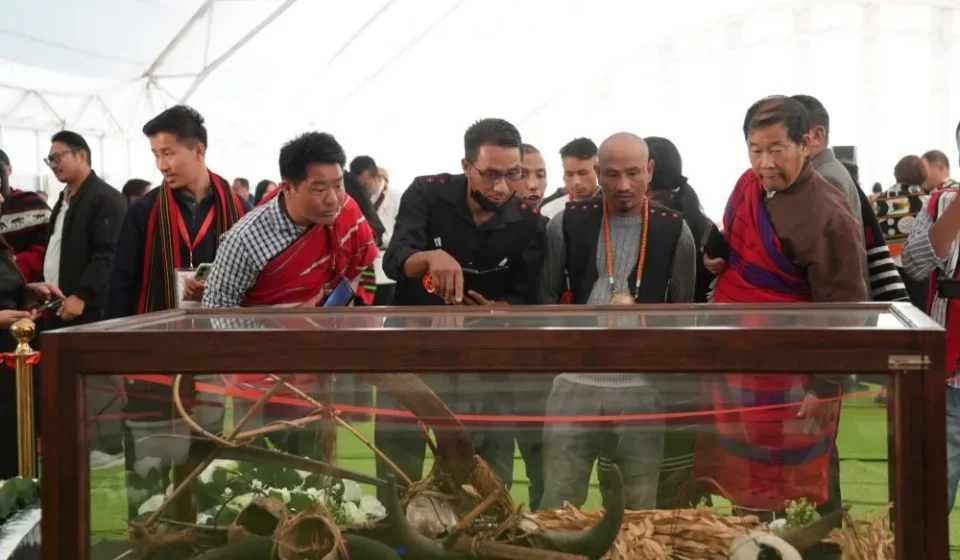

The remains of 39 Naga ancestors were returned to their homeland after more than a century, with a historic homecoming ceremony in Kohima on November 28 described by community leaders as a moment of restoration, healing and renewed hope. The remains will be placed for public viewing before being laid to rest at Naga Solidarity Park on November 30.
Speakers at the ceremony said the repatriation recovered a painful chapter of Naga history while offering an opportunity to restore dignity, reconnect with the past and strengthen bonds among Naga communities. Rev Dr Ellen Konyak, coordinator of Recover, Restore and Decolonise, said the homecoming marked the end of a journey that began in 2020 and took six years to bring the ancestors back.
Konyak described repatriation as an act of restoration and said it should not be seen as the end of the process but as a new beginning for Nagas to reclaim their history and shape their future. She said the return represented recognition of shared humanity and a step toward healing wounds left by colonial history. Reconciliation, she added, did not mean forgetting the past but transforming grief into forgiveness and loss into a foundation for the future.
Dr Vihuto Asumi, president of Sumi Hoho and secretary of the Nagaland Tribal Hohos Coordination Committee, said the return was significant not only for the Naga people but for humanity. He said the ancestors had lived with families, communities, traditions and a homeland, and their return was an act of honour and respect. He also paid tribute to those who suffered under the brutal practices of that era.
Asumi stressed that history must be preserved with honesty and dignity, and that younger generations should learn both the achievements and difficult experiences of their ancestors. Reflecting on the repatriation process, he called it challenging but deeply spiritual, requiring the community to revisit its past and recognise its responsibility to bring the ancestors home.
He warned that it would be unfortunate if Nagas could bring their ancestors home from across the continent but fail to bridge divisions among their descendants. Differences in tribal identity, language, customs and aspirations should never become reasons for hostility or disunity, he said. “If we could unite for the sake of our ancestors, surely we can also unite for the sake of our children and the generations yet to come,” Asumi said.
RS Jollyson, vice president of the Tangkhul Naga Long, said the repatriation had helped transform historical accounts into a shared experience of remembrance, solidarity and collective responsibility. He noted that stronger relationships had developed among different Naga tribes since the initiative began, bringing communities together in a common cause. He said the homecoming was a silent but powerful message to heal past wounds, strengthen relationships and rediscover a shared identity as one people. The present generation, he added, now has the responsibility to carry that message forward and translate the spirit of the homecoming into greater Naga unity.
Original Source: https://www.morungexpress.com/historic-repatriation-an-opportunity-to-heal-reconnect
Category: Nagaland
Tags:
Publish Date: 2026-11-28 22:33:00