Sovereign AI Is Not Autarky: Monetizing Inference Without Diluting Mission

Sovereignty Lives in the Control Plane, Not in the Weights
We tend to conflate sovereignty with self-sufficiency – the assumption that a nation’s AI stack is only legitimate if every weight matrix inside it was trained within its borders. That assumption deserves a harder look, and the recent Sarvam AI controversy hands us a near-perfect test case.
The Signal
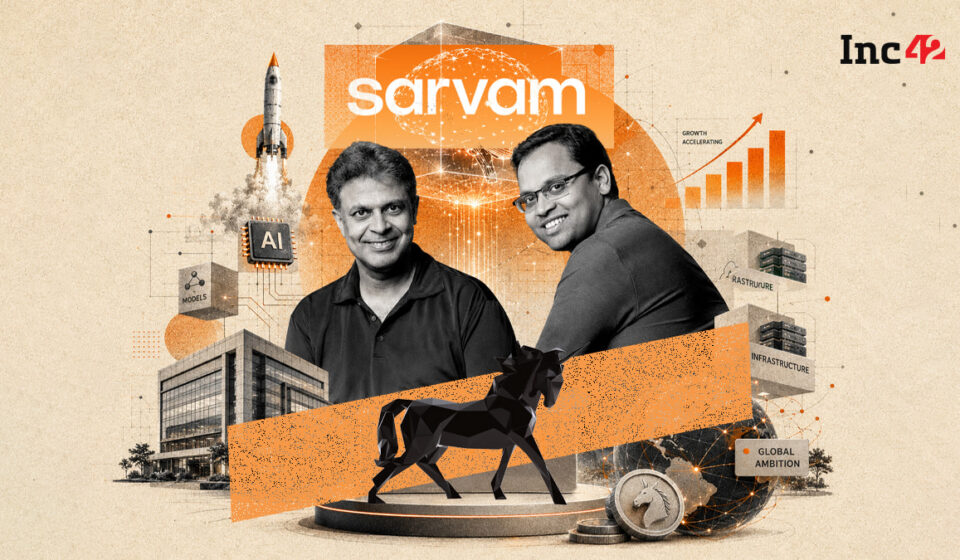
Sarvam’s new Token Factory lets enterprises reach Indian and overseas open-weight models through a single API, running on GPUs in India. Critics pounced: a self-styled champion of sovereign Indian AI, hosting Chinese models? MeitY’s secretary has since pushed back, observing that offering foreign LLMs violates nothing in the IndiaAI Mission, that a startup must monetise, and that building a frontier model is a different exercise from running an inference business.
The Architectural Argument Beneath the Politics
Strip the noise and three design principles emerge.
First, sovereignty is layered. A national AI stack has a research layer (the model), a compute layer (the GPU), and a control plane – routing, data residency, telemetry, guardrails, billing. Owning the control plane while licensing open weights is not a retreat; it’s how mature infrastructure plays have always worked. Open-weight models are, by definition, inspectable and self-hostable. Once you can pin, audit, and run them in-country, the relevant question stops being “whose model is this?” and becomes “who controls the inference path?”
Second, monetisation is an architectural requirement, not an embarrassment. Frontier research is a decade-long cost centre; inference is the cash engine that funds it. The real discipline lies in keeping the two roadmaps organisationally decoupled while technically coupled – a commercial platform that doesn’t quietly rewrite the research agenda to chase margin.
Third, funding transparency is a procurement issue. The distinction between privately procured GPUs and mission-subsidised compute isn’t bureaucratic hair-splitting. It’s precisely the audit trail an enterprise buyer needs to price risk.
The Moat Moves to the Router
Model pluralism is the destination here. When every serious stack can reach twenty models, value migrates to orchestration – evaluation harnesses, cost-aware routing, prompt/response governance, drift detection. That layer is also the new lock-in surface, if you let it be. Design for churn now, or rebuild painfully later.
A Note From the Northeast
I have argued for years in STPI rooms across this region: our founders’ barrier was never talent – it was capital expenditure on infrastructure. Inference-as-a-utility collapses that wall. A team in Guwahati can build on frontier capability without owning a single GPU. But the interoperability and residency rules must be written down, or we will spend the next decade renting somebody else’s control plane.
Takeaways
- Abstract your inference layer today; assume model churn is permanent.
- Treat evaluation and routing as first-class engineering disciplines.
- Demand in-country residency and auditability at inference time.
- Keep R&D economics and platform economics separate – let neither corrupt the other.
Sovereignty, ultimately, is not the absence of foreign components. It is the presence of domestic agency over how they are used.
About the Author: Sanjeev Sarma is the Founder Director and Chief Software Architect at Webx Technologies. With a core focus on Generative AI integration, Cloud-Native Scalability, and Enterprise Software Architecture, he has spent over two decades driving digital transformation across Northeast India and beyond. Beyond his corporate leadership, Sanjeev is deeply invested in shaping the future of the IT industry. He serves as an Industry Expert on the Board of Studies for Assam Don Bosco University’s School of Technology, advises state technology committees, and actively mentors emerging tech startups at STPI. He brings a unique, dual perspective of high-level enterprise execution and future-ready academic curriculum development.